In a world that never stops, having instant access to clean, perfectly temperature-controlled water at your fingertips is no longer a luxury—it’s a modern necessity. Whether you crave a steaming cup of tea to start your day, a refreshing glass of ice-cold water after a workout, or room-temperature hydration for cooking, a high-quality water dispenser can transform your daily routine. With technology constantly evolving, the 2026 market offers an impressive array of innovative models designed to meet every household and office need. This comprehensive guide delves into the top picks, highlighting their features, benefits, and how to choose the ideal water dispenser for you.
Water Dispenser: Your Convenient Hydration Solution
A water dispenser stands as a cornerstone of modern convenience, providing immediate access to hot, cold, and often room-temperature purified water without the complexities of plumbing installation. These units are a game-changer for homes, offices, and even temporary setups, offering a streamlined approach to hydration. They are especially beneficial for those without whole-house filtration systems, renters unable to modify plumbing, or anyone seeking to reduce reliance on single-use plastic bottles. Many models now incorporate basic filtration to enhance taste and remove common impurities, making every sip a pleasure.
The Benefits of Using a Water Dispenser
|
Our Picks for the Best Water Dispenser in 2026
As an Amazon Associate I earn from qualifying purchases.
|
||
| Num | Product | Action |
|---|---|---|
| 1 | Brio Limited Edition Top Loading Water Cooler Dispenser - Hot & Cold Water, Child Safety Lock, Holds 3 or 5 Gallon Bottles - UL/Energy Star Approved |

|
| 2 | New Wave Enviro Porcelain Water Dispenser, Classic Blue Stripe |
|
| 3 | Brio 520 UV Self-Cleaning Bottleless Water Cooler Dispenser, UL Certified - Built-in 2 Stage Filtration (2 Free Replacement Filters Included) Reduces PFAS & Microplastics - 3 Temp (Hot Cold, Room) |
|
| 4 | Brio Self Cleaning Bottom Loading Water Cooler Water Dispenser – Black Stainless Steel - 3 Temperature Settings - Hot, Room & Cold Water |
|
| 5 | Brita UltraMax Large Water Dispenser With Standard Filter, BPA-Free, Reduces Copper, Cadmium and Mercury Impurities, Lasts 2 Months or 40 Gallons, Includes 1 Filter, Kitchen Accessories, Large 27-Cup |
|
| 6 | Brio Self Cleaning Bottom Loading Water Cooler Water Dispenser – Limited Edition - 3 Temperature Settings - Hot, Cold & Cool Water |
|
| 7 | Water Jug Pump for 5 Gallon Bottle – Portable Electric USB-C Charging Dispenser, Dual Powerful Motors, Fast Flow, Fits 2-5 Gallon Jugs – Ideal for Home, Office, Camping, RV, Black |
|
| 8 | Igloo Top Loading Water Cooler – Hot & Cold Dispenser – Black & Stainless Steel, Holds 3 & 5 Gallon Jugs, Child Safety Lock – for Homes, Kitchens, Offices, Dorms |
|
| 9 | Brio 130 Series Top-Load Water Cooler Dispenser for 3- and 5-Gallon Bottles, Hot & Cold, Spill-Free Loading, Child Safety Lock, Energy Star 3.0, Black |
|
| 10 | Water Dispenser 5 Gallon Water Bottle Pump |
|
Embracing a water dispenser in your home or office brings a multitude of advantages beyond simple hydration. The convenience of having water at your desired temperature on demand is paramount. No more waiting for kettles to boil or constantly refilling ice trays; a water dispenser ensures your preferred water temperature is always ready.
Beyond immediate access, water dispensers offer significant cost savings compared to continually purchasing bottled water, especially for families or offices with high consumption. Many systems also promote environmental responsibility by reducing plastic waste when utilizing large refillable bottles or connecting to a direct water line. Modern designs prioritize safety and hygiene, featuring touchless operation and self-cleaning functions that minimize bacterial growth and keep your water pure.
Types of Water Dispensers on the Market
The diversity of water dispensers available means there’s a perfect match for every space and preference. Understanding the different types is crucial for making an informed decision.
- Top-Loading Water Dispensers: These are typically the most traditional and affordable models. They require you to lift and invert a 3 or 5-gallon bottle onto the top of the unit. While simple and reliable, the heavy lifting can be a drawback for some users, and the visible bottle might not suit all aesthetics.
- Bottom-Loading Water Dispensers: Offering a more ergonomic design, these dispensers house the water bottle in a hidden compartment at the base. An internal electric pump draws water upwards, eliminating heavy lifting and creating a cleaner, more streamlined appearance. They are often favored in offices and homes where aesthetics and ease of use are priorities.
- Countertop Water Dispensers: Designed for smaller spaces, these compact units sit conveniently on a kitchen counter or desk. They typically use smaller 1 to 3-gallon bottles or connect to filtered water jugs. While they save floor space, their capacity is often limited, and they may not always offer hot water.
- Bottleless (Point-of-Use – POU) Water Dispensers: These advanced systems connect directly to your home or office water line, providing an unlimited supply of filtered water. They usually include built-in multi-stage filtration, such as carbon or reverse osmosis, ensuring high-quality drinking water without the need for bottle refills or storage. This option is ideal for permanent installations and high-usage environments.
- Self-Cleaning Water Dispensers: Integrating features like UV sterilization or ozone cleaning, these models automatically sanitize internal reservoirs and pathways. This technology significantly reduces the frequency of manual cleaning, inhibits the growth of bacteria, and ensures safer, cleaner water with less effort.
Comparing Popular Water Dispenser Types
To help you navigate the options, here’s a detailed comparison of common water dispenser types:
| Feature | Countertop Water Dispenser | Top-Loading Water Dispenser | Bottom-Loading Water Dispenser | Bottleless (POU) Water Dispenser |
|---|---|---|---|---|
| Size | Small, compact | Medium | Large | Large |
| Capacity | 1-3 gallon bottles | 3 or 5 gallon bottles | 3 or 5 gallon bottles | Unlimited (direct water line) |
| Portability | High, easy to move | Medium, can be moved | Low, less portable | None (permanent fixture) |
| Water Source | Small bottles/filtered jugs | External 3/5-gallon bottles | External 3/5-gallon bottles | Direct plumbing connection |
| Temperature | Cold/Room (some offer hot) | Hot/Cold/Room | Hot/Cold/Room | Hot/Cold/Room |
| Filtration | Often none, relies on bottle | Often none, relies on bottle | Often none, relies on bottle | Built-in (Carbon, RO, UV) |
| Ease of Use | Easy refills, lightweight | Requires heavy lifting | Easy bottle changes, no lifting | No bottle changes or lifting |
| Price Range | Low ($30-$100) | Low-Mid ($80-$150) | Mid ($120-$250) | High ($400-$1,200) |
| Best For | Small spaces, dorms, 1-2 users | Budget-conscious, moderate use | Families, offices, ergonomic need | Permanent installations, high usage, superior filtration |
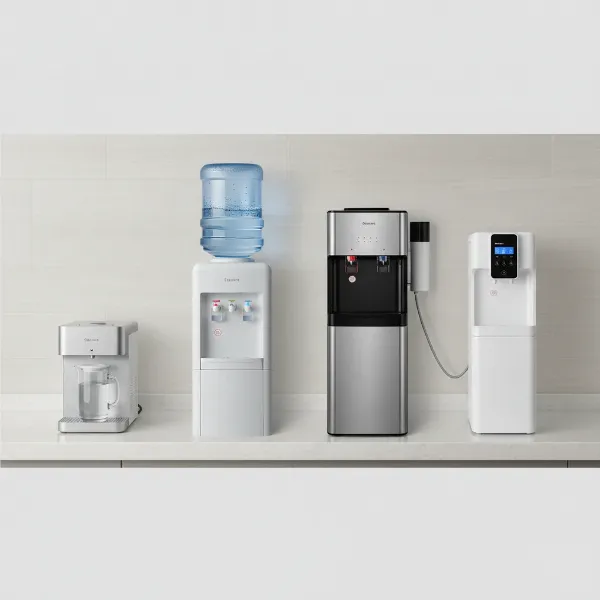 A visual comparison of different water dispenser types: countertop, top-loading, bottom-loading, and bottleless models.
How to Choose the Right Water Dispenser
Selecting the perfect water dispenser involves more than just picking a stylish model. It requires a thoughtful assessment of your specific needs, space constraints, and long-term operating costs.
First, determine your usage needs. Consider the number of people who will be using the dispenser daily and their temperature preferences. A small countertop unit might suffice for a single user or a small office primarily needing cold water, while a bottom-loading or bottleless model with hot and cold functions is better for larger families or busy workplaces with varied demands.
Space availability is another critical factor. Measure your intended location—whether it’s a countertop or a floor space—to ensure the unit fits comfortably while allowing adequate clearance for ventilation, typically 6 inches on all sides.
Consider your water source options. Will you rely on bottled water delivery services, or do you prefer the convenience and lower long-term cost of a bottleless system connected to your tap? If you opt for bottled water, think about the effort involved in lifting and replacing heavy 5-gallon bottles versus the ease of a bottom-loading unit.
Energy efficiency should also play a role in your decision. Water dispensers operate continuously to maintain temperatures, so an Energy Star certified model can significantly reduce your electricity bills. Some models also allow you to turn off the hot water function when not needed, saving an additional $15-20 per month.
Finally, evaluate safety features, especially if children are in the household. Child safety locks for the hot water spout are essential to prevent accidental burns. Look for other practical features like indicator lights for low water levels or self-cleaning cycles that add to convenience and peace of mind.
Top Water Dispenser Brands and Models for 2026
The market for water dispensers in 2026 is robust, featuring several brands known for their reliability, innovation, and user satisfaction. Here are some of the top picks based on features, performance, and user reviews:
- Brio CLBXL520SC Self-Cleaning Bottleless Water Dispenser: This premium bottleless unit is celebrated for its 4-stage filtration, including UV-C sterilization, and touchless sensors for hygienic dispensing. It’s an excellent choice for offices and large families seeking unlimited, clean water with minimal maintenance.
- Philips ADD6920 Countertop RO Water Dispenser: Bringing reverse osmosis quality to the countertop, this model offers 4-stage RO filtration, providing hot, cold, and room-temperature water without plumbing. It’s ideal for apartments or smaller homes seeking advanced filtration in a compact design.
- Avalon A4 Bottom-Loading Water Cooler Dispenser: Often lauded as a “Best Overall” pick, the Avalon A4 offers efficient cooling and heating with a convenient bottom-loading design, child safety lock, and empty bottle indicator. It’s a solid choice for the average family.
- Avalon B8WHT Touchless Self-Cleaning Dispenser: Combining touchless technology with ozone self-cleaning, this 5-gallon bottom-loading unit prioritizes hygiene and ease of use. It’s Energy Star certified, keeping operating costs low while providing hot, cold, and room-temperature water.
- Brio Bottom Loading Water Cooler Dispenser (LED Display): A popular choice for its balance of features and value, this dispenser includes an LED display and offers hot, cold, and room-temperature water from 5-gallon bottles. Its bottom-loading design makes bottle changes simple.
- ZenWater 4-Gallon Countertop Gravity Water Dispenser: For eco-conscious users, this unique dispenser uses 8-stage gravity filtration without electricity. Its glass tank construction and alkaline enhancement make it popular for health-conscious and off-grid homes, though it typically only offers room-temperature water.
- Primo Water Bottom Loading Classic 2 Temp Dispenser: This sleek, bottom-loading model focuses on simplicity and efficiency, providing cold and room-temperature water. It’s a reliable option for those who don’t require hot water but appreciate the ease of a bottom-loading system.
- Avalon A5 Self Cleaning Bottleless Water Cooler: Another excellent bottleless option, the A5 features integrated NSF filtration and auto-cleaning systems. Its stainless steel construction and elimination of heavy bottle swaps make it a modern choice for families.
- Frigidaire EFWC519 Water Cooler Dispenser: Known for its robust build quality at an affordable price, this top-loading dispenser is often recommended for offices. It offers efficient operation and a hot water safety lock.
- Kepooman Water Fountain, Water Dispenser: This highly-rated 5-gallon hot and cold water cooler includes a child safety lock and is often available at competitive prices, making it a strong value proposition for many households.
Essential Tips for Using and Maintaining Your Water Dispenser
To ensure your water dispenser operates efficiently and, more importantly, provides safe drinking water, regular maintenance is crucial. Neglected dispensers can become breeding grounds for bacteria, mold, and biofilm, potentially leading to health issues.
Weekly Maintenance Tasks (5 minutes):
- Wipe exterior surfaces: Use a damp cloth with mild soap to clean the dispensing area, drip tray, and buttons. This prevents bacterial transfer from frequent touchpoints.
- Empty and clean drip tray: Remove the tray, discard any collected water, wash it with dish soap, and dry thoroughly before replacing. Standing water in the drip tray can quickly foster bacterial growth.
- Inspect bottle seals (for bottle-fed models): Check for any cracks, debris, or buildup around the bottle connection point. Clean with a damp cloth to prevent contamination.
Monthly Deep Cleaning (30 minutes):
Self-cleaning models may extend this to every three months, but standard dispensers require a deep clean every 6 weeks.
- Unplug and drain: Disconnect the dispenser from power. For hot/cold units, allow the hot water tank to cool for 30-60 minutes before draining. Drain all water from both hot and cold reservoirs through their respective spigots.
- Prepare cleaning solution: Mix 1 tablespoon of unscented bleach per gallon of water. Alternatively, a cup of white vinegar per gallon can be used for a natural, albeit less potent, solution. Do not use excessive bleach as it can damage internal components.
- Sanitize internal system: Pour the cleaning solution into the reservoir where the bottle sits. Let it soak for 5-10 minutes to allow the solution to work. Dispense the entire solution through all spigots.
- Rinse thoroughly: Fill the reservoir with clean water and dispense it completely through all spigots. Repeat this rinsing process three to four times until no bleach or vinegar smell remains.
- Clean spouts/nozzles: Remove and soak the dispensing spouts in a bleach solution for 5 minutes, then rinse and reinstall. These are high-contact areas and a significant contamination risk.
> “Water dispensers offer unparalleled convenience, providing instant hot and cold water. However, proper cleaning and maintenance are crucial to ensure safe, contaminant-free drinking water for your family or office.” – Emily Thompson, Consumer Testing Specialist at CleanWaterHacks
Troubleshooting Common Issues:
- Water not cold enough: Check if vents are blocked or if the room temperature is too high. Ensure 6+ inches of clearance around the unit. If persistent, the compressor might be failing.
- Hot water not heating: Verify the hot water switch is on and the power outlet is working. Mineral buildup or a faulty heating element could be culprits.
- Bad water taste/smell: This often indicates bacterial growth. Perform a deep clean immediately, replace the water bottle, and flush the system.
Energy-Saving Tips:
- Turn off the hot water heater at night or when not in use to save $15-20 per month.
- Use a timer plug to schedule operation during peak usage hours.
- Position the dispenser away from direct sunlight or heat sources to reduce the workload on the cooling system.
Conclusion
Choosing the best water dispenser for your home or office is an investment in convenience, health, and often, sustainability. From compact countertop models perfect for small spaces to advanced bottleless systems with multi-stage filtration, the 2026 market offers a solution for every need. By considering factors like capacity, temperature options, filtration capabilities, and maintenance requirements, you can select a unit that seamlessly integrates into your lifestyle. With the right water dispenser, you’re not just getting water; you’re gaining a reliable source of pure, perfectly chilled or heated hydration, making your daily life a little easier and a lot more refreshing.
What are the most important features you look for in a water dispenser to meet your daily hydration needs?
Frequently Asked Questions
Are water dispensers worth it?
Yes, water dispensers can be highly worthwhile, especially for offices, large families, or individuals who consume a lot of water and desire instant access to hot or cold purified water. They offer convenience, can reduce long-term costs compared to buying bottled water, and many models provide improved water quality through built-in filtration.
How often should I clean my water dispenser?
For standard water dispensers, a deep cleaning should be performed every six weeks. Self-cleaning models can extend this interval to every three months. Additionally, weekly maintenance, such as cleaning the drip tray and wiping spigots, is recommended to prevent bacterial growth and maintain hygiene.
What’s the difference between bottle-fed and bottleless dispensers?
Bottle-fed dispensers use large, external water bottles (3 or 5-gallon) that require manual replacement. Bottleless (or Point-of-Use) dispensers connect directly to your home’s water line, providing an unlimited supply of filtered water through built-in filtration systems, eliminating the need for heavy bottle lifting or storage.
How much electricity does a water dispenser use?
Electricity consumption varies significantly. A standard hot and cold water dispenser can cost around $35-45 per month to operate, while Energy Star certified models typically cost $25-35. Cold-only units are more economical at $5-8 per month, and room-temperature-only models use no electricity.
Can I use tap water in a bottle-fed dispenser?
While you can technically fill a bottle with tap water and place it on a bottle-fed dispenser, these units typically do not have built-in filtration for the main water supply. It is recommended to use pre-purified bottled water or to invest in a bottleless dispenser with integrated filtration if you intend to use tap water to ensure safety and taste.