Upgrading your water dispenser is a fantastic step towards a more efficient home or office, but what about the old unit that’s served its purpose? Simply tossing it in the regular trash isn’t just irresponsible; it can harm the environment and violate local regulations. As a technician with over a decade of experience in water dispensers, I’ve seen firsthand the components that make up these units and understand the importance of proper disposal. This article will guide you through the essential steps to recycle your old water dispenser responsibly, ensuring a greener footprint and a clearer conscience.
Why Responsible Water Dispenser Recycling Matters
Disposing of old appliances like water dispensers thoughtfully is crucial for environmental protection and resource conservation. Many components within a water dispenser, particularly electric models, are not meant for landfills. When sent to a landfill, these units can leach hazardous chemicals into the soil and groundwater, posing serious threats to ecosystems and public health. For instance, older refrigerated models often contain refrigerants like Freon, oils, and other compounds that are potent greenhouse gases and ozone-depleting substances. Federal law mandates the proper removal and recovery of these materials to prevent them from venting into the atmosphere. [cite: 4 (search 2), 5 (search 2)]
Beyond preventing harm, responsible recycling reclaims valuable materials. Plastics, metals (like steel, copper, and aluminum), and electronic components can all be repurposed, reducing the need for new raw materials and conserving energy in manufacturing processes. This commitment to recycling helps mitigate climate change, reduces waste, and supports a circular economy where resources are continually reused. Making the effort to recycle your water dispenser properly is a direct contribution to a healthier planet for future generations.
Identifying Your Water Dispenser’s Components for Recycling
Understanding what your water dispenser is made of is the first step towards proper recycling. These units are complex appliances with various materials, some of which require special handling.
Metal Components: The internal framework, compressor, and cooling coils of most water dispensers are made of various metals, including steel, copper, and sometimes aluminum. These are highly recyclable and are typically accepted at local scrap metal recyclers. Separating these metals can even provide a small return, as scrap yards often pay for salvaged materials. [cite: 2 (search 1)]
Plastic Casings and Parts: Many water dispensers feature outer casings, drip trays, and internal reservoirs made from different types of plastic, such as High-Density Polyethylene (HDPE) or Acrylonitrile Butadiene Styrene (ABS). While plastics are recyclable, acceptance varies widely by local facility. It’s essential to check with your local waste management or recycling center to confirm which types of plastics they accept and if any pre-separation is required. Some specialized companies can even take apart units and process HDPE materials for recycling into new products like decking or outdoor furniture. [cite: 5 (search 1)]
Electronic Waste (E-waste): Electric water dispensers contain numerous electronic components. This includes power cords, wiring, circuit boards, sensors, and control panels. These items are classified as e-waste and should never be thrown into regular trash due to the potential presence of heavy metals and other toxic substances. E-waste requires specialized recycling to ensure safe material recovery and disposal. [cite: 2 (search 1)]
Refrigerant & Compressor: Hazardous Material Requiring Professional Handling: This is arguably the most critical component for responsible disposal. If your water dispenser offers chilled water, it likely contains a compressor and refrigerant gases, similar to a refrigerator or air conditioner. These refrigerants (like Freon) are harmful to the ozone layer and contribute to global warming if released. It is illegal to intentionally vent these refrigerants into the atmosphere. Therefore, units containing refrigerants must have them removed by a certified professional or handled by programs specifically equipped to do so. This often involves a fee but is non-negotiable for environmental safety. [cite: 4 (search 2)]
Other materials, such as rubber gaskets, might not be widely recyclable and may need to be disposed of in a landfill if no specific recycling option is available locally. Knowing these distinctions will guide your recycling efforts effectively.
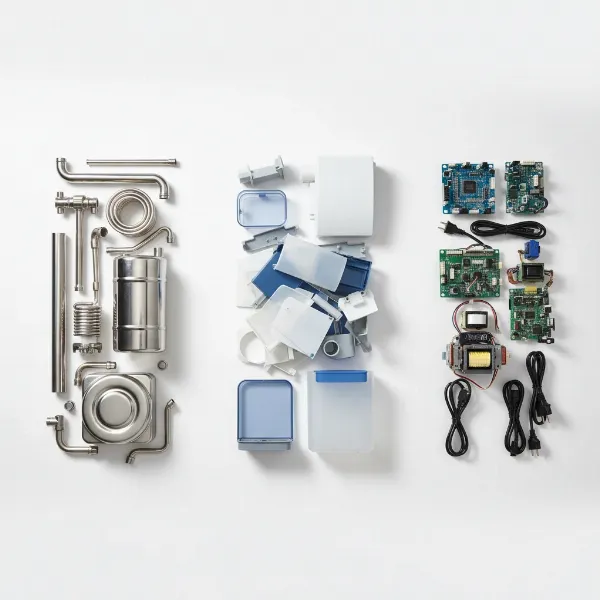 A disassembled water dispenser with its components separated into piles: metals, plastics, and electronic waste, highlighting proper sorting for recycling.
Preparing Your Water Dispenser for Recycling
Before you haul your old water dispenser away, a few crucial steps are needed to ensure safety and compliance with recycling guidelines. Neglecting these preparations can lead to hazards or rejection at recycling facilities.
Safety First: Unplug and Drain All Water
|
Our Picks for the Best Water Dispenser in 2026
As an Amazon Associate I earn from qualifying purchases.
|
||
| Num | Product | Action |
|---|---|---|
| 1 | Brio Limited Edition Top Loading Water Cooler Dispenser - Hot & Cold Water, Child Safety Lock, Holds 3 or 5 Gallon Bottles - UL/Energy Star Approved |

|
| 2 | Brio Commercial Grade Bottleless Ultra Safe Reverse Osmosis Drinking Water Filter Water Cooler Dispenser-3 Temperature Settings Hot, Cold & Room Water - UL Approved – Point of Use |
|
| 3 | Housiwill Countertop Water Dispenser, Top Loading Water Cooler for 1.2 to 5 Gallon, 3 Temperature Settings Room Temperature Water Cold Hot Water Dispenser, Suitable for Home, Office, Dorm Bedside Use |
|
| 4 | Water Jug Pump for 5 Gallon Bottle – Portable Electric USB-C Charging Dispenser, Dual Powerful Motors, Fast Flow, Fits 2-5 Gallon Jugs – Ideal for Home, Office, Camping, RV, Black |
|
| 5 | Brio Bottom Loading Water Cooler Dispenser for 5 Gallon Bottles - 3 Temperatures with Hot, Room & Cold Spouts, Child Safety Lock, LED Display with Empty Bottle Alert, Stainless Steel |
|
| 6 | Brio 130 Series Top-Load Water Cooler Dispenser for 3- and 5-Gallon Bottles, Hot & Cold, Spill-Free Loading, Child Safety Lock, Energy Star 3.0, Black |
|
| 7 | Brio Countertop Self Cleaning Bottleless Water Cooler Dispenser with Filtration - Hot Cold and Room Temperature Water. Free Extra Replacement Filters Included - UL/Energy Star Approved |
|
| 8 | Brita UltraMax Large Water Dispenser With Standard Filter, BPA-Free, Reduces Copper, Cadmium and Mercury Impurities, Lasts 2 Months or 40 Gallons, Includes 1 Filter, Kitchen Accessories, Large 27-Cup |
|
| 9 | Primo Bottom-Loading Self-Sanitizing Water Dispenser - 2 Temp (Hot-Cold) Water Cooler Water Dispenser for 5 Gallon Bottle w/Child Safety Lock, Black and Stainless Steel |
|
| 10 | Igloo Top Loading Water Cooler with Removable Tray & Energy-Saving Features - Water Tower with Hot, Cold Temperature Settings- Water Dispenser Fits 3 & 5-Gallon Jugs with Child Safety Lock- Stainless |
|
The very first step is to ensure the unit is completely de-energized. Unplug the water dispenser from its power source to eliminate any risk of electric shock. Next, thoroughly drain all residual water from both the hot and cold reservoirs, as well as any internal lines. Many dispensers have a drain plug or a small screw at the back to facilitate this. Use a bucket or tray to collect the water, ensuring no spills. Completely draining the unit prevents water damage during transport and makes it lighter and safer to handle. [cite: 4 (search 1)]
Professional Refrigerant Removal (if applicable)
For any water dispenser with a cooling function, professional refrigerant removal is paramount. Refrigerants like Freon are dangerous if released. A certified HVAC technician or an authorized appliance recycling program can safely extract these gases. Do not attempt to cut any lines or disassemble the compressor yourself, as this is illegal and hazardous. Confirming that your unit’s refrigerant has been properly handled is a critical step in responsible disposal.
Cleaning the Unit
Once empty, give the water dispenser a good clean. Remove any visible mineral deposits, mold, or grime from the reservoirs, drip tray, and external surfaces. A clean appliance is more readily accepted by recyclers and makes handling more sanitary. Use mild soap and water, and ensure it’s completely dry before transport.
Disassembly Considerations
While not always required, some local recycling centers may ask you to disassemble certain parts of the water dispenser to facilitate sorting. This usually involves separating the plastic casing from the metal frame or removing larger electronic components. Always check with your specific recycling facility beforehand to understand their requirements. If disassembly is needed, proceed with caution and use appropriate tools.
By following these preparatory steps, you ensure your old water dispenser is ready for safe and responsible recycling, protecting both yourself and the environment.
Your Options for Recycling and Disposal
Finding the right avenue for recycling your old water dispenser can depend on your location, the unit’s condition, and whether it contains refrigerants. Fortunately, several options are available to help you dispose of it responsibly.
Local Recycling Centers
Many municipal or county recycling facilities accept small appliances as part of their general recycling programs. It’s crucial to contact your local waste management company first to inquire about their specific guidelines for water dispensers. They can inform you if there are any fees, whether refrigerant removal is necessary, and if disassembly into separate material streams (metals, plastics) is required before drop-off. Some centers may even have designated areas for electronic waste. [cite: 1 (search 1)]
Electronic Waste (E-Waste) Events
Communities often host special electronic waste collection events throughout the year. These events are specifically designed to handle electronics and appliances, ensuring that hazardous materials are processed correctly. Check your local government’s environmental services website or community calendar for upcoming e-waste events, which offer a convenient way to dispose of your unit alongside other unwanted electronics. [cite: 1 (search 1)]
Retailer Take-Back and Trade-In Programs
When purchasing a new water dispenser, inquire about retailer take-back or trade-in programs. Many appliance retailers, like Best Buy, offer to haul away your old unit for recycling, sometimes for a fee or as part of a delivery service for a new purchase. [cite: 3 (search 4)] Some of these programs partner with initiatives like the EPA’s Responsible Appliance Disposal (RAD) Program, which guarantees that refrigerants are recovered, foam insulation is handled, and metals, plastics, and glass are recycled responsibly. [cite: 4 (search 2)] This can be a hassle-free option that ensures proper environmental handling.
Scrap Metal Yards
If you’ve already had the refrigerant removed and perhaps disassembled your water dispenser, the metal components (steel, copper, aluminum) can be taken to a local scrap metal yard. These facilities specialize in processing metals for reuse and may even offer a small payment for your efforts. Always confirm with the scrap yard that they accept the types of metal you have. [cite: 2 (search 1)]
Municipal Bulky Waste Collection
Some cities and towns provide curbside bulky waste collection services for large items, including appliances. However, rules vary significantly. For refrigerated water dispensers, proof of professional refrigerant removal is almost always a prerequisite for collection. Contact your local waste management department to understand their specific requirements, collection schedules, and any associated fees for appliance disposal. [cite: 3 (search 1)]
Hazardous Waste Facilities
In cases where local recycling centers or e-waste events cannot accommodate a refrigerated water dispenser, or if you have specific hazardous components, a dedicated hazardous waste disposal site might be necessary. These specialized facilities are equipped to handle dangerous materials safely, minimizing environmental impact.
By exploring these various avenues, you can find a suitable and responsible method for recycling your old water dispenser.
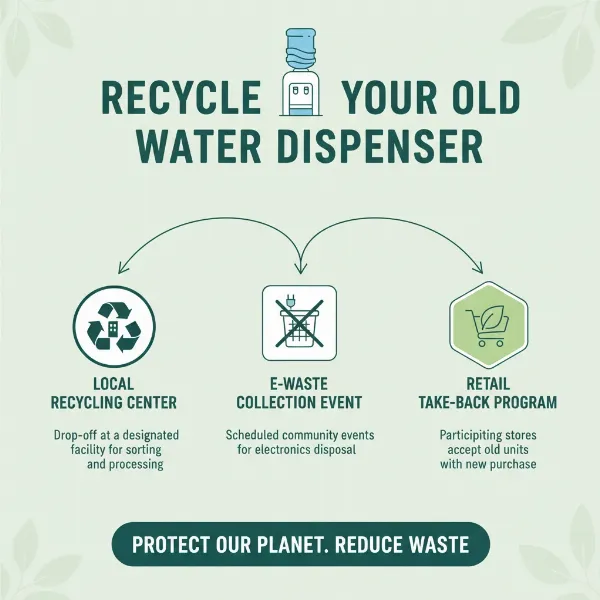 A graphic illustrating various recycling options for water dispensers, including local centers, e-waste events, and retailer take-back programs.
Alternatives to Recycling for Functional Units
If your old water dispenser is still in good working condition, recycling might not be the only or even the best option. Giving it a second life through donation, selling, or creative repurposing can extend its usefulness and further reduce waste.
Donation to Charities or Schools
Many charitable organizations, non-profits, and community centers are grateful for functional appliance donations. Places like Habitat for Humanity ReStore often accept working appliances, which can then be sold at a reduced price to support community projects. Local schools or community centers might also benefit from a donated water dispenser for staff rooms or public areas. This option not only keeps the item out of the landfill but also contributes to your community. [cite: 2 (search 2), 5 (search 2)]
Selling or Giving Away
Online marketplaces and community groups offer excellent platforms to sell or give away your functional water dispenser. Websites such as Craigslist, Facebook Marketplace, or local Freecycle groups connect you with individuals in your area who might be looking for an affordable water solution. It’s a quick and easy way to find a new home for your appliance, benefitting both the new owner and the environment. [cite: 2 (search 2)]
Creative Repurposing and Upcycling Ideas
For the creatively inclined, an old water dispenser can be transformed into something entirely new and functional. Here are a few ideas:
- Garden Watering Station: With minor modifications, it can become a convenient dispenser for watering plants, especially useful for larger gardens.
- Pet Watering Station: Adapt it to provide a constant supply of fresh water for your pets, particularly handy for multiple animals or large breeds.
- Home Beverage Dispenser: Repurpose it into a unique beverage dispenser for parties, filled with lemonade, iced tea, or other refreshments.
- Planter or Pot Stand: Turn the casing into a stylish planter or a stand for your potted plants, adding a touch of upcycled charm to your home or garden.
- Outdoor Bar or Drink Station: With a bit of paint and shelving, an old dispenser can be transformed into a unique outdoor bar for entertaining. [cite: 2 (search 2)]
Choosing one of these alternatives for a working unit can significantly extend its lifespan and prevent it from becoming waste prematurely.
Choosing the Best Recycling Path for You
Deciding on the most suitable recycling or disposal method for your old water dispenser involves weighing several factors, ensuring an outcome that is both convenient for you and beneficial for the environment.
Consider Local Regulations: The absolute first step is to check your local municipality’s waste management guidelines. Regulations regarding appliance disposal, especially for items containing refrigerants, can vary significantly by city and state. Some areas have strict rules, specific drop-off points, or mandatory fees for certain components. Ignorance of these rules can lead to fines or improper disposal.
Unit Condition and Type:
- Functional Units: If your water dispenser is still working well, consider donation or selling it. These options maximize its lifespan and utility before it reaches end-of-life.
- Non-Refrigerated Units: Simpler water dispensers (without cooling functions) are generally easier to recycle, as they don’t contain hazardous refrigerants. Focus on local recycling centers that accept small appliances and e-waste.
- Refrigerated Units: These require the most careful consideration due to refrigerants. Prioritize options like retailer take-back programs (especially those partnered with EPA RAD), specialized e-waste facilities, or professional refrigerant removal followed by scrap metal recycling. The presence of refrigerants means you cannot simply place it out for bulky trash unless specific protocols are met.
Convenience vs. Environmental Impact: While convenience is a factor, always prioritize responsible disposal. A retailer take-back program, though potentially costing a small fee, offers the most hassle-free and environmentally sound solution for refrigerated units. For non-refrigerated models, a local recycling center or e-waste event might be the most straightforward.
Cost Implications: Be prepared for potential fees, especially for refrigerant removal or specialized hazardous waste disposal. These costs reflect the complex and necessary process of safely handling harmful chemicals. View these fees as an investment in environmental protection.
By carefully evaluating these points, you can make an informed decision that aligns with both your practical needs and your commitment to responsible waste management.
> “Every old appliance contains a story of resource and potential. Our goal in recycling isn’t just to discard; it’s to reclaim, renew, and reimagine its future, preventing harm and building sustainability one component at a time.” – Mai Le, Environmental Recycling Specialist, WaterDispenserPro.com
Conclusion
Responsibly recycling your old water dispenser is more than just a chore; it’s a vital act of environmental stewardship. By understanding the various components within your unit and following the proper disposal channels, you actively prevent hazardous materials from contaminating our planet and contribute to the valuable cycle of resource recovery. From safely draining and preparing the unit to exploring local recycling centers, e-waste events, retailer programs, or even considering donation and repurposing, there are multiple pathways to ensure your old dispenser doesn’t end up harming the environment.
Remember that refrigerated units require particular attention due to their refrigerants, making professional removal or specialized programs essential. The choices we make today about our waste directly impact the health of our communities and the planet tomorrow. So, before you bid farewell to your trusty water dispenser, take a moment to research your local options and commit to a responsible choice. What steps will you take to ensure your old appliance contributes to a greener future?
Frequently Asked Questions
Can I just throw my old water dispenser in the trash?
No, it is strongly advised not to throw your old water dispenser in the regular trash. Many models contain electronic components, plastics, metals, and potentially harmful refrigerants (like Freon) that can leach toxic chemicals into the environment if sent to a landfill. Proper recycling or disposal is crucial to protect the planet.
Do all water dispensers contain harmful refrigerants?
Only water dispensers that provide chilled water (refrigerated models) typically contain harmful refrigerants. Non-refrigerated, room-temperature, or hot-only dispensers usually do not. Always check your unit’s specifications or consult the manufacturer’s guidelines to determine if it contains refrigerants, as these require special handling.
Is it expensive to recycle a water dispenser?
The cost of recycling a water dispenser can vary. Some local recycling centers or e-waste events may offer free drop-off. However, if your unit contains refrigerants, there might be a fee for professional removal, or a charge from retailers/municipalities for specialized handling. It’s best to inquire locally for exact costs.
What is the EPA’s RAD program?
The EPA’s Responsible Appliance Disposal (RAD) Program is a voluntary partnership that helps protect the ozone layer and reduce greenhouse gas emissions. RAD partners, often retailers or utilities, ensure that refrigerants are recovered, foam insulation is handled, and other materials are recycled using best environmental practices when disposing of old appliances.
Can I disassemble my water dispenser myself for recycling?
You can often disassemble non-refrigerated water dispensers to separate plastic and metal components for recycling, but always check local facility requirements first. However, never attempt to disassemble a refrigerated unit yourself if it still contains refrigerants, as this is illegal and dangerous. Always seek professional help for refrigerant removal.