Let’s be honest, the modern kitchen is a hub of activity, and for families with young children, it’s also a landscape of potential hazards. Between hot stovetops and sharp utensils, the last thing you need to worry about is an accidental burn from your water cooler. That’s precisely why a Water Dispenser With Child Safety Lock isn’t just a feature; it’s a non-negotiable for any household with curious little hands. It’s about blending the incredible convenience of instant hot and cold water with the priceless peace of mind that comes from knowing your family is protected.
As the voice of Water Dispenser Pro, I’ve seen countless families make this smart upgrade. They’re not just buying an appliance; they’re investing in safety, convenience, and a healthier lifestyle. In this guide, we’re going to dive deep into everything you need to know. We’ll demystify the technology, explore the different types, and empower you to choose the perfect model that fits your home like a glove. Ready to become an expert? Let’s get started.
The Evolution of Hydration: More Than Just Water
Water dispensers have come a long way from the simple, gurgling coolers you might remember from your dentist’s office. They’ve evolved into sophisticated home appliances that are central to our daily routines. The initial purpose was simple: provide chilled water on demand. But soon, the demand for instant hot water for tea, coffee, and instant meals transformed the device into a dual-function workhorse.
This evolution, however, introduced a new concern. With water heated to nearly boiling temperatures (typically between 185°F and 203°F or 85°C and 95°C), the risk of serious scalds became a real issue, especially for the most vulnerable members of the family. The industry responded, and the child safety lock was born. It was a simple yet brilliant innovation that turned the hot and cold water dispenser from a potential liability into a family-friendly essential.
Decoding the Different Types of Water Dispensers
Before you can pick the right model, you need to understand the main players on the field. Each type has its pros and cons, but the great news is that you can find a water dispenser with child safety lock in every category.
Top-Loading Dispensers
This is the classic design. You hoist a 3 or 5-gallon water jug and place it upside-down on top of the unit.
- Pros: Generally the most affordable option, and it’s easy to see when the water level is low.
- Cons: Lifting those heavy bottles can be a real back-breaker. Seriously, a 5-gallon jug weighs about 42 pounds! Plus, spills can happen during the bottle change.
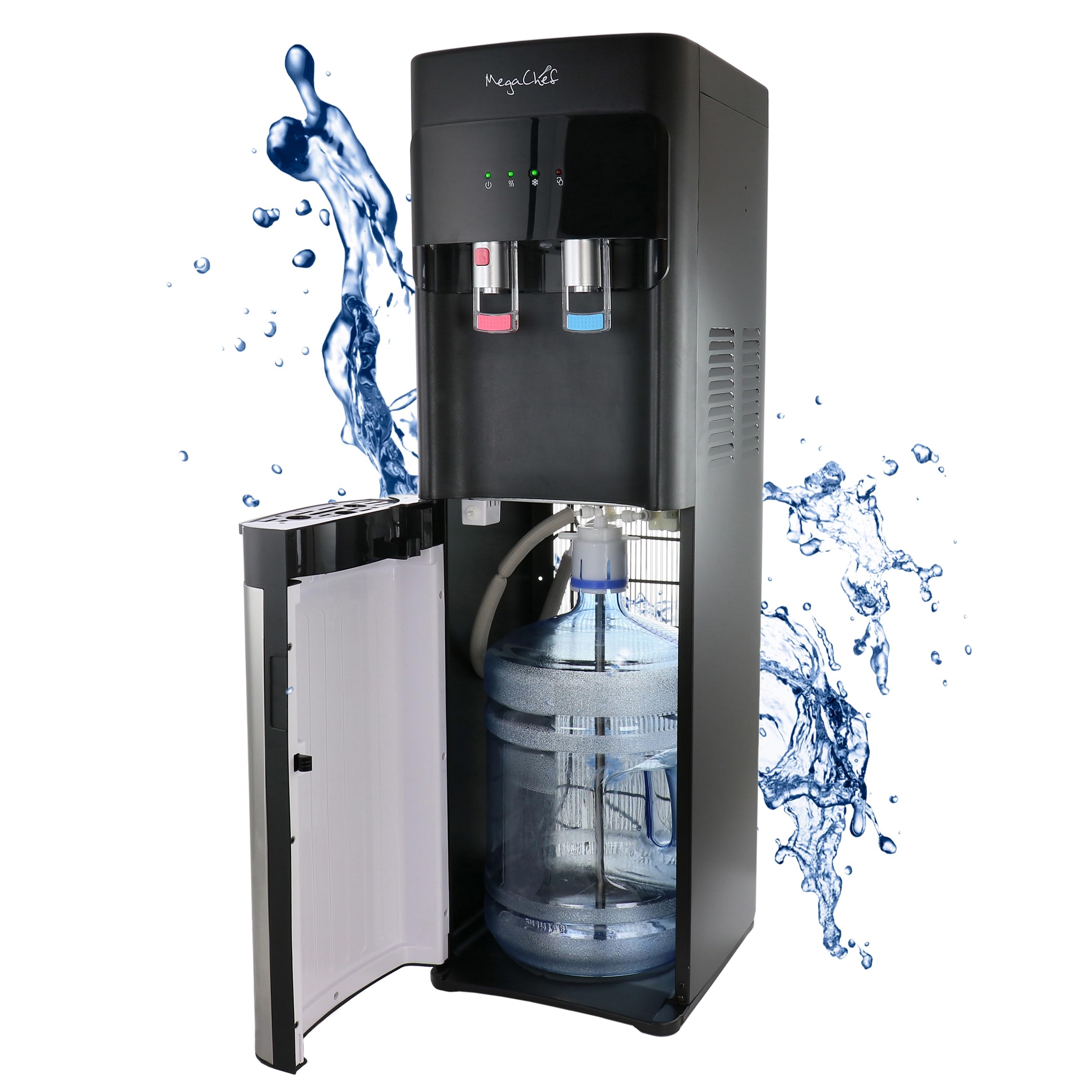
Bottom-Loading Dispensers
A more ergonomic and aesthetically pleasing option. The water jug sits upright in a concealed cabinet at the base of the dispenser. A pump then draws the water up to the cooling and heating chambers.
- Pros: No heavy lifting! Changing the bottle is a simple slide-in-and-out process. The sleek design hides the bottle from view, giving your kitchen a cleaner look.
- Cons: They are typically more expensive than top-loaders and the pump adds another mechanical component that could potentially require maintenance down the road.
Point-of-Use (POU) or Countertop Dispensers
These units connect directly to your home’s water line. They act as a water purifier and dispenser in one, providing an endless supply of filtered hot and cold water.
- Pros: No bottles to buy, store, or replace. It’s the most convenient and environmentally friendly option. They often come with advanced multi-stage filtration systems.
- Cons: The initial cost and installation can be higher. You’ll also need a water line nearby, which might limit placement options.
Expert Take: Johnathan Smith, a home appliance safety engineer with over 15 years in the field, advises, “For families, the decision often comes down to bottom-loading versus POU. If you want simplicity and flexibility in placement, a bottom-loader is fantastic. If you value ultimate convenience and want to eliminate plastic bottles entirely, a POU system is a long-term investment in both your health and the environment.”
How to Choose the Perfect Water Dispenser with Child Safety Lock
Feeling overwhelmed by the options? Don’t be. Choosing the right dispenser is all about matching the features to your family’s unique needs. Let’s break it down into a simple checklist.
- Household Size: How many people will be using it? A small family might be fine with a standard unit, but a larger household or one that entertains often might benefit from a dispenser with a larger cold water tank to handle higher demand.
- Temperature Needs: Most units offer hot and cold. Some also provide a third tap for room-temperature water, which is great for cooking or for those who prefer their water cool but not icy.
- The Lock Mechanism: Not all child safety locks are created equal. Most require a two-step action, like sliding a button while simultaneously pushing a lever. Look for one that is intuitive for adults but complex enough to foil a curious toddler.
- Space and Aesthetics: Where will it go? Measure your intended space first. Do you want a freestanding unit that makes a statement or a more compact countertop model? Modern dispensers come in various finishes like stainless steel, black, and white to match your kitchen decor.
- Extra Bells and Whistles:
- Self-Cleaning: Some high-end models use ozone or UV light to automatically sanitize the water tanks, reducing the need for manual cleaning.
- Night Light: A soft LED light illuminating the dispensing area is surprisingly handy for those late-night glasses of water.
- Energy Star Rating: Look for this certification to ensure your dispenser is energy-efficient, saving you money on your electricity bill.
Installation and Maintenance for a Long, Happy Lifespan
You’ve made your choice! Now, let’s make sure your new water dispenser with child safety lock serves you well for years to come.
Simple Installation
For top and bottom-loading units, installation is a breeze. Just find a level spot near an electrical outlet, let the unit stand upright for a few hours to allow the coolant to settle, place the water bottle, plug it in, and you’re good to go. For POU systems, you may need a plumber for the initial connection to your water line, though many handy homeowners can tackle it themselves with a good set of instructions.
Why is Cleaning Your Water Dispenser So Important?
Regular cleaning is crucial to prevent the buildup of biofilm and ensure your water always tastes fresh and pure. Neglecting this can lead to off-tastes and potential health concerns.
How to Clean Your Water Dispenser
You should clean your dispenser every 3-6 months, or whenever you change the bottle. It’s a simple process that only takes about 30 minutes.
- Unplug the Unit: Safety first! Always disconnect the power before cleaning.
- Drain the Water: Drain any remaining water from the taps and the drain plug at the back of the unit.
- Create a Cleaning Solution: Mix a solution of 1 part plain white vinegar to 3 parts water. You can also use a manufacturer-approved cleaning solution.
- Clean the Reservoir: Pour the solution into the top reservoir (for top-loaders) or pump it through the system (for bottom-loaders, following manufacturer instructions). Let it sit for about 10-15 minutes.
- Flush the System: Drain the cleaning solution completely through the taps. Then, flush the system by running 2-3 gallons of fresh water through it until any vinegar taste is gone.
- Wipe It Down: Don’t forget to clean the drip tray and wipe down the exterior surfaces and taps with a mild soap solution.
The Tech Under the Hood: Compressor vs. Thermoelectric Cooling
When you look at the specs, you might see terms like “compressor cooling” or “thermoelectric cooling.” What’s the difference?
- Compressor Cooling: Think of this as a miniature refrigerator. It uses a compressor and refrigerant to cool the water. It’s powerful, gets water very cold (down to 37-50°F or 3-10°C), and cools it quickly. This is the best choice for office settings or large families with high usage. The trade-off is that these units are heavier and can produce a soft hum.
- Thermoelectric Cooling: This technology uses a semiconductor plate to transfer heat out of the water. It’s very quiet, energy-efficient, and environmentally friendly as it uses no refrigerants. However, it can’t get the water as cold as a compressor (usually around 50-60°F or 10-15°C) and is slower to cool. It’s best suited for smaller households with moderate use.
Frequently Asked Questions (FAQ)
What is the primary benefit of a water dispenser with a child safety lock?
The primary benefit is preventing accidental burns. The safety mechanism requires a specific, coordinated action that is difficult for young children to perform, giving parents crucial peace of mind while keeping instant hot water accessible for adults.
Can the child safety lock be disabled?
On most models, the child safety lock is a permanent, integrated feature on the hot water tap and cannot be disabled. This is a deliberate design choice to comply with safety standards and ensure the feature is always active.
How much electricity does a water dispenser use?
An Energy Star certified water dispenser uses significantly less energy than older models. On average, it costs about the same as running a standard desktop computer. The actual cost depends on your usage, the unit’s efficiency, and your local electricity rates.
Are all water dispensers noisy?
Not at all. Thermoelectric models are virtually silent. Compressor models produce a low hum, similar to a modern refrigerator, which is usually only noticeable in a very quiet room.
Can a child still get cold water with the lock on?
Yes. The child safety lock is almost always exclusive to the hot water tap. The cold and, if available, room temperature taps remain fully operational and easy for everyone in the family to use. This encourages kids to stay hydrated without any risk.
Your Final Step to a Safer, More Convenient Home
Choosing a water dispenser with child safety lock is one of the smartest decisions you can make for your family’s well-being and daily convenience. It’s about more than just instant tea or a perfectly chilled glass of water; it’s about creating a safer home environment. By understanding the different types, key features, and maintenance needs, you are now fully equipped to select a model that will serve your family reliably for years. Go ahead, make the choice for convenience, health, and above all, peace of mind.