Let’s be honest, we’ve all been there. You hoist a heavy 5-gallon water bottle, line it up with the top of the water cooler, take a deep breath, and flip it. For a terrifying second, you’re wrestling with a gushing jug of water, praying you don’t recreate the great office flood of ’09. That “glug-glug-SPLASH” is a sound many of us know too well. But what if I told you that entire clumsy, messy ritual is a thing of the past? This is where understanding What Is A No Spill System becomes a complete game-changer for your hydration station. It’s not just a fancy feature; it’s the simple, brilliant solution to the single biggest headache of traditional top-loading water coolers.
At Water Dispenser Pro, we’ve seen countless innovations over the years, but few have had such a practical, day-to-day impact as the no spill system. It’s a small piece of engineering that delivers a huge sigh of relief. In this guide, we’re going to pull back the curtain and show you exactly what it is, how it works, and why your next water dispenser absolutely needs one.
The Evolution of the Water Cooler: From Puddles to Perfection
Before we dive into the mechanics, it helps to appreciate the journey. Water dispensers first became popular as a convenient way to get chilled water without taking up precious refrigerator space. The classic top-loading design was simple and effective: an open reservoir where an inverted bottle would sit, using gravity to keep it full.
The problem, as we’ve established, was the bottle change. It was messy, it required a bit of muscle, and it left the water reservoir exposed to dust, germs, and anything else floating in the air during the swap. This led to two major paths of innovation: moving the bottle to the bottom (bottom-loading water dispensers) or fixing the spill problem at the source. The no spill system is the champion of that second path.
The Main Players: A Quick Rundown of Dispenser Types
To understand where the no spill system fits, let’s quickly look at the dispenser family:
- Top-Loading Dispensers: The classic model where the water bottle sits on top. These are often the most affordable and are the primary type to feature a no spill system.
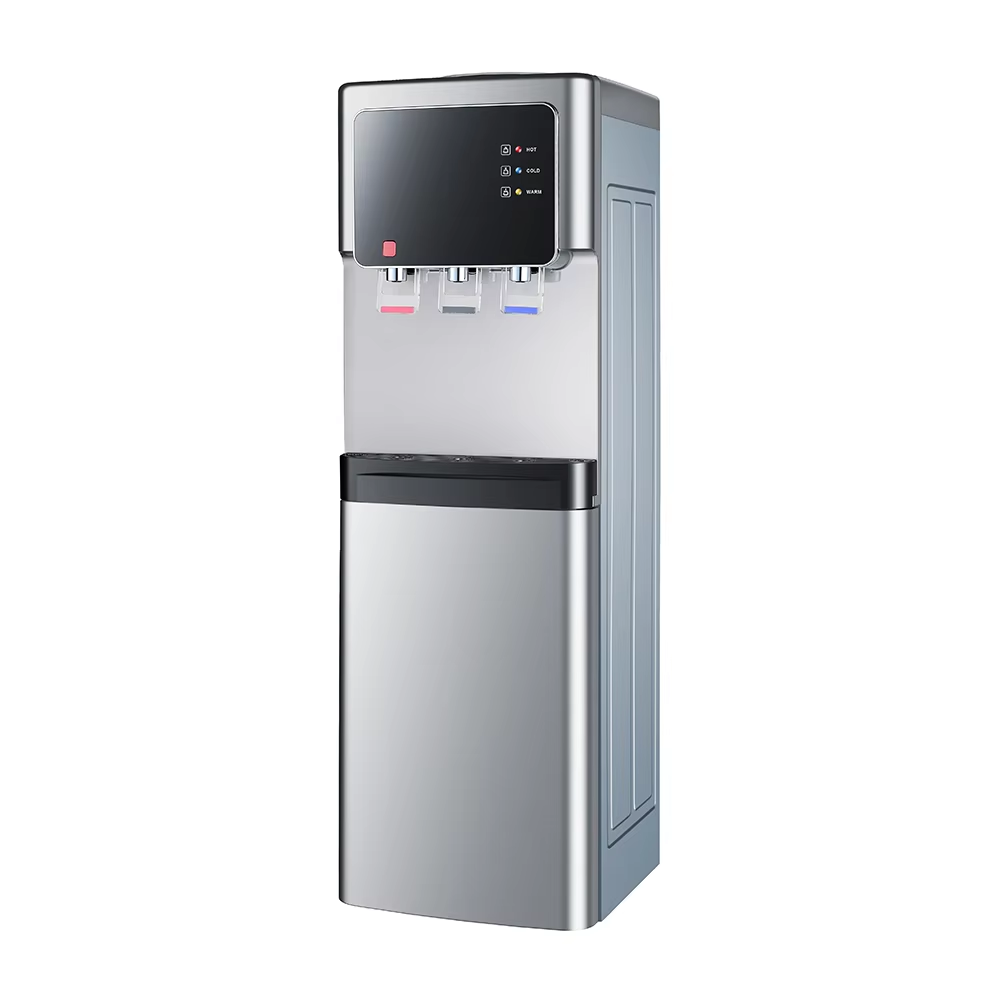
- Bottom-Loading Dispensers: These conceal the water bottle in a cabinet below, using a pump to draw water up. They solve the heavy lifting and spill problem but are generally more expensive and have more mechanical parts.
- Point-of-Use (POU) or Countertop Dispensers: These connect directly to your water line, filtering tap water to provide an endless supply of hot and cold water. They eliminate bottles altogether but require a water hookup.
So, What Is a No Spill System and How Does It Work?
A no spill system is a cleverly designed mechanism that creates a sealed, water-tight connection between your water bottle and the dispenser. Think of it like a lock and key. The dispenser has the “lock” (a probe), and the special cap on the water bottle is the “key.”
Here’s the step-by-step breakdown of the magic:
- The Special Cap: Most 3- and 5-gallon water bottles you get from a delivery service come with a special cap. It’s not just a simple lid. Inside this cap is a small, spring-loaded valve or a puncture-able seal. When left alone, this valve is completely sealed, meaning you can turn the bottle upside down and not a single drop will come out.
- The Probe: Inside the collar of the water dispenser’s reservoir is a protruding spike or probe. This is the heart of the no spill system.
- The Connection: When you place the water bottle onto the dispenser, you don’t need to remove the cap. You simply place it directly onto the collar. The probe inside pushes up against the valve in the cap, opening it. This action simultaneously pierces the cap’s seal and opens the valve.
The result? Water flows from the bottle into the dispenser, and air flows from the dispenser into the bottle to replace it, all within a closed loop. There’s no open-air gushing, no splashing, and no opportunity for spills. You can place the bottle with confidence and control.
Expert Take: As Johnathan Smith, a home appliance engineer with over 15 years of experience, notes, “The primary benefit of a no spill system isn’t just convenience; it’s hygiene. By creating a sealed connection, it significantly reduces the chance of airborne contaminants like dust, bacteria, or even stray pet hair from entering the water reservoir during a bottle change. It’s a simple feature that promotes a cleaner drinking experience.”
The Real-World Benefits: Why You’ll Love a No Spill System
Okay, the tech is cool, but what does it actually mean for you, your family, or your office team? The advantages are immediate and incredibly practical.
- Zero Spills, Zero Stress: This is the big one. You can change a 40-pound water bottle without spilling a drop. It turns a dreaded chore into a simple, two-second task. No more grabbing towels “just in case.”
- Enhanced Hygiene: As our expert pointed out, by keeping the system sealed, you’re protecting your water supply from airborne particles. This is especially important in busy offices or homes with pets and kids.
- Floor Protection: Repeated small spills or one big “oops” can damage hardwood, laminate, or tile grout over time. A no spill system is a cheap insurance policy for your floors.
- Anyone Can Do It: Because you don’t have to rush or perfectly time a “flip,” the process is far less intimidating. It makes it easier for more people in the household or office to feel comfortable changing the bottle.
How to Choose the Right Water Dispenser for Your Needs
Now that you’re sold on the feature, how do you pick the right machine? A water dispenser is a long-term investment in convenience and health, so it’s worth taking a moment to consider your options.
Here’s a quick checklist to guide you:
- [ ] Where will it be used?
- Home: A quieter model with a smaller footprint might be ideal. Look for features like a child safety lock on the hot water tap.
- Office: Durability and capacity are key. You’ll want a robust model with a large drip tray that can handle heavy, all-day use.
- [ ] How many people will use it?
- 1-4 People: A standard top-loading model is perfectly sufficient.
- 5+ People: Consider a high-capacity model or even a point-of-use dispenser if you’re tired of swapping bottles frequently.
- [ ] What temperatures do you need?
- Cold & Room Temp: Great for simple hydration.
- Hot & Cold: A must-have for tea, instant coffee, or oatmeal lovers. Most models now come standard with this combination.
- [ ] What’s your budget?
- Top-loading dispensers with a no spill system offer the best value, typically ranging from $100 to $250.
- Bottom-loading models start around $180 and can go up to $300+.
- Point-of-use systems have a higher upfront cost but no recurring bottle expenses.
Beyond the Spill: Comparing Key Dispenser Technologies
While the no spill system is a critical feature for top-loaders, there are other technical aspects to consider when comparing models. Two of the most important are the cooling method and self-cleaning functions.
Compressor Cooling vs. Thermoelectric Cooling
This is the engine of your dispenser, and it makes a huge difference.
- Compressor Cooling (Block): This is the same technology used in your kitchen refrigerator.
- Pros: Chills water faster, gets it much colder (typically 37-50°F or 3-10°C), and performs consistently even in hot environments.
- Cons: Can be slightly noisier and makes the unit heavier.
- Thermoelectric Cooling (Chip): This uses an electronic chip (a Peltier device) to transfer heat.
- Pros: Very quiet, lightweight, and more energy-efficient.
- Cons: Doesn’t get water as cold (typically 50-60°F or 10-15°C) and its performance can suffer in warmer rooms.
Our Recommendation: For most users, especially in an office or a home that loves ice-cold water, a compressor-cooled model is the superior choice. The performance difference is significant.
Frequently Asked Questions (FAQ)
1. Do all new top-loading water coolers have a no spill system?
No, not all of them. While it has become a very common feature on reputable brands, some budget or older models may still have a simple open-top design. It’s crucial to check the product specifications for “no spill system,” “spill-proof,” or “puncture probe” to be sure.
2. Can I use a regular water bottle without a special cap on a no spill dispenser?
It’s not recommended. The system is designed to work with the valved caps. If you use a regular bottle and remove the cap, you’ll defeat the purpose and likely cause a massive spill as water gushes out uncontrollably. Stick to the bottles designed for dispensers.
3. What is the main difference between a no spill system and a bottom-loading dispenser?
A no spill system solves the mess of changing a bottle on a top-loader. A bottom-loading dispenser solves both the mess and the heavy lifting by eliminating the need to hoist the bottle at all. The trade-off is that bottom-loaders are more complex and typically more expensive.
4. How do I clean a water dispenser that has a no spill system?
The cleaning process is largely the same. You’ll still need to drain the reservoirs and clean them periodically with a designated cleaning solution or a vinegar-water mix. The probe and collar area should be wiped down carefully during each cleaning to ensure it remains hygienic.
5. Is a water dispenser with a no spill system hard to set up?
Not at all! The setup is incredibly straightforward. Most units come fully assembled. You simply place it where you want it, clean the reservoirs as recommended in the manual for the first use, and then place your first bottle on top. It’s a plug-and-play experience.
The Final Word: A Smarter Way to Hydrate
In the world of home and office appliances, it’s often the simplest innovations that make the biggest difference in our daily lives. The no spill system is a perfect example. It takes the one major drawback of a convenient, affordable appliance and completely eliminates it.
By choosing a dispenser with this feature, you’re not just buying a machine that gives you hot and cold water. You’re investing in convenience, cleanliness, and peace of mind. No more wrestling with water jugs, no more mopping up puddles, and no more hesitating when you see the bottle is empty. For these reasons, we at Water Dispenser Pro consider a no spill system to be an essential, non-negotiable feature for any modern top-loading water cooler.