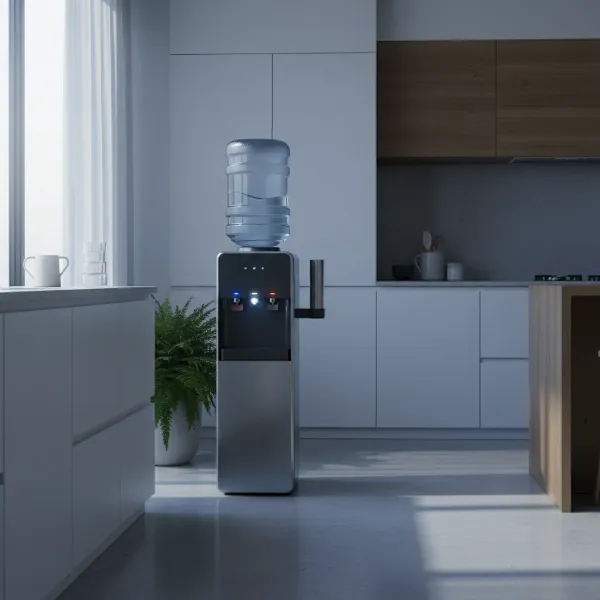
Navigating daily life with hard water can be a constant challenge, from unsightly limescale on fixtures to concerns about its impact on your appliances and even your health. If you reside in an area with hard water, you know the struggle of maintaining household items and ensuring the purity of your drinking water. Fortunately, a high-quality water dispenser designed to tackle hard water can transform your hydration experience, offering not just convenience but also peace of mind. This comprehensive guide will walk you through everything you need to know, leveraging over a decade of expertise in water purification, to help you select the ideal water dispenser that suits your needs and budget, ensuring clean, great-tasting water for your home or office.
Water Dispensers: Your Solution for Convenient Hydration
Water dispensers have evolved significantly, moving beyond simple water delivery to integrating sophisticated filtration systems that address various water quality concerns. For anyone dealing with the pervasive effects of hard water, a suitable dispenser isn’t just a luxury; it’s a necessity. These appliances provide readily available hot, cold, or ambient water, but more importantly, they can be equipped with advanced technologies to neutralize the challenges posed by high mineral content.
The Benefits of Using a Water Dispenser
|
Our Picks for the Best Water Dispenser in 2026
As an Amazon Associate I earn from qualifying purchases.
|
||
| Num | Product | Action |
|---|---|---|
| 1 | Brio Limited Edition Top Loading Water Cooler Dispenser - Hot & Cold Water, Child Safety Lock, Holds 3 or 5 Gallon Bottles - UL/Energy Star Approved |

|
| 2 | Igloo Top Loading Water Cooler – Hot & Cold Dispenser – Black & Stainless Steel, Holds 3 & 5 Gallon Jugs, Child Safety Lock – for Homes, Kitchens, Offices, Dorms |
|
| 3 | Brio Self Cleaning Bottom Loading Water Cooler Water Dispenser – Limited Edition - 3 Temperature Settings - Hot, Cold & Cool Water |
|
| 4 | Brio Self Cleaning Bottom Loading Water Cooler Water Dispenser – Black Stainless Steel - 3 Temperature Settings - Hot, Room & Cold Water |
|
| 5 | Brio 130 Series Top-Load Water Cooler Dispenser for 3- and 5-Gallon Bottles, Hot & Cold, Spill-Free Loading, Child Safety Lock, Energy Star 3.0, Black |
|
| 6 | Water Dispenser 5 Gallon Water Bottle Pump |
|
| 7 | Water Jug Pump for 5 Gallon Bottle – Portable Electric USB-C Charging Dispenser, Dual Powerful Motors, Fast Flow, Fits 2-5 Gallon Jugs – Ideal for Home, Office, Camping, RV, Black |
|
| 8 | New Wave Enviro Porcelain Water Dispenser, Classic Blue Stripe |
|
| 9 | Brio 520 UV Self-Cleaning Bottleless Water Cooler Dispenser, UL Certified - Built-in 2 Stage Filtration (2 Free Replacement Filters Included) Reduces PFAS & Microplastics - 3 Temp (Hot Cold, Room) |
|
| 10 | Brita UltraMax Large Water Dispenser With Standard Filter, BPA-Free, Reduces Copper, Cadmium and Mercury Impurities, Lasts 2 Months or 40 Gallons, Includes 1 Filter, Kitchen Accessories, Large 27-Cup |
|
The advantages of integrating a water dispenser into your daily routine are numerous, extending beyond mere convenience, especially when dealing with hard water. Firstly, they offer instant access to water at your desired temperature, whether it’s for a quick glass of chilled water or a hot cup of tea, saving precious time. Secondly, by opting for a filtered dispenser, you significantly reduce reliance on single-use plastic bottles, leading to substantial cost savings and a positive environmental impact over time. Lastly, and most critically for hard water areas, specialized dispensers ensure safer, cleaner drinking water by actively removing or reducing hardness minerals, thus protecting your health and the longevity of your appliances.
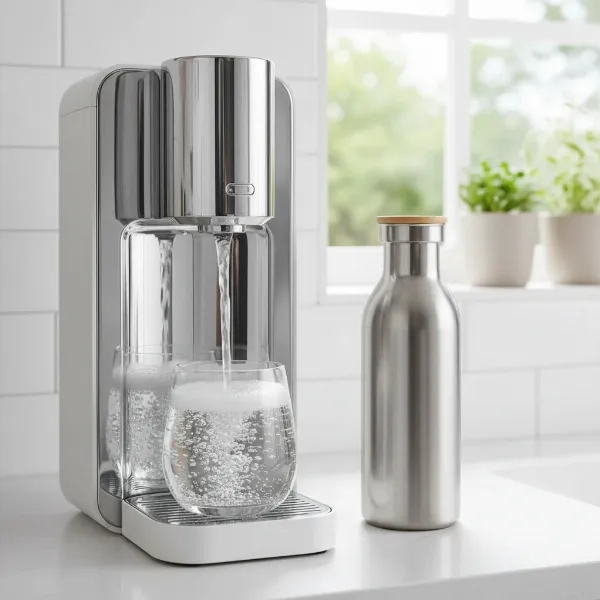 A clear glass of filtered water being dispensed from a modern water dispenser, with a reusable water bottle nearby.
Understanding Hard Water: Its Impact and Measurement
Hard water is a common issue affecting many households globally, characterized by high concentrations of dissolved minerals, primarily calcium and magnesium. These minerals are naturally picked up as water flows through rock and soil formations. While generally not harmful to drink, hard water presents numerous inconveniences and potential problems for both you and your plumbing systems.
The effects of hard water are easily noticeable. You might observe a white, chalky residue, known as limescale, on faucets, showerheads, and especially inside appliances that heat water, such as kettles, coffee makers, and, critically, water dispensers. This buildup can reduce the efficiency of heating elements, increase energy consumption, and shorten the lifespan of your appliances by causing clogs and corrosion. Beyond appliances, hard water can leave your skin feeling dry and your hair dull, as it reacts with soap to form a film that is difficult to rinse away.
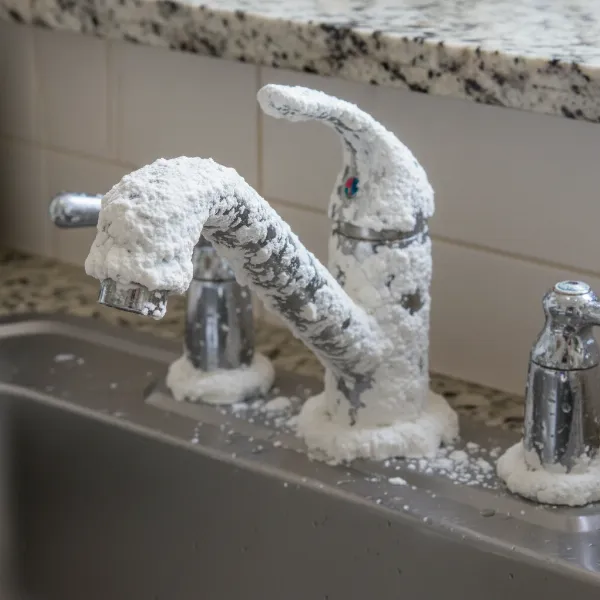 Severe limescale buildup visible on a stainless steel kitchen faucet and sink, showing the damaging effects of hard water.
Water hardness is typically measured in grains per gallon (GPG) or milligrams per liter (mg/L). A common scale helps classify water:
- Soft Water: 0-3 GPG
- Moderately Hard Water: 3-7 GPG
- Hard Water: 7-10 GPG
- Very Hard Water: 10+ GPG
Knowing your water’s hardness level is the first step in selecting an effective water dispenser, as different filtration technologies are suited for varying degrees of mineral content.
Types of Water Dispensers and How They Tackle Hard Water
Water dispensers come in various forms, each offering different features and levels of filtration. When it comes to combating hard water, the key lies in the integrated purification technology.
- Countertop Water Dispensers: These compact units are ideal for smaller spaces or individual use. Many models now incorporate advanced filtration, including options specifically designed to reduce hardness minerals. Countertop reverse osmosis (RO) dispensers are particularly effective for hard water.
- Freestanding Water Dispensers: Larger capacity, these units are suitable for families or office environments. They often accommodate 3 or 5-gallon water bottles, but bottleless (point-of-use) models connected directly to your water line offer continuous supply and can integrate powerful multi-stage filtration systems to treat hard water before dispensing.
- Hot and Cold Water Dispensers: A popular choice, these provide on-demand hot and cold water. For hard water areas, it’s crucial that these units include a robust filtration system, as heating hard water accelerates limescale formation, which can quickly degrade internal components.
- Water Dispensers with Integrated Filtration: These are specifically what you need. They come equipped with filtration cartridges designed to purify tap water. For hard water, look for systems that use ion-exchange resin or reverse osmosis membranes.
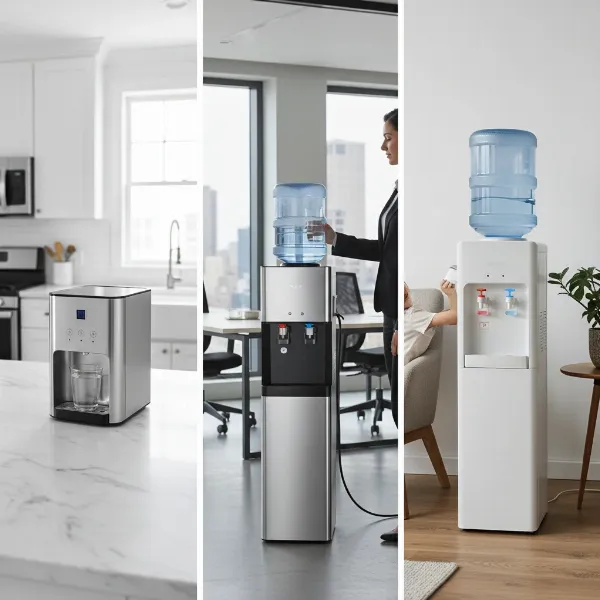 Collage showing different types of water dispensers: countertop, freestanding bottleless, and bottled, in various home and office settings.
Comparing Water Dispenser Technologies for Hard Water
Understanding the core filtration technologies is paramount when choosing a water dispenser for hard water areas. Not all filters are created equal, and their effectiveness against hardness varies significantly.
| Feature/Technology | Reverse Osmosis (RO) | Ion-Exchange Filtration | Standard Carbon Filtration |
|---|---|---|---|
| Hard Water Effectiveness | Excellent (removes ~99% TDS, including hardness minerals) | Good (reduces hardness minerals by swapping ions) | Minimal (primarily for taste and odor, not hardness) |
| Limescale Prevention | Highly effective (prevents almost all mineral buildup) | Moderately effective (reduces scale formation) | Not effective (limescale will still form) |
| Other Contaminant Removal | Excellent (lead, fluoride, chlorine, pesticides, bacteria, viruses) | Good (lead, chlorine, some heavy metals, PFOA/PFOS) | Good (chlorine, sediment, some organic compounds) |
| Installation/Complexity | More complex, often requires plumbing and a drain connection; some countertop models are self-contained | Simpler, often found in pitchers or easy-to-install under-sink/POU systems | Very simple, often found in basic pitchers or inline filters |
| Maintenance | Regular filter changes (pre-filters, post-filters) and periodic membrane replacement; descaling still beneficial for dispenser parts | Regular filter changes (often every 2-6 months depending on usage and hardness) | Regular filter changes (typically every 1-3 months) |
| Cost (Initial/Ongoing) | Higher initial investment, moderate to high filter replacement cost | Moderate initial investment, regular filter replacement cost | Lower initial investment, low filter replacement cost |
Reverse Osmosis (RO) Systems are considered the gold standard for effectively treating very hard water. An RO membrane has tiny pores that force water molecules through, leaving behind dissolved solids like calcium, magnesium, lead, and many other contaminants. This process results in extremely pure water, virtually free of hardness minerals, which dramatically prevents limescale buildup in your dispenser.
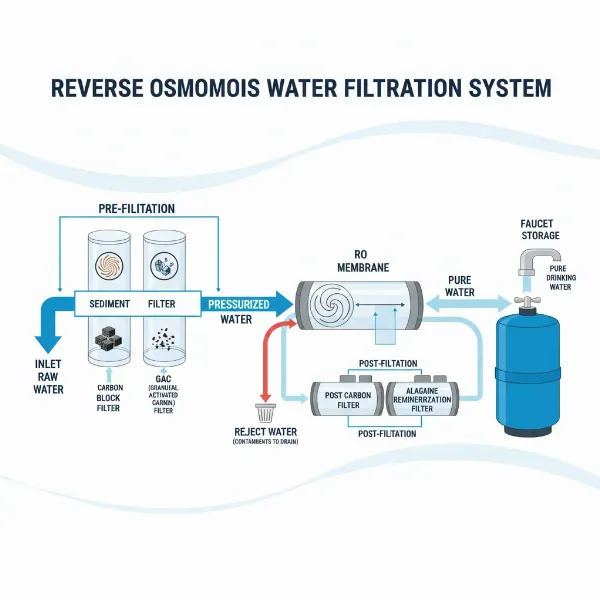 Simplified diagram illustrating the multi-stage process of a reverse osmosis water filtration system within a water dispenser.
Ion-Exchange Filtration works by exchanging undesirable hardness ions (calcium and magnesium) for less problematic ions, often sodium. This technology is highly effective for moderately hard water and is commonly found in multi-stage filters for pitchers and some point-of-use dispensers, like those utilizing advanced 5-stage ion-exchange technology to remove a high percentage of Total Dissolved Solids (TDS).
“For extreme hardness, an RO dispenser is the best bet. For moderate hardness, an ion-exchange filter can help. Regular maintenance is key to prevent clogs and mineral build-up.” – Water Dispenser Pro Expert
Guide to Choosing the Right Water Dispenser for Hard Water Areas
Selecting the perfect water dispenser involves careful consideration of several factors, especially when dealing with the challenges of hard water.
- Assess Your Water Hardness Level: Before anything else, test your water. Home testing kits are readily available, or you can check with your local water provider. Knowing your GPG will guide you towards the most appropriate filtration technology (e.g., RO for very hard water, ion-exchange for moderate).
- Prioritize Filtration Technology: As discussed, RO and ion-exchange are your primary allies against hard water. Decide which is best suited for your water’s hardness and your purity preferences. Don’t settle for basic carbon filters if hardness is your main concern.
- Consider Dispenser Type and Capacity:
- Countertop units with RO or advanced ion-exchange are excellent for convenience and space-saving.
- Freestanding bottleless dispensers that connect to your water line can offer continuous, high-volume filtered water, often with powerful multi-stage systems.
- Match the capacity to your household or office size to ensure a constant supply without frequent refills or filter exhaustion.
- Evaluate Maintenance Requirements: Hard water necessitates diligent maintenance. Look for dispensers that are easy to clean and descale. Some models offer self-cleaning features (e.g., UV light) which can simplify upkeep. Understand the frequency and cost of filter replacements.
- Look for Additional Features:
- Hot and Cold Options: Convenient for various beverage needs.
- Child Safety Lock: Essential for hot water spouts if you have children.
- Automatic Shut-off: Prevents overflow and can save energy.
- Filter Change Indicators: Helps you remember when to replace filters.
- UV Sterilization: An added layer of protection against bacteria and viruses.
- Read User Reviews and Certifications: Customer feedback can offer practical insights into a dispenser’s performance in hard water conditions. Look for certifications from organizations like NSF International, which validate filtration claims.
- Choose a Reputable Retailer: Purchase from stores or online platforms with a good reputation for quality products and reliable customer service and warranty.
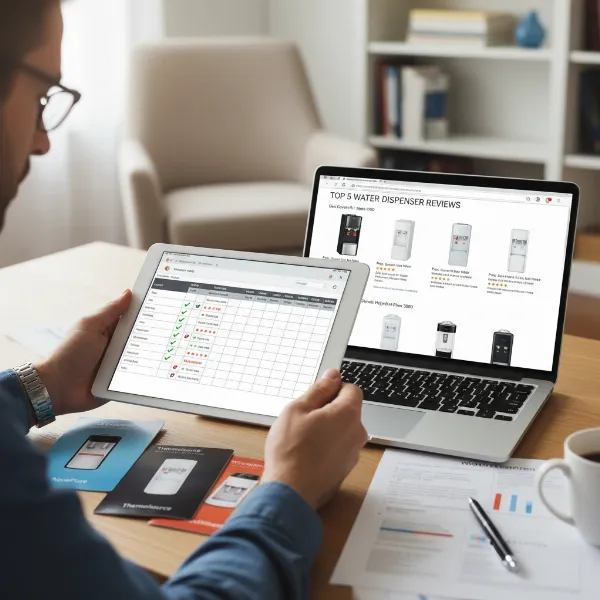 A person thoughtfully comparing features and specifications on a tablet or laptop screen, next to various water dispenser brochures, symbolizing the selection process.
Top Considerations for Brands and Models
While specific brand recommendations can vary based on innovation and new products, focusing on the features and technologies offered by reputable manufacturers is key. Look for brands known for their commitment to water purification, especially those that specialize in advanced filtration.
- Brands known for RO systems: AquaTru is often cited for its countertop RO systems. Many bottleless water dispenser brands also integrate high-quality RO membranes.
- Brands excelling in ion-exchange: ZeroWater is a prominent example, known for its 5-stage ion-exchange filters that effectively remove Total Dissolved Solids, a significant component of hard water.
- Brands with self-cleaning features: Some premium dispensers, like certain Brio models, incorporate UV self-cleaning, which, while not removing hardness, helps maintain hygiene in the presence of minerals that can foster microbial growth.
When exploring options, prioritize models that explicitly state their ability to reduce TDS, calcium, and magnesium. Look for detailed specifications on their filtration stages and the expected lifespan of their filters in hard water conditions.
Essential Tips for Using and Maintaining Your Water Dispenser in Hard Water Conditions
Proper maintenance is crucial for maximizing the lifespan and efficiency of your water dispenser, particularly in hard water areas. Neglecting it can lead to rapid limescale buildup, reduced water flow, and premature appliance failure.
- Regular Cleaning: At least once a month, thoroughly clean the dispenser. Disconnect it from power, drain all water, and clean the water reservoirs and dispensing spouts. Use a mild, food-grade descaling solution or a mixture of white vinegar and water (diluted) to tackle mineral deposits. Let it soak for a few hours before rinsing thoroughly.
- Timely Filter Replacement: Adhere strictly to the manufacturer’s recommended filter replacement schedule. In hard water areas, filters may need to be changed more frequently than in soft water areas due to increased mineral load. A clogged filter not only reduces filtration effectiveness but also strains the dispenser’s pump.
- Monitor for Limescale Buildup: Regularly inspect internal components if accessible, especially heating elements and water lines, for signs of limescale. Addressing it early prevents more severe issues.
- Proper Placement: Place your dispenser in a cool, dry area away from direct sunlight, which can promote algae growth, and away from heat sources that might impact water temperature.
- Use Filtered Water Only: If using a bottled water dispenser, ensure the bottled water itself is low in TDS or pre-filtered, to reduce the burden on any internal dispenser filtration system and minimize limescale.
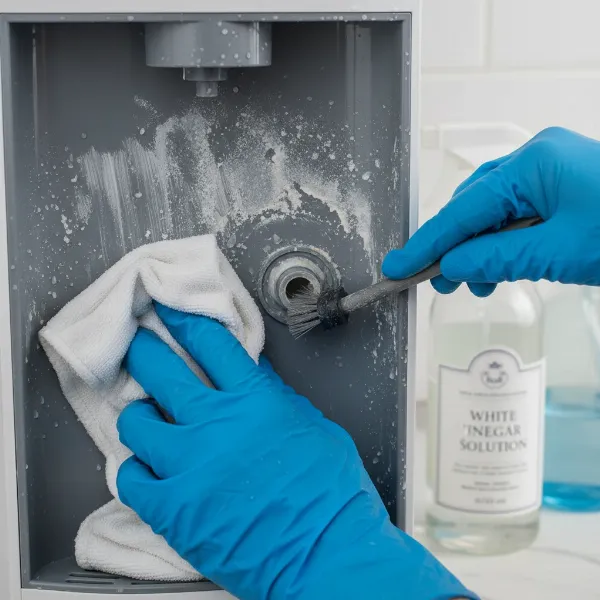 A person's hand meticulously cleaning the interior of a water dispenser with a cloth and a descaling solution, removing mineral deposits.
Following these maintenance tips will ensure your water dispenser continues to provide clean, refreshing water efficiently, even in the most challenging hard water environments.
Conclusion
Choosing the best water dispenser for hard water areas is an investment in your health, your home, and your peace of mind. By understanding the nature of hard water, discerning the effectiveness of various filtration technologies like Reverse Osmosis and ion-exchange, and considering practical features, you can make an informed decision. The right dispenser will not only provide convenient access to clean, great-tasting water but also protect your appliance from the damaging effects of mineral buildup. Remember that regular maintenance is your ally in extending the life and efficiency of your unit. Take the time to assess your needs, research the best solutions, and transform your hydration experience.
What steps will you take today to ensure your water dispenser is fighting hard water effectively?
Frequently Asked Questions
How often should I clean my water dispenser in a hard water area?
In hard water areas, it’s recommended to clean your water dispenser thoroughly at least once a month. This includes descaling with a vinegar solution to prevent limescale buildup, which can damage components and reduce efficiency.
Can hard water damage my water dispenser?
Yes, hard water can significantly damage your water dispenser. The high mineral content leads to limescale accumulation on heating elements, pipes, and faucets, causing clogs, reduced water flow, decreased efficiency, and potentially shortening the appliance’s lifespan.
What is TDS and why is it important for hard water?
TDS stands for Total Dissolved Solids, which are inorganic salts and organic matter dissolved in water, including the calcium and magnesium that cause hardness. High TDS levels indicate hard water, making TDS reduction (through RO or advanced ion-exchange) crucial for effective hard water treatment in dispensers.
Is an RO system always necessary for hard water?
While RO systems are highly effective, they might not always be necessary. For very hard water (10+ GPG), RO is ideal. However, for moderately hard water (3-7 GPG), an advanced ion-exchange filtration system can effectively reduce hardness minerals, offering a good balance of performance and maintenance.
How do I know if my water is hard?
You can determine if your water is hard by observing signs like limescale buildup on fixtures, soap scum that doesn’t rinse easily, or dull hair and dry skin. For an accurate measurement, use a home water testing kit, or contact your local water utility provider for a water quality report.