Choosing the right water dispenser for your home or office can significantly impact your daily hydration and convenience. With a variety of models available, deciding between a bottom-load and a top-load dispenser is one of the most common dilemmas consumers face. Both designs offer distinct advantages and drawbacks, catering to different needs, preferences, and physical capabilities. Understanding these key differences is crucial to selecting a unit that perfectly fits your lifestyle, budget, and aesthetic desires. Let’s explore the world of water dispensers to help you make an informed decision for refreshing, accessible hydration.
The Classic Choice: Top-Load Water Dispensers
Top-load water dispensers represent the traditional model you often see in various settings. Their design involves placing a large water bottle, typically a five-gallon jug, upside down onto a receptacle at the top of the unit. Gravity then feeds the water into internal reservoirs for heating or chilling before it’s dispensed. This straightforward mechanism has been a reliable staple for years, offering a no-frills approach to fresh drinking water.
One of the primary advantages of top-load dispensers is their affordability. These models generally come with a lower initial purchase price, making them an attractive option for budget-conscious buyers. Their simplicity in design means fewer moving parts, which often translates to greater durability and easier maintenance. With the water bottle visibly positioned on top, it’s also effortless to monitor water levels, so you’ll always know when it’s time for a refill. This transparency ensures you’re never caught off guard with an empty dispenser.
However, the classic design isn’t without its challenges. The most significant drawback is the heavy lifting required to replace the water bottle. Maneuvering a full five-gallon jug, which can weigh over 40 pounds, can be physically demanding and potentially lead to back strain, especially for individuals with mobility issues, seniors, or children. This process also carries a higher risk of spills and splashes, potentially creating a mess during bottle changes. Furthermore, the exposed water bottle, while practical for monitoring levels, can be less aesthetically pleasing and might not seamlessly blend with modern interior designs.
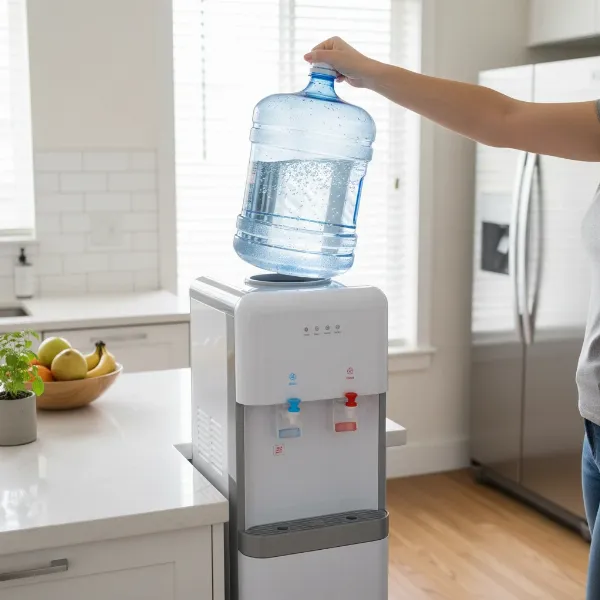 A classic top-load water dispenser with a visible 5-gallon water bottle on top.
The Modern Solution: Bottom-Load Water Dispensers
Bottom-load water dispensers offer a contemporary alternative, prioritizing convenience and a sleek aesthetic. In this design, the water bottle is discreetly housed in a compartment at the base of the unit, completely hidden from view. A pump mechanism then draws the water up from the bottle to the dispensing taps, providing hot, cold, or ambient water on demand. This innovative approach addresses many of the ergonomic and aesthetic concerns associated with top-load models.
The most celebrated benefit of bottom-load dispensers is their ease of use. There’s no heavy lifting or awkward flipping required; you simply slide the water bottle into the bottom cabinet. This feature makes bottle replacement significantly simpler and safer for everyone, including the elderly, those with physical limitations, or anyone who wants to avoid strain. The concealed bottle also contributes to a sleek and modern design, allowing the dispenser to blend seamlessly with any décor, from minimalist offices to contemporary home kitchens. The hidden bottle creates a cleaner, more organized look.
Another significant advantage is the reduced risk of spills. Since bottles are not inverted or lifted high, the chances of accidental spills or splashes during replacement are virtually eliminated, contributing to a tidier environment. Additionally, many bottom-load dispensers are designed with enhanced energy efficiency. Their internal components often operate with less strain, and some models feature improved insulation and more advanced compressor-based cooling systems, which can lead to lower energy consumption over time.
However, bottom-load dispensers typically come with a higher initial price tag compared to their top-load counterparts, reflecting their advanced design and convenience features. They also rely on a pump mechanism, which, while efficient, can sometimes produce a slight humming noise during operation. This pump system may also require occasional maintenance or be a potential point of failure over the dispenser’s lifespan, whereas top-load models have fewer mechanical parts that can malfunction. Lastly, because the water bottle is hidden, visually monitoring water levels can be more challenging. Some models include indicator lights to signal an empty bottle, but it’s not as instantaneous as seeing the bottle itself.
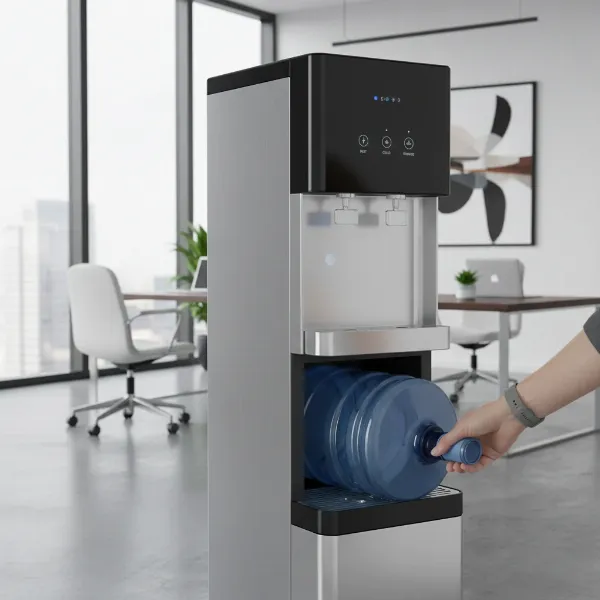 A modern bottom-load water dispenser with a hidden water bottle compartment, featuring a sleek and minimalist design.
Head-to-Head Comparison: Top Load vs. Bottom Load
When weighing your options, a direct comparison of key features helps clarify which dispenser truly suits your priorities. Both types aim to provide convenient hydration, but their execution of this goal differs significantly.
| Feature | Top-Loading Dispenser | Bottom-Loading Dispenser |
|---|---|---|
| Bottle Placement | On top, visible | In bottom cabinet, concealed |
| Lifting Effort | High (heavy lifting) | Low (slide-in) |
| Spillage Risk | Higher | Lower |
| Initial Price | Lower | Higher |
| Aesthetics | Less sleek, bottle exposed | More sleek, bottle hidden |
| Ease of Use | More challenging (lifting) | Easier (no lifting) |
| Maintenance Focus | Simpler (fewer parts) | Pump system checks |
| Water Level | Easy to monitor visually | Indicator lights (if available) |
| Energy Efficiency | Generally less | Generally more |
| Noise Level | Generally quieter | Possible pump hum |
The bottle placement is the most obvious differentiator. Top-load models expose the water jug, making it easy to see when it’s running low, but demanding physical effort. Bottom-load units conceal the bottle for a cleaner appearance, sacrificing visual water level monitoring for effortless bottle changes.
Lifting effort and spillage risk are crucial ergonomic considerations. For individuals or environments where heavy lifting is a concern, bottom-load dispensers are a clear winner, minimizing strain and mess. Top-load models, while simple, inherently involve these physical demands.
In terms of price, top-load dispensers generally offer a more budget-friendly entry point. The advanced pumping mechanism and often sleeker design of bottom-load units contribute to their higher cost. However, the investment in a bottom-load dispenser can be justified by its convenience and aesthetic appeal.
Aesthetics play a significant role in integration into your space. If a streamlined, uncluttered look is paramount, the hidden bottle of a bottom-load dispenser is highly appealing. A top-load dispenser’s visible bottle might detract from a modern interior.
Regarding maintenance, top-load dispensers, with their fewer mechanical components, often require less specialized attention, mainly focusing on cleaning. Bottom-load units, while generally reliable, depend on a pump system that might need occasional checks or replacement over its lifespan.
Finally, energy efficiency is becoming an increasingly important factor. Bottom-load dispensers often feature superior insulation and compressor technology, potentially leading to lower operating costs in the long run compared to some top-load models that might use less efficient cooling methods.
Choosing the Right Water Dispenser for Your Needs
Deciding between a bottom-load and a top-load water dispenser ultimately boils down to your personal priorities and specific circumstances. There isn’t a universally “better” option; instead, there’s the best fit for you.
Key Factors to Consider
- Your Budget: If your primary concern is the initial cost, a top-load dispenser will typically be more budget-friendly. However, consider the potential long-term energy savings and convenience value of a bottom-load unit if your budget allows.
- Physical Capability and Ergonomics: For anyone who struggles with lifting heavy objects, such as seniors, individuals with back pain, or even children who might help with refills, a bottom-load dispenser is an invaluable investment in comfort and safety.
- Aesthetic Preferences: Do you prefer a sleek, modern, and uncluttered look in your kitchen or office? The hidden bottle of a bottom-load dispenser will likely appeal more. If functionality and visibility are more important than a seamless look, a top-load might be fine.
- Usage Frequency and Environment: In high-traffic environments like busy offices where bottles are changed frequently, the ergonomic benefits of a bottom-load dispenser truly shine, reducing the hassle and potential for accidents. For a smaller household with less frequent changes, a top-load might be perfectly adequate.
- Long-Term Costs and Maintenance: While top-loaders are simpler to maintain, bottom-loaders can offer energy savings. Factor in potential pump maintenance for bottom-load units versus the simplicity of a gravity-fed top-loader.
- Noise Level: If a quiet environment is crucial, be aware that the pump in a bottom-load dispenser might produce a slight hum. Top-loaders are typically silent outside of dispensing water.
|
Our Picks for the Best Water Dispenser in 2026
As an Amazon Associate I earn from qualifying purchases.
|
||
| Num | Product | Action |
|---|---|---|
| 1 | Water Dispenser 5 Gallon Water Bottle Pump |

|
| 2 | Water Jug Pump for 5 Gallon Bottle – Portable Electric USB-C Charging Dispenser, Dual Powerful Motors, Fast Flow, Fits 2-5 Gallon Jugs – Ideal for Home, Office, Camping, RV, Black |
|
| 3 | Igloo Top Loading Water Cooler – Hot & Cold Dispenser – Black & Stainless Steel, Holds 3 & 5 Gallon Jugs, Child Safety Lock – for Homes, Kitchens, Offices, Dorms |
|
| 4 | Brio Self Cleaning Bottom Loading Water Cooler Water Dispenser – Black Stainless Steel - 3 Temperature Settings - Hot, Room & Cold Water |
|
| 5 | Brio 130 Series Top-Load Water Cooler Dispenser for 3- and 5-Gallon Bottles, Hot & Cold, Spill-Free Loading, Child Safety Lock, Energy Star 3.0, Black |
|
| 6 | Brio Self Cleaning Bottom Loading Water Cooler Water Dispenser – Limited Edition - 3 Temperature Settings - Hot, Cold & Cool Water |
|
| 7 | Brio 520 UV Self-Cleaning Bottleless Water Cooler Dispenser, UL Certified - Built-in 2 Stage Filtration (2 Free Replacement Filters Included) Reduces PFAS & Microplastics - 3 Temp (Hot Cold, Room) |
|
| 8 | Brita UltraMax Large Water Dispenser With Standard Filter, BPA-Free, Reduces Copper, Cadmium and Mercury Impurities, Lasts 2 Months or 40 Gallons, Includes 1 Filter, Kitchen Accessories, Large 27-Cup |
|
| 9 | New Wave Enviro Porcelain Water Dispenser, Classic Blue Stripe |
|
| 10 | Brio Limited Edition Top Loading Water Cooler Dispenser - Hot & Cold Water, Child Safety Lock, Holds 3 or 5 Gallon Bottles - UL/Energy Star Approved |
|
By carefully evaluating these factors against your unique needs, you can confidently choose the water dispenser that will provide the most convenient, efficient, and enjoyable hydration experience for your household or workplace.
Conclusion
Both bottom-load and top-load water dispensers serve the essential purpose of providing easy access to hot and cold drinking water, but they cater to different priorities. Top-load models stand out for their affordability, simple design, and straightforward water level monitoring, making them a practical choice for many. Conversely, bottom-load dispensers excel in convenience, offering effortless bottle replacement and a sleek aesthetic, albeit at a higher initial cost and with a reliance on a pump mechanism.
Ultimately, the optimal choice hinges on your specific requirements. If budget is paramount and heavy lifting isn’t an issue, a top-load unit could be your perfect match. If you prioritize ease of use, a modern appearance, and reduced physical strain, investing in a bottom-load dispenser will likely prove more satisfying. Whichever style you choose, today’s water dispensers are designed to enhance your daily hydration. Which features are most important to you in your ideal water dispenser?
Frequently Asked Questions
Are bottom load water dispensers more energy-efficient?
Yes, generally, bottom-load water dispensers tend to be more energy-efficient. Their design often incorporates better insulation and more advanced compressor-based cooling systems, which can reduce the workload on internal components and consume less electricity over time compared to many top-load models.
How often should I clean my water dispenser?
It’s recommended to clean your water dispenser thoroughly every 3-6 months to ensure optimal hygiene and water quality. This includes cleaning the reservoir, drip tray, and dispensing nozzles. Regular cleaning prevents mineral buildup and bacterial growth, regardless of whether it’s a top-load or bottom-load model.
Can both top-load and bottom-load dispensers provide hot and cold water?
Yes, the ability to dispense hot and cold water is a common feature found in both top-load and bottom-load water dispensers. Most models offer both options, along with ambient temperature water, making them versatile for various needs like making tea or having a refreshing cold drink.
What safety features should I look for in a water dispenser?
Key safety features to look for include child safety locks on the hot water tap to prevent accidental burns, automatic shut-off functions to prevent overheating, and indicators for low water levels or pump issues. These features enhance user safety and prolong the dispenser’s lifespan.