Tired of lugging heavy water bottles or constantly refilling pitchers? A bottleless water cooler promises endless purified water with ultimate convenience, but with so many options, how do you know which one delivers? The Brio Self-Cleaning Bottleless Water Cooler stands out with its innovative features. This comprehensive review will delve into its performance, features, and user experiences to help you decide if it’s the right hydration solution for your home or office.
The Allure of Bottleless Hydration: Why Choose Brio?
In the quest for convenient and clean drinking water, bottleless water coolers have emerged as a popular choice, offering a refreshing alternative to traditional bottled dispensers. These plumbed-in units connect directly to your home or office water line, providing an unending supply of filtered water. The shift to a bottleless system dramatically reduces plastic waste, making it an environmentally conscious decision, while also eliminating the physical strain and recurring costs associated with constantly buying and replacing five-gallon water jugs. Brio positions itself in this market by integrating advanced filtration with user-friendly features like self-cleaning technology, aiming to deliver not just water, but peace of mind and effortless hydration.
Unpacking the Brio Self-Cleaning Bottleless Water Cooler: Features at a Glance
The Brio Self-Cleaning Bottleless Water Cooler is engineered to provide a comprehensive hydration experience, blending advanced filtration with smart functionalities. This dispenser offers the versatility of tri-temperature dispensing, providing piping hot water for teas and instant meals, refreshingly cold water, and ambient room temperature water, all on demand. At its core lies a robust filtration system, typically multi-stage, incorporating sediment and carbon filters to tackle common impurities like dust, rust, and chlorine, and often offering more advanced options like Ultrafiltration (UF) or Reverse Osmosis (RO) for even finer purification, removing microscopic contaminants and dissolved solids to ensure crisp, clean-tasting water.
A standout innovation is Brio’s self-cleaning mechanism, which employs either UV-C light or ozone technology to sanitize the internal tanks and water lines. UV-C models use ultraviolet light for about 40 minutes per cycle, effectively preventing bacterial growth without interrupting water dispensing. Ozone-based systems inject ozone into the water for a deeper clean, typically running for 90 minutes, during which dispensing is not recommended to avoid an odd taste. Beyond purification, Brio coolers are designed with aesthetics and safety in mind, featuring sleek stainless steel finishes that complement modern interiors, child safety locks on the hot water spout to prevent accidental burns, and a discreet night light that illuminates the dispensing area for easy, spill-free access in low light conditions.
Performance Deep Dive: Pros and Cons of Owning a Brio Cooler
Investing in a Brio Self-Cleaning Bottleless Water Cooler comes with a distinct set of advantages and potential drawbacks, crucial for discerning its overall value. On the positive side, users consistently praise the significant improvement in water taste, attributing it to the multi-stage filtration systems that effectively remove impurities and odors. The bottleless design itself is a major draw, offering unparalleled convenience by eliminating the need for heavy bottle lifting and the environmental benefit of reducing single-use plastic waste. The ability to dispense hot, cold, and room temperature water instantly caters to diverse preferences, from a quick cup of coffee to a refreshing glass of iced water. Furthermore, the self-cleaning feature, whether UV or ozone-based, provides a strong layer of hygienic assurance, simplifying maintenance and offering peace of mind regarding water purity.
However, the Brio cooler experience is not without its reported challenges. A recurring concern among users involves durability, with some units experiencing frequent breakdowns or a shorter lifespan than expected. While many find the unit operates quietly, some reports indicate that it can be noisy or run constantly, which might be disruptive in quiet environments. The cost and frequency of filter replacements are also a point of contention; while less frequent than bottled water purchases, these specialized filters can be expensive and need to be changed every 6 to 12 months, adding to the long-term cost of ownership. Some users have also reported mixed experiences with customer service, which can be a significant factor when issues arise. Lastly, the installation, though often DIY-friendly, requires a dedicated cold water line connection and power outlet, and for RO models, a drain line, necessitating some plumbing work that might be challenging for those less handy. It’s also a sizable appliance, requiring a designated space.
Installation & Upkeep: Setting Up Your Brio for Success
Installing your Brio Self-Cleaning Bottleless Water Cooler is generally a straightforward process designed for DIY enthusiasts, though some plumbing knowledge can be beneficial, particularly for reverse osmosis models. The cooler typically comes with an installation kit, including necessary tubing and push-to-connect fittings, simplifying the connection to your cold water line. It’s crucial to select a location near both a cold water source and a grounded electrical outlet, and for RO systems, a drain line connection, often under the sink, is also required. Before connecting, it’s recommended to flush the new filters to remove any manufacturing dust, ensuring optimal water quality from the start. Once connected, you simply plug in the unit, activate the heating and cooling switches, and dispense water from each tap until the flow is steady, indicating the system is primed and ready.
Maintenance largely revolves around filter replacement and utilizing the self-cleaning function. Filters, which can include sediment, carbon, ultrafiltration, or reverse osmosis stages, should be replaced every 6 to 12 months, depending on your model and water usage. While the replacements are typically easy to swap out thanks to quick-change designs, the cost of these proprietary filters can accumulate over time. The self-cleaning feature, whether UV or ozone-based, should be activated regularly, often weekly, to sanitize the internal components. For ozone models, it’s advised to run the 90-minute cleaning cycle overnight or during periods of non-use, as water dispensed during this time might have an unusual taste. Regular adherence to these maintenance steps will ensure your Brio cooler consistently provides clean, fresh-tasting water and extends its operational life.
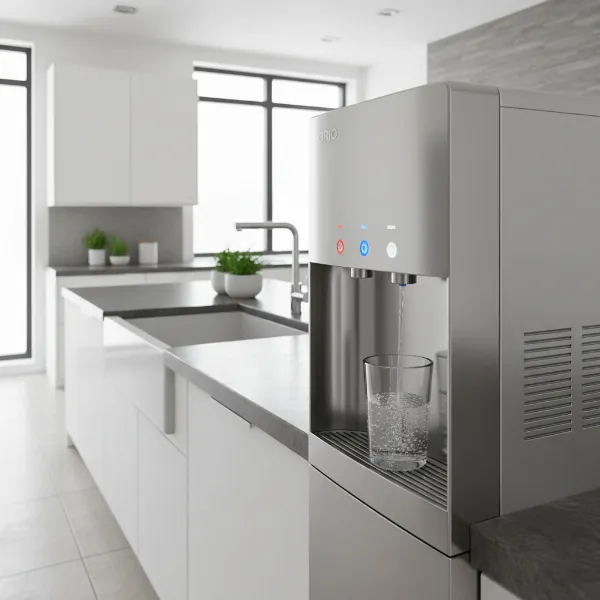 A Brio self-cleaning bottleless water cooler in a modern kitchen setting, dispensing water into a glass, highlighting its sleek design and user-friendly interface
Real-World Experiences: What Users Are Saying
User feedback on the Brio Self-Cleaning Bottleless Water Cooler paints a picture of a product that excels in convenience and water quality but can present challenges in durability and support. Many customers enthusiastically praise the delicious taste of the filtered water and the unparalleled convenience of having hot, cold, and room temperature water instantly available without the hassle of heavy bottles. The self-cleaning feature is often highlighted as a significant benefit, offering peace of mind and reducing manual effort.
“The filtered water from my Brio is fantastic, and I love not having to buy plastic bottles anymore. The self-cleaning mode is a game-changer for hygiene.” – A Satisfied Home User
However, a notable segment of reviews points to concerns regarding the cooler’s long-term reliability. Some users have reported units failing within months, citing issues with cooling, heating, or general functionality, leading to frustration. Experiences with customer service are mixed; while some report responsive support and successful replacements, others describe difficulty in resolving issues. The cost of replacement filters is also a common point of discussion, with some finding it surprisingly high. Ultimately, while many find the Brio to be a valuable addition to their home or office, a careful consideration of these mixed experiences is important.
Conclusion
The Brio Self-Cleaning Bottleless Water Cooler offers a compelling vision of effortless hydration, combining advanced multi-stage filtration with the convenience of self-cleaning technology and instant tri-temperature water. For those seeking to reduce plastic waste, eliminate bottle lifting, and enjoy high-quality water on demand, the Brio presents a strong argument. Its sleek design, child safety features, and quiet operation (for most) further enhance its appeal.
However, potential buyers must weigh these benefits against reported concerns regarding long-term durability, the cost of filter replacements, and occasional mixed customer service experiences. While many users attest to its value, others highlight the importance of considering the unit’s longevity and potential maintenance costs. Ultimately, the “worth it” factor hinges on individual priorities: if cutting-edge convenience and pristine water quality are paramount, and you are prepared for potential long-term maintenance, the Brio could be an excellent investment. Are you ready to embrace the bottleless revolution with a Brio water cooler?
Frequently Asked Questions
How does the Brio self-cleaning feature work?
|
Our Picks for the Best Water Dispenser in 2026
As an Amazon Associate I earn from qualifying purchases.
|
||
| Num | Product | Action |
|---|---|---|
| 1 | Brio 520 UV Self-Cleaning Bottleless Water Cooler Dispenser, UL Certified - Built-in 2 Stage Filtration (2 Free Replacement Filters Included) Reduces PFAS & Microplastics - 3 Temp (Hot Cold, Room) |

|
| 2 | Brita UltraMax Large Water Dispenser With Standard Filter, BPA-Free, Reduces Copper, Cadmium and Mercury Impurities, Lasts 2 Months or 40 Gallons, Includes 1 Filter, Kitchen Accessories, Large 27-Cup |
|
| 3 | New Wave Enviro Porcelain Water Dispenser, Classic Blue Stripe |
|
| 4 | Brio Self Cleaning Bottom Loading Water Cooler Water Dispenser – Black Stainless Steel - 3 Temperature Settings - Hot, Room & Cold Water |
|
| 5 | Brio Self Cleaning Bottom Loading Water Cooler Water Dispenser – Limited Edition - 3 Temperature Settings - Hot, Cold & Cool Water |
|
| 6 | Brio Limited Edition Top Loading Water Cooler Dispenser - Hot & Cold Water, Child Safety Lock, Holds 3 or 5 Gallon Bottles - UL/Energy Star Approved |
|
| 7 | Igloo Top Loading Water Cooler – Hot & Cold Dispenser – Black & Stainless Steel, Holds 3 & 5 Gallon Jugs, Child Safety Lock – for Homes, Kitchens, Offices, Dorms |
|
| 8 | Brio 130 Series Top-Load Water Cooler Dispenser for 3- and 5-Gallon Bottles, Hot & Cold, Spill-Free Loading, Child Safety Lock, Energy Star 3.0, Black |
|
| 9 | Water Dispenser 5 Gallon Water Bottle Pump |
|
| 10 | Water Jug Pump for 5 Gallon Bottle – Portable Electric USB-C Charging Dispenser, Dual Powerful Motors, Fast Flow, Fits 2-5 Gallon Jugs – Ideal for Home, Office, Camping, RV, Black |
|
Brio self-cleaning water coolers utilize either UV-C light or ozone technology to sanitize their internal components. UV-C systems run automated cycles of ultraviolet light to kill bacteria in the cold water tank, while ozone-based models inject ozone into the water system to eliminate bacteria and biofilms, typically requiring a 90-minute cycle during which water should not be dispensed.
What kind of filters does the Brio bottleless water cooler use?
Brio bottleless water coolers typically employ multi-stage filtration systems, commonly including sediment filters to remove rust and dust, and carbon block filters to improve taste and eliminate odors. Depending on the model, more advanced options like Ultrafiltration (UF) or Reverse Osmosis (RO) filters may also be integrated for finer purification, tackling microscopic contaminants and dissolved solids.
Is the Brio bottleless water cooler difficult to install?
Installation for most Brio bottleless water coolers is designed to be DIY-friendly, often including all necessary components like tubing and quick-connect fittings. It involves connecting the unit to your cold water line and a power outlet. While generally straightforward, some models, especially those with Reverse Osmosis, may require connecting to a drain line, which could necessitate basic plumbing knowledge.
How often do I need to replace Brio water cooler filters?
Brio water cooler filters generally need to be replaced every 6 to 12 months, though the exact frequency can vary based on your specific model, the quality of your incoming tap water, and your household’s water consumption. Regular filter replacement is crucial for maintaining optimal water quality and the cooler’s performance.
What are the common issues reported by Brio water cooler users?
Common issues reported by Brio water cooler users include concerns about the unit’s durability and lifespan, with some experiencing breakdowns prematurely. There are also mixed reviews regarding customer service experiences, and the cost of proprietary filter replacements is often cited as a significant ongoing expense. Some users have also noted occasional noise or the cooling unit freezing over.