Imagine a world where clean, fresh drinking water isn’t drawn from dwindling underground reserves or delivered in plastic bottles, but harvested directly from the air around us. In an era grappling with escalating global water scarcity and the pervasive issue of plastic waste, this vision is fast becoming a tangible reality. The innovative Atmospheric Water Dispenser (AWD), also known as an Atmospheric Water Generator (AWG), is emerging as a groundbreaking solution, promising to revolutionize how we access and consume water. These advanced devices offer a sustainable, on-demand hydration source that sidesteps traditional infrastructure, reducing our environmental footprint while ensuring a continuous supply of purified water.
What are Atmospheric Water Dispensers?
Atmospheric Water Dispensers are innovative devices designed to extract water vapor from the ambient air and convert it into pure, drinkable water. This technology provides an independent water production system, freeing users from reliance on conventional piped water sources or bottled water deliveries. At its core, an AWG functions by mimicking the natural condensation process that forms rain and dew, but in a controlled and accelerated environment.
The Science Behind Turning Air into Water
The process by which an Atmospheric Water Dispenser transforms invisible atmospheric moisture into liquid water is both ingenious and remarkably efficient, replicating the Earth’s own water cycle. It begins with the air intake system, where a fan draws ambient air into the machine. This air then passes over a cooling system, typically involving refrigeration coils, which significantly lowers its temperature. As the humid air cools below its dew point—the temperature at which air becomes saturated with water vapor—the moisture condenses into liquid water droplets.
These newly formed water droplets are collected in a condensation chamber and then channeled through a sophisticated filtration system. This multi-stage process removes impurities such as dust, pollen, bacteria, and other airborne contaminants, often including activated carbon filters and UV sterilization for thorough purification. Some advanced units may also incorporate mineralization cartridges to enrich the water with beneficial minerals, enhancing both taste and health benefits. The purified water is then stored in an internal tank, ready for dispensing at desired temperatures, often including hot and cold options. The use of phase change materials in some advanced systems further optimizes this process, allowing for more efficient water extraction across varying environmental conditions.
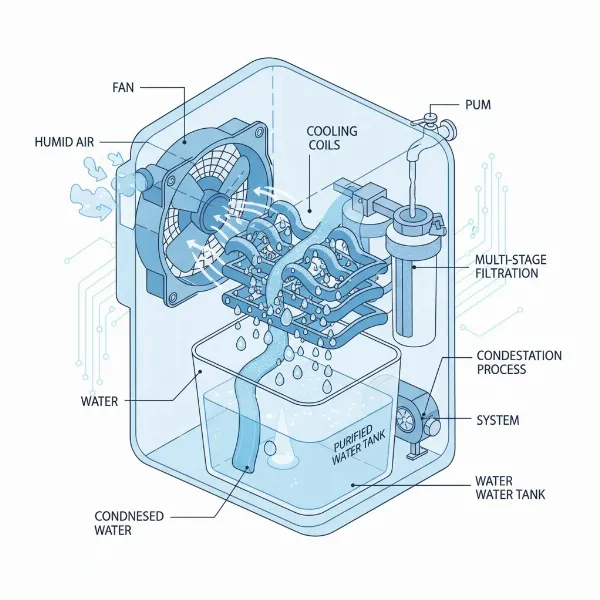 Illustration of an Atmospheric Water Generator's internal condensation process, showing air intake and water droplet formation
Advantages of Atmospheric Water Dispensers
Atmospheric Water Dispensers offer a compelling array of benefits that address many of today’s pressing hydration challenges. Firstly, they provide a sustainable water source by utilizing the inexhaustible supply of moisture in the atmosphere, thereby reducing the strain on finite groundwater and surface water resources. This also makes them remarkably eco-friendly, significantly cutting down on the production and disposal of single-use plastic water bottles, which contribute massive amounts of waste to landfills and oceans.
Moreover, AWGs deliver pure, high-quality drinking water. Through rigorous multi-stage filtration and sterilization, the water produced is free from common contaminants found in tap water and often exceeds bottled water standards. The convenience factor is undeniable: users enjoy on-demand water without the need for plumbing installations or frequent water deliveries. For many, this translates to considerable cost savings in the long run, as the expense of purchasing bottled water or paying municipal water bills is drastically reduced after the initial investment. Finally, their inherent flexibility allows them to be deployed in diverse settings, from urban homes to remote off-grid locations, ensuring reliable hydration wherever needed.
Types of Atmospheric Water Dispensers on the Market
The market for Atmospheric Water Dispensers is evolving, offering a range of models tailored to different needs and environments.
- Residential AWGs: These are typically compact, aesthetically designed units suitable for homes and small offices. They focus on user-friendliness, often featuring hot and cold water dispensing, and capacities suitable for daily household consumption, generally producing 10-30 liters per day.
- Commercial and Industrial AWGs: Larger in scale, these units are engineered for higher water production capacities, serving larger offices, factories, hotels, or even entire communities. They prioritize robust performance and efficiency in demanding environments.
- Portable Atmospheric Water Generators: Designed for mobility, these compact units are ideal for outdoor activities, camping, emergency relief efforts, or military applications where access to traditional water sources is non-existent. Their rugged construction and self-contained operation are key features.
- Multi-functional AWDs: Some advanced Atmospheric Water Dispensers integrate additional features, such as air purification and dehumidification, offering a comprehensive indoor environmental solution. These “3-in-1” devices enhance air quality while producing drinking water, adding significant value.
Challenges and Future Developments
While Atmospheric Water Dispensers present a promising solution, the technology faces certain challenges that are actively being addressed through ongoing innovation. One primary limitation is humidity dependency; the water production efficiency of AWGs is directly related to the ambient air humidity. In very dry climates, their output can be significantly reduced. Future developments aim to overcome this by improving extraction technologies that can operate more effectively in low-humidity environments.
Energy consumption is another key consideration, as AWGs require electricity to power their cooling and filtration systems. However, advancements are continuously being made to enhance energy efficiency, with modern machines consuming as little as 400 watts for residential models. A significant future trend involves the integration with renewable energy sources like solar or wind power, which would dramatically reduce operating costs and environmental impact, making them even more sustainable.
The initial cost optimization of these devices is also a focus for manufacturers. As technology matures and production scales, the cost of AWGs is expected to decrease, making them more accessible to a broader consumer base. Looking ahead, smart features and IoT connectivity are poised to transform AWGs, enabling remote monitoring, predictive maintenance, and intelligent management to optimize water production and user experience.
> “Atmospheric water generation isn’t just about collecting moisture; it’s about engineering independence and resilience against an unpredictable future of water resources.” – Brian Sheng, Co-founder, Aquaria Technologies
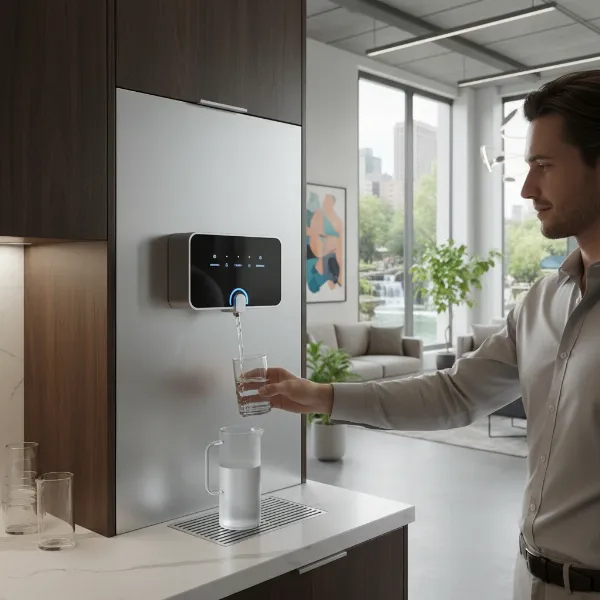 An Atmospheric Water Dispenser providing clean water in a modern home or office setting, emphasizing convenience and sustainability.
Who Can Benefit from Atmospheric Water Dispensers?
Atmospheric Water Dispensers offer a versatile hydration solution applicable across numerous scenarios:
- Homes and Offices: Providing a steady supply of clean drinking water, reducing reliance on bottled water and municipal systems, and cutting down on plastic waste.
- Water-Scarce Areas: For regions facing drought or limited access to potable water, AWGs can be a lifeline, offering a decentralized and reliable source of safe drinking water.
- Emergency Relief: In disaster-stricken areas where infrastructure is compromised, portable AWGs can quickly deploy to provide clean water to affected populations and rescuers.
- Outdoor Activities: Campers, hikers, and off-grid enthusiasts can benefit from portable units that generate water in remote locations.
- Industrial and Agricultural Use: As a supplementary water source, AWGs can alleviate pressure on existing supplies, especially during periods of water shortage, supporting various operational needs.
Choosing the Right Atmospheric Water Dispenser for Your Needs
Selecting the ideal Atmospheric Water Dispenser involves considering several factors to ensure it meets your specific requirements:
- Water Production Capacity: Assess your daily water consumption needs. AWGs come with varying capacities, typically measured in liters per day.
- Environmental Conditions: Consider the average humidity levels in your area. While some advanced models perform better in drier conditions, higher humidity generally translates to greater efficiency.
- Energy Consumption: Look for energy-efficient models, especially if you plan for continuous use. Consider units that can integrate with renewable energy sources.
- Filtration and Purification System: Investigate the number of filtration stages and the types of purification technologies (e.g., activated carbon, UV sterilization) to ensure optimal water quality.
- Additional Features: Do you need hot and cold water dispensing? Would air purification or dehumidification capabilities be beneficial?
- Brand Reputation and Reviews: Research reputable brands and read user reviews to gauge reliability, customer service, and long-term performance.
- Size and Portability: Determine if you need a compact, counter-top model, a standing unit, or a portable device for specific uses.
Maintenance Tips for Your Atmospheric Water Dispenser
To ensure your Atmospheric Water Dispenser operates efficiently and continues to provide clean, safe drinking water, regular maintenance is crucial.
- Regular Cleaning: Periodically clean the exterior and the water collection tank according to the manufacturer’s instructions to prevent mold or bacterial growth.
- Filter Replacement: Adhere to the recommended schedule for replacing water filters. This is vital for maintaining water purity and the machine’s overall performance. Neglecting filter changes can compromise water quality and even damage the unit.
- Proper Placement: Place the AWG in a well-ventilated area to ensure efficient air intake and optimal operation. Avoid direct sunlight or confined spaces that can hinder performance.
Conclusion
The evolution of hydration is leading us towards innovative and sustainable solutions, with Atmospheric Water Dispensers at the forefront. By harnessing the abundant moisture in the air, these devices offer a unique pathway to clean, on-demand drinking water, mitigating the pressures on traditional water sources and reducing plastic waste. From providing vital hydration in water-stressed regions to offering eco-friendly convenience in homes and offices, AWGs are not just a technological marvel but a crucial step towards a more water-secure future. As technology advances, becoming more energy-efficient and cost-effective, the vision of accessing pure water directly from the air will become a standard, integral part of our daily lives. Are you ready to embrace the future of hydration?
Frequently Asked Questions
How much water can an Atmospheric Water Dispenser produce daily?
|
Our Picks for the Best Water Dispenser in 2026
As an Amazon Associate I earn from qualifying purchases.
|
||
| Num | Product | Action |
|---|---|---|
| 1 | Brio 520 UV Self-Cleaning Bottleless Water Cooler Dispenser, UL Certified - Built-in 2 Stage Filtration (2 Free Replacement Filters Included) Reduces PFAS & Microplastics - 3 Temp (Hot Cold, Room) |

|
| 2 | Brio Self Cleaning Bottom Loading Water Cooler Water Dispenser – Limited Edition - 3 Temperature Settings - Hot, Cold & Cool Water |
|
| 3 | Brio Limited Edition Top Loading Water Cooler Dispenser - Hot & Cold Water, Child Safety Lock, Holds 3 or 5 Gallon Bottles - UL/Energy Star Approved |
|
| 4 | Brio 130 Series Top-Load Water Cooler Dispenser for 3- and 5-Gallon Bottles, Hot & Cold, Spill-Free Loading, Child Safety Lock, Energy Star 3.0, Black |
|
| 5 | Water Jug Pump for 5 Gallon Bottle – Portable Electric USB-C Charging Dispenser, Dual Powerful Motors, Fast Flow, Fits 2-5 Gallon Jugs – Ideal for Home, Office, Camping, RV, Black |
|
| 6 | New Wave Enviro Porcelain Water Dispenser, Classic Blue Stripe |
|
| 7 | Brio Self Cleaning Bottom Loading Water Cooler Water Dispenser – Black Stainless Steel - 3 Temperature Settings - Hot, Room & Cold Water |
|
| 8 | Brita UltraMax Large Water Dispenser With Standard Filter, BPA-Free, Reduces Copper, Cadmium and Mercury Impurities, Lasts 2 Months or 40 Gallons, Includes 1 Filter, Kitchen Accessories, Large 27-Cup |
|
| 9 | Igloo Top Loading Water Cooler – Hot & Cold Dispenser – Black & Stainless Steel, Holds 3 & 5 Gallon Jugs, Child Safety Lock – for Homes, Kitchens, Offices, Dorms |
|
| 10 | Water Dispenser 5 Gallon Water Bottle Pump |
|
The water production capacity of an Atmospheric Water Dispenser varies significantly depending on the model and environmental conditions, primarily humidity and temperature. Residential units typically produce between 10 to 30 liters (approximately 2.6 to 7.9 gallons) per day, while larger commercial or industrial systems can generate hundreds or even thousands of liters daily.
Do Atmospheric Water Dispensers work in dry climates?
While Atmospheric Water Dispensers generally perform best in areas with high humidity, technological advancements are improving their efficiency in drier climates. Some advanced models are designed with features like enhanced condensation coils or adsorption technologies to extract moisture more effectively, though their output will still be lower compared to humid environments.
Are Atmospheric Water Dispensers energy efficient?
Modern Atmospheric Water Dispensers are becoming increasingly energy efficient. Many residential models consume a comparable amount of electricity to a refrigerator, with some using as little as 400 watts. Future developments are focused on integrating renewable energy sources, such as solar power, to further enhance their energy independence and reduce operating costs.
What are the main filters used in AWGs?
Atmospheric Water Generators typically employ a multi-stage filtration system to ensure water purity. Common filters include sediment filters to remove dust and particles, activated carbon filters to eliminate odors and improve taste, and sometimes specialized membranes or UV (ultraviolet) sterilization for bacterial and viral disinfection. Some models also add mineral cartridges for health benefits.