An overheating water dispenser is more than just an inconvenience; it can be a safety hazard, potentially leading to scalding water, appliance damage, or even electrical issues. For an appliance designed to provide refreshing cold or perfectly hot water, excessive heat emanating from the unit signals a problem that needs immediate attention. This comprehensive guide will help you understand why your water dispenser might be overheating, how to safely troubleshoot common issues, and essential maintenance practices to prevent future problems, ensuring your unit operates efficiently and safely.
Water Dispenser Overheating: Understanding the Underlying Issues
When your water dispenser feels unusually hot, or the hot water it dispenses is excessively scalding, it indicates a malfunction within the unit’s heating or cooling systems. Ideally, a water dispenser maintains water within a safe and comfortable temperature range, typically between 49-54 degrees Celsius for hot water, and around 4-10 degrees Celsius for cold. Deviations from these norms, especially excessive heat, can be caused by various factors, from simple environmental conditions to complex internal component failures. Ignoring these signs can not only damage the dispenser but also pose risks like burns or electrical short circuits, highlighting the importance of timely diagnosis and repair.
Identifying the Types of Overheating Problems
Overheating in water dispensers can manifest in several ways, each pointing to a different set of potential causes. Recognizing the specific symptoms can help narrow down the troubleshooting process. For instance, a unit that is always hot to the touch, even when not actively heating, suggests a different problem than one that only overheats intermittently or produces a burning smell. Common scenarios include the dispenser’s exterior feeling excessively hot, the hot water being much hotter than usual, the unit making unusual noises alongside overheating, or even tripping a circuit breaker. These distinct signs are crucial for an effective diagnostic approach, moving beyond a general “it’s too hot” to a more precise understanding of the issue.
Comparative Analysis: Common Causes vs. Symptoms
Understanding the relationship between common symptoms and their potential causes is the first step in effectively troubleshooting an overheating water dispenser. This table provides a quick reference for diagnosing the issue.
| Symptom / Issue | Common Cause | Initial Fix / Action | When to Call a Professional |
|---|---|---|---|
| Dispenser feels excessively hot | Poor ventilation | Relocate, ensure 4-6 inches clear space around unit | If unit remains hot despite adequate ventilation |
| Hot water is too hot / boiling | Faulty thermostat, sediment buildup | Adjust thermostat, descale the hot tank | If thermostat replacement or descaling fails |
| Burning plastic/dust smell | Dirty condenser coils, faulty wiring | Clean condenser coils, visually inspect wiring | If smell persists or seems electrical |
| Compressor runs constantly | Low refrigerant, leak, faulty fan | Check fan operation, inspect for visible leaks | Any suspected refrigerant issue or major leak |
| Unit trips circuit breaker | Electrical short, overloaded circuit | Unplug, check other appliances, reset breaker | If breaker trips repeatedly |
| Leaking water | Loose connections, cracked tank | Tighten connections, identify and seal leak source | If leak source is unclear or severe |
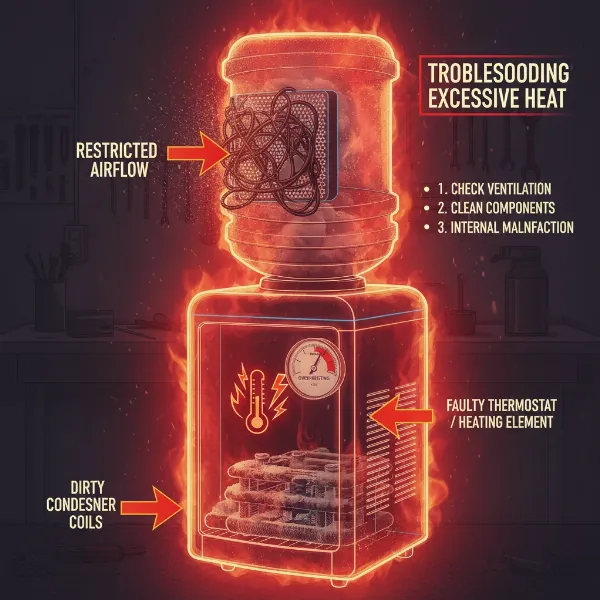 Illustration of a water dispenser showing common overheating issues like poor ventilation, dirty coils, and thermostat problems.
Step-by-Step Guide: How to Safely Fix an Overheating Water Dispenser
Addressing an overheating water dispenser requires a methodical and safe approach. Always prioritize safety by disconnecting power before any physical inspection or repair.
Step 1: Safety First – Unplug and Allow to Cool
Before touching your water dispenser, immediately unplug it from the power outlet. This prevents electrical shock and further damage. Allow the unit to cool down completely, which may take several hours. This ensures components are safe to handle and can help reset any internal thermal protection mechanisms.
Step 2: Address Ventilation Issues
Often, a lack of proper airflow around the dispenser can cause it to overheat. Ensure there is at least 4-6 inches of clear space around all sides, especially the back where the condenser coils are typically located. Move the unit away from walls, furniture, or other appliances that might obstruct ventilation. Poor air circulation traps heat, forcing the compressor and other components to work harder and generate more heat.
Step 3: Clean Condenser Coils
Dust, pet hair, and debris can accumulate on the condenser coils at the back or bottom of the dispenser, insulating them and preventing efficient heat dissipation. With the unit unplugged, use a soft brush or vacuum cleaner attachment to gently clean the coils. Regular cleaning of these coils is vital for maintaining optimal cooling efficiency and preventing overheating.
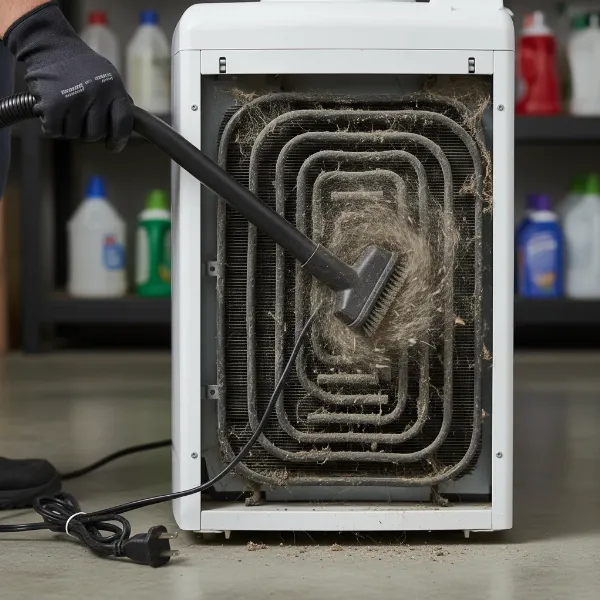 Person cleaning dust and debris from the condenser coils of a water dispenser with a brush or vacuum.
Step 4: Check and Adjust Thermostat
A malfunctioning thermostat can cause the heating element to remain on for too long, leading to excessively hot water. If your dispenser has an adjustable thermostat, check its settings. If it’s set too high, adjust it to a lower, safer temperature, typically between 49-54°C (120-130°F). If the thermostat is faulty and cannot be adjusted, it may need to be replaced by a professional.
Step 5: Ensure Adequate Water Supply
For bottled water dispensers, ensure the water bottle is full and correctly seated. Running a dispenser with a low water level can strain the heating and cooling elements, potentially causing them to overheat. For plumbed-in units, check that the water supply line is open and water pressure is sufficient. Low water pressure can prevent the heating element from operating efficiently, leading to overheating.
Step 6: Descale the Hot Water Tank
Mineral buildup (scaling) in the hot water tank can act as an insulator, making the heating element work harder to heat the water. Over time, this can lead to overheating and reduced efficiency. Descaling the hot water tank with a vinegar solution or a commercial descaling agent, as per the manufacturer’s instructions, can remove these deposits and restore proper heating. Flush the system thoroughly after descaling to remove any residue.
Step 7: Inspect for Leaks
While not a direct cause of overheating, a leak can indicate a problem with the water tank or connections, which could indirectly affect the unit’s thermal regulation if components are exposed to moisture or low water levels result. Visually inspect all connections and hoses for any signs of leaks or damage. Tighten any loose fittings or replace worn seals and tubing as needed.
Top Water Dispenser Components Prone to Overheating Issues
Understanding which internal components are most susceptible to overheating can aid in diagnosis and repair.
- Thermostat: The thermostat regulates the water temperature. If it malfunctions, it might not signal the heating element to turn off, leading to continuous heating and excessively hot water. Replacing a faulty thermostat is often a straightforward fix for experienced technicians.
- Compressor: In cold and hot water dispensers, the compressor is crucial for the cooling cycle. If the compressor struggles due to dirty coils, low refrigerant, or mechanical failure, it can generate excessive heat, causing the entire unit to warm up. Compressor issues often require professional intervention.
- Condenser Coils: These coils, usually at the back or bottom of the unit, dissipate heat from the cooling system. If they are covered in dust and grime, they cannot release heat effectively, leading to the compressor and other components overheating. Regular cleaning is essential.
- Fan Motor: Many dispensers have a fan that helps circulate air over the condenser coils. A failing or obstructed fan motor can prevent proper heat exchange, causing the system to overheat. Listen for unusual fan noises or check if the fan is spinning freely.
- Heating Element: While designed to produce heat, a faulty heating element might operate inefficiently or continuously, leading to the hot water tank becoming excessively hot. Sediment buildup can also cause the element to work harder.
- Electrical Components (ELCB, Circuit Board): Internal electrical malfunctions, such as a damaged ELCB (Earth Leakage Circuit Breaker) or a faulty circuit board, can disrupt normal operation and lead to overheating or electrical hazards. These issues are complex and should only be handled by qualified technicians.
Essential Maintenance Tips to Prevent Overheating
Proactive maintenance is key to extending the life of your water dispenser and preventing overheating issues.
- Regular Cleaning: Regularly clean the exterior of your dispenser, especially the condenser coils and fan vents, to ensure proper airflow and heat dissipation. Consider a deep internal cleaning and descaling of the hot water tank every 6-12 months, particularly in hard water areas.
- Proper Placement: Always place your water dispenser in a location with adequate ventilation, away from direct sunlight or other heat sources. Ensure it sits on a level surface to prevent strain on internal components.
- Monitoring Water Levels: For bottled water dispensers, avoid running the unit with an empty or nearly empty bottle. Ensure the bottle is replaced promptly to prevent the heating and cooling elements from operating without sufficient water, which can cause them to overheat.
- Avoiding Overuse: While designed for continuous use, in very high-demand environments, giving the dispenser short breaks can help prevent strain on the cooling system.
- Scheduled Servicing: Consider scheduling periodic professional maintenance, especially for plumbed-in or complex models. A technician can inspect internal components, check refrigerant levels, and address any potential issues before they escalate into major problems.
“Preventative maintenance is the unsung hero of appliance longevity. A few minutes of regular cleaning and proper placement can save you hours of troubleshooting and costly repairs.” – John Smith, Senior Water Dispenser Technician
Conclusion
|
Our Picks for the Best Water Dispenser in 2026
As an Amazon Associate I earn from qualifying purchases.
|
||
| Num | Product | Action |
|---|---|---|
| 1 | Primo Bottom-Loading Self-Sanitizing Water Dispenser - 2 Temp (Hot-Cold) Water Cooler Water Dispenser for 5 Gallon Bottle w/Child Safety Lock, Black and Stainless Steel |

|
| 2 | Brio Bottom Loading Water Cooler Dispenser for 5 Gallon Bottles - 3 Temperatures with Hot, Room & Cold Spouts, Child Safety Lock, LED Display with Empty Bottle Alert, Stainless Steel |
|
| 3 | Igloo Top Loading Water Cooler with Removable Tray & Energy-Saving Features - Water Tower with Hot, Cold Temperature Settings- Water Dispenser Fits 3 & 5-Gallon Jugs with Child Safety Lock- Stainless |
|
| 4 | Water Jug Pump for 5 Gallon Bottle – Portable Electric USB-C Charging Dispenser, Dual Powerful Motors, Fast Flow, Fits 2-5 Gallon Jugs – Ideal for Home, Office, Camping, RV, Black |
|
| 5 | Brio Commercial Grade Bottleless Ultra Safe Reverse Osmosis Drinking Water Filter Water Cooler Dispenser-3 Temperature Settings Hot, Cold & Room Water - UL Approved – Point of Use |
|
| 6 | Brio 130 Series Top-Load Water Cooler Dispenser for 3- and 5-Gallon Bottles, Hot & Cold, Spill-Free Loading, Child Safety Lock, Energy Star 3.0, Black |
|
| 7 | Brita UltraMax Large Water Dispenser With Standard Filter, BPA-Free, Reduces Copper, Cadmium and Mercury Impurities, Lasts 2 Months or 40 Gallons, Includes 1 Filter, Kitchen Accessories, Large 27-Cup |
|
| 8 | Housiwill Countertop Water Dispenser, Top Loading Water Cooler for 1.2 to 5 Gallon, 3 Temperature Settings Room Temperature Water Cold Hot Water Dispenser, Suitable for Home, Office, Dorm Bedside Use |
|
| 9 | Brio Limited Edition Top Loading Water Cooler Dispenser - Hot & Cold Water, Child Safety Lock, Holds 3 or 5 Gallon Bottles - UL/Energy Star Approved |
|
| 10 | Brio Countertop Self Cleaning Bottleless Water Cooler Dispenser with Filtration - Hot Cold and Room Temperature Water. Free Extra Replacement Filters Included - UL/Energy Star Approved |
|
An overheating water dispenser is a clear signal that your unit requires attention. By systematically troubleshooting common causes such as poor ventilation, dirty coils, thermostat malfunctions, or water supply issues, you can often resolve the problem yourself. Remember to always prioritize safety by unplugging the unit before any inspection or repair. Regular cleaning, proper placement, and mindful usage are critical preventive measures that can significantly extend your dispenser’s lifespan and ensure it provides safe, perfectly temperature-controlled water for years to come. If, after attempting basic troubleshooting, the problem persists or if you suspect a serious electrical or component failure, do not hesitate to contact a qualified technician. Investing in regular maintenance is an investment in your appliance’s health and your peace of mind. What steps will you take today to ensure your water dispenser operates safely and efficiently?
Frequently Asked Questions
Why does my water dispenser feel hot on the outside?
Your water dispenser may feel hot on the outside due to insufficient ventilation, allowing heat from the compressor or condenser coils to build up around the unit. Ensure there is enough clear space (4-6 inches) around all sides for proper airflow. Dirty condenser coils can also cause heat to radiate outwards.
Can low water level cause a water dispenser to overheat?
Yes, operating a water dispenser with a consistently low water level, especially in the hot tank, can cause the heating element to work harder or run dry. This can lead to overheating of the element and potentially damage the unit. Always ensure the water bottle is full or the plumbed-in supply is adequate.
How often should I clean my water dispenser to prevent overheating?
It is recommended to clean the exterior, especially the condenser coils, every 3-6 months. A more thorough internal cleaning and descaling of the hot water tank should be performed every 6-12 months, particularly if you live in an area with hard water, to prevent mineral buildup that can affect heating efficiency.
What should I do if my water dispenser is still overheating after troubleshooting?
If your water dispenser continues to overheat after you’ve checked ventilation, cleaned the coils, adjusted the thermostat, and ensured adequate water supply, it’s best to unplug the unit and contact a qualified appliance technician. There might be a more complex internal issue, such as a faulty compressor, electrical circuit board, or refrigerant leak, which requires professional expertise.
Is it safe to use an overheating water dispenser?
No, it is not safe to continue using an overheating water dispenser. Excessive heat can lead to scalding, fire hazards from electrical faults, or permanent damage to the appliance. Immediately unplug the unit and do not use it until the cause of the overheating has been identified and safely resolved.