After countless picnics, camping trips, and backyard barbecues, your trusty cooler often bears the brunt of spills, lingering food odors, and even stubborn mold or mildew. A quick rinse isn’t enough to truly eliminate the bacteria and grime that can accumulate, potentially compromising the safety and freshness of your food and drinks. As an experienced technician in water purification and storage solutions, I’ve seen firsthand the power of simple, effective sanitization methods. Hydrogen peroxide, a common household item, offers an incredibly efficient, eco-friendly, and food-safe way to bring your cooler back to pristine condition. This guide will walk you through everything you need to know to sanitize your cooler thoroughly, ensuring it’s ready for your next adventure.
The Unsung Hero: Why Hydrogen Peroxide is Excellent for Cooler Sanitization
Why should hydrogen peroxide be your go-to for cooler cleaning? This remarkable compound, typically found in a 3% solution, is a powerful oxidizing agent. This means it actively breaks down organic matter, making it highly effective against a wide array of contaminants. For your cooler, this translates to several key benefits: it’s an excellent disinfectant, killing bacteria, viruses, mold, and mildew that can thrive in damp environments. Beyond its germ-killing properties, hydrogen peroxide is also a fantastic deodorizer, neutralizing stale or unpleasant odors instead of just masking them. Perhaps most importantly for food storage, it breaks down into water and oxygen, leaving no toxic residues after proper rinsing, making it a truly food-safe sanitizing solution.
What You’ll Need: Gathering Your Sanitization Arsenal
Before you embark on your cooler cleaning mission, gather these simple supplies to ensure a smooth and effective process. Having everything ready beforehand saves time and makes the job much easier. You’ll need a bottle of 3% hydrogen peroxide, which is readily available at most pharmacies and supermarkets. Make sure it’s fresh for maximum efficacy. A sturdy scrub brush or a clean sponge will be essential for tackling stubborn spots and reaching into crevices. For dilution and rinsing, you’ll need clean water, preferably warm, and a spray bottle for easy application of the hydrogen peroxide solution. Finally, rubber gloves are highly recommended to protect your hands, and a clean towel or paper towels will be useful for drying.
Step-by-Step Guide to Sanitizing Your Cooler with Hydrogen Peroxide
Sanitizing your cooler with hydrogen peroxide is a straightforward process that yields impressive results. Following these steps will ensure a deep clean, eliminating odors and harmful microbes.
- Empty and Initial Rinse: Start by completely emptying your cooler. Remove any remaining ice, food, or debris. Give the cooler a good initial rinse with warm water to remove loose dirt and food particles. You can do this in a utility sink, bathtub, or even outdoors with a hose.
- Pre-Clean with Soap and Water: Before sanitizing, a preliminary wash is crucial. Mix a few drops of dish soap with warm water. Using your scrub brush or sponge, thoroughly scrub the interior and exterior of the cooler, paying close attention to corners, hinges, and the drain plug area. This removes visible dirt and grease, allowing the hydrogen peroxide to work more effectively. Rinse thoroughly until all soap residue is gone.
- Prepare the Hydrogen Peroxide Solution: For general sanitization, a 3% hydrogen peroxide solution works perfectly straight from the bottle. If you prefer to dilute it slightly for a lighter clean or if you have a very large cooler and want to conserve, you can mix equal parts 3% hydrogen peroxide and water in a spray bottle. For example, half a cup of hydrogen peroxide with half a cup of water.
- Apply and Let Sit: Spray or pour the hydrogen peroxide solution generously over all interior surfaces of the cooler, including the lid, walls, and bottom. Ensure every part that comes into contact with food or ice is thoroughly coated. Let the solution sit for 5 to 10 minutes. This contact time is critical for the hydrogen peroxide to effectively disinfect and break down odors.
- Scrub (If Needed) and Rinse Thoroughly: After the soaking period, use your scrub brush to gently scrub any remaining stains or stubborn spots. Hydrogen peroxide often loosens grime, making it easier to remove. Once you’re satisfied, rinse the cooler meticulously with clean, fresh water. Rinse several times to ensure all traces of the hydrogen peroxide solution are washed away. Remember, hydrogen peroxide breaks down into water and oxygen, so any residue is harmless after rinsing.
- Dry Completely: This is a vital step to prevent future mold and mildew growth. Wipe down the cooler’s interior and exterior with a clean towel. Then, leave the lid open and allow the cooler to air dry completely, preferably in a well-ventilated area or in direct sunlight, which also offers natural sanitizing benefits.
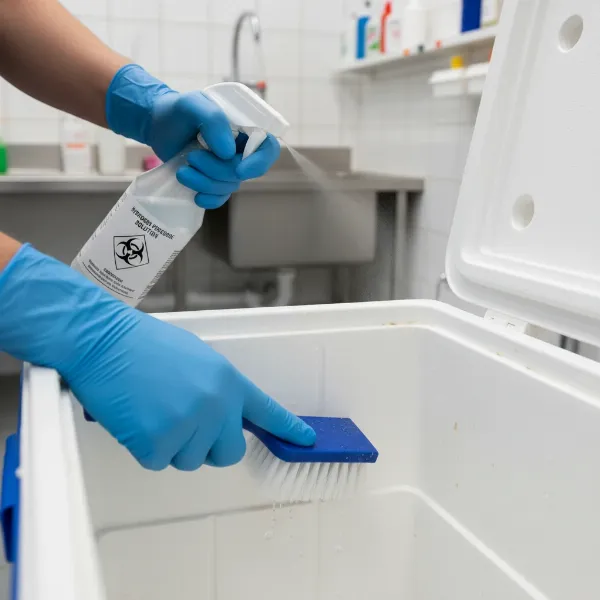 A person in gloves cleaning the interior of a cooler with a spray bottle of hydrogen peroxide and a scrub brush.
Important Safety Precautions When Using Hydrogen Peroxide
While hydrogen peroxide is generally safe for household use, taking a few precautions ensures a risk-free cleaning experience. Always wear rubber gloves to protect your hands from potential irritation, especially if you have sensitive skin. Work in a well-ventilated area to avoid inhaling any fumes, though the vapors from 3% hydrogen peroxide are typically mild. Keep hydrogen peroxide away from your eyes; if accidental contact occurs, rinse immediately and thoroughly with water for several minutes. Store the bottle in a cool, dark place, as light and heat can cause it to degrade, reducing its effectiveness. Never mix hydrogen peroxide with other cleaning products, especially bleach, as this can create dangerous gases.
> “Hydrogen peroxide is a fantastic, environmentally friendly disinfectant for coolers because it effectively kills bacteria and mold, and then simply degrades into water and oxygen, leaving no harmful residues.” – Dr. Elena Petrova, Environmental Health Specialist
Common Mistakes to Avoid During Cooler Sanitization
To achieve the best results and ensure safety, steer clear of these common pitfalls when sanitizing your cooler. Firstly, don’t skip the pre-cleaning step with soap and water. Hydrogen peroxide works best on surfaces that are already free of loose debris and heavy grease. Trying to sanitize a visibly dirty cooler will diminish its effectiveness. Secondly, avoid using hydrogen peroxide at concentrations higher than 3% for general cooler cleaning; higher concentrations can be corrosive and unnecessary. Another mistake is not allowing sufficient contact time; the solution needs 5-10 minutes to properly disinfect. Finally, failing to rinse thoroughly or dry completely can lead to water spots or, worse, new mold growth, negating your cleaning efforts.
Maintaining a Clean Cooler: Tips for Regular Upkeep
Consistent maintenance is key to keeping your cooler fresh and ready for action, minimizing the need for deep sanitization. After every use, especially if it contained food or beverages, give your cooler a quick rinse with warm, soapy water. Always ensure it’s completely dry before storing it. Leaving the lid ajar during storage helps air circulation and prevents moisture buildup, which is a breeding ground for mold and mildew. Consider lining your cooler with a cooler bag or plastic liners for very messy items to catch spills and make cleanup easier. Regularly check the drain plug and seals for any signs of wear or trapped grime, and clean them as needed. With these simple habits, your cooler will remain a hygienic vessel for all your refreshments.
Conclusion
Sanitizing your cooler with hydrogen peroxide is an easy, effective, and environmentally conscious method to ensure your food and drinks are stored in a truly clean environment. By following the simple steps outlined, from pre-cleaning to thorough rinsing and drying, you can eliminate lingering odors, harmful bacteria, and stubborn mold, extending the life and utility of your cooler. Remember, a clean cooler isn’t just about aesthetics; it’s about safeguarding your health and enjoying your outdoor experiences without worry. Are you ready to give your cooler the deep clean it deserves and embark on your next adventure with peace of mind?
Frequently Asked Questions
Is 3% hydrogen peroxide safe for all cooler materials?
|
Our Picks for the Best Water Dispenser in 2026
As an Amazon Associate I earn from qualifying purchases.
|
||
| Num | Product | Action |
|---|---|---|
| 1 | Brita UltraMax Large Water Dispenser With Standard Filter, BPA-Free, Reduces Copper, Cadmium and Mercury Impurities, Lasts 2 Months or 40 Gallons, Includes 1 Filter, Kitchen Accessories, Large 27-Cup |

|
| 2 | Water Dispenser 5 Gallon Water Bottle Pump |
|
| 3 | Igloo Top Loading Water Cooler – Hot & Cold Dispenser – Black & Stainless Steel, Holds 3 & 5 Gallon Jugs, Child Safety Lock – for Homes, Kitchens, Offices, Dorms |
|
| 4 | Brio Limited Edition Top Loading Water Cooler Dispenser - Hot & Cold Water, Child Safety Lock, Holds 3 or 5 Gallon Bottles - UL/Energy Star Approved |
|
| 5 | Water Jug Pump for 5 Gallon Bottle – Portable Electric USB-C Charging Dispenser, Dual Powerful Motors, Fast Flow, Fits 2-5 Gallon Jugs – Ideal for Home, Office, Camping, RV, Black |
|
| 6 | Brio 130 Series Top-Load Water Cooler Dispenser for 3- and 5-Gallon Bottles, Hot & Cold, Spill-Free Loading, Child Safety Lock, Energy Star 3.0, Black |
|
| 7 | Brio Self Cleaning Bottom Loading Water Cooler Water Dispenser – Black Stainless Steel - 3 Temperature Settings - Hot, Room & Cold Water |
|
| 8 | Brio 520 UV Self-Cleaning Bottleless Water Cooler Dispenser, UL Certified - Built-in 2 Stage Filtration (2 Free Replacement Filters Included) Reduces PFAS & Microplastics - 3 Temp (Hot Cold, Room) |
|
| 9 | Brio Self Cleaning Bottom Loading Water Cooler Water Dispenser – Limited Edition - 3 Temperature Settings - Hot, Cold & Cool Water |
|
| 10 | New Wave Enviro Porcelain Water Dispenser, Classic Blue Stripe |
|
Yes, 3% hydrogen peroxide is generally safe for most common cooler materials, including various plastics and insulated foams. It is non-corrosive and non-abrasive at this concentration, making it an excellent choice for sanitizing without damaging surfaces. Always perform a patch test on an inconspicuous area if you are unsure about a specific material.
How often should I sanitize my cooler with hydrogen peroxide?
The frequency depends on usage. For light, infrequent use, a thorough hydrogen peroxide sanitization every few months or before and after long-term storage is sufficient. If you use your cooler frequently, especially for raw foods or messy items, a deep clean with hydrogen peroxide once a month, coupled with regular post-use cleaning, is recommended.
Can hydrogen peroxide remove tough stains from my cooler?
Hydrogen peroxide’s oxidizing properties can often help break down and lift organic stains, such as those from food or mold. While it’s very effective as a disinfectant and deodorizer, for extremely tough, set-in stains, you might need additional scrubbing or a slightly longer soak time. Always pre-clean thoroughly to give the peroxide the best chance to work.
What are the environmental benefits of using hydrogen peroxide for cleaning?
Hydrogen peroxide is an environmentally friendly cleaning agent because it breaks down into water and oxygen, leaving no harmful residues behind. Unlike many harsh chemical cleaners, it does not contribute to water pollution or leave toxic byproducts in your home or the environment, making it a sustainable choice for sanitization.