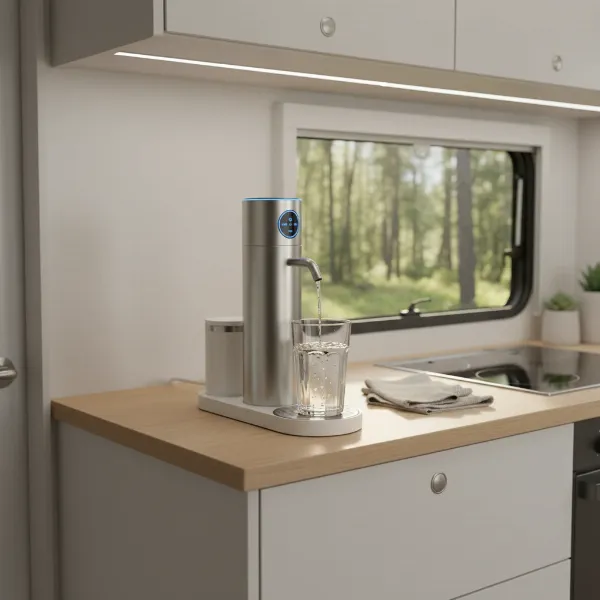
Ensuring your team stays hydrated is more than just a perk; it’s a cornerstone of workplace productivity and well-being. Dehydration, even a slight 1-2% loss in body water, can significantly impair cognitive performance, making the presence of a reliable water dispenser in your office or breakroom a necessity, not a luxury. As an admin and technician with over a decade of experience in water filtration and dispensing solutions, I’ve seen firsthand how the right water dispenser can transform an office environment. This guide will help you navigate the top water dispensers for offices and breakrooms in 2026, ensuring you select a model that perfectly balances convenience, hygiene, and efficiency for your unique workspace.
The Indispensable Role of Water Dispensers in Modern Offices
A well-chosen water dispenser offers myriad benefits beyond simply quenching thirst, directly impacting employee satisfaction and operational efficiency. Providing easy access to clean, refreshing water encourages healthier habits among staff, contributing to increased energy levels and focus throughout the workday. This convenient amenity also significantly reduces the need for single-use plastic bottles, aligning with corporate sustainability goals and cutting down on waste. Beyond environmental advantages, offices often find cost savings in the long term by investing in a water dispenser compared to the recurring expense of bottled water deliveries. Ultimately, a modern water dispenser fosters a more comfortable and productive work environment, where employees can quickly grab a cold drink or make a hot beverage without interruption.
Navigating the Types of Water Dispensers for Your Office
Choosing the ideal water dispenser for your office requires understanding the different types available and how they cater to varying needs and spaces. Each style offers distinct advantages in terms of capacity, convenience, and functionality, making it crucial to assess your workplace’s specific demands.
Bottled Water Dispensers
Bottled water dispensers remain a popular choice due to their simplicity and flexibility, allowing offices to offer specialty waters like spring or distilled options. These units typically hold large 3- or 5-gallon jugs, providing a readily available supply of water.
- Top-Loading Models: These are often more economical and straightforward in design. However, they require users to lift heavy water bottles onto the top, which can be cumbersome and a potential spill risk.
- Bottom-Loading Models: Gaining popularity for their ease of use, bottom-loading dispensers house the water bottle in a cabinet at the base, eliminating the need for heavy lifting and reducing the chance of spills. This design also often contributes to a sleeker, more modern aesthetic that integrates well into professional settings.
|
Our Picks for the Best Water Dispenser in 2026
As an Amazon Associate I earn from qualifying purchases.
|
||
| Num | Product | Action |
|---|---|---|
| 1 | Housiwill Countertop Water Dispenser, Top Loading Water Cooler for 1.2 to 5 Gallon, 3 Temperature Settings Room Temperature Water Cold Hot Water Dispenser, Suitable for Home, Office, Dorm Bedside Use |

|
| 2 | Igloo Top Loading Water Cooler with Removable Tray & Energy-Saving Features - Water Tower with Hot, Cold Temperature Settings- Water Dispenser Fits 3 & 5-Gallon Jugs with Child Safety Lock- Stainless |
|
| 3 | Brita UltraMax Large Water Dispenser With Standard Filter, BPA-Free, Reduces Copper, Cadmium and Mercury Impurities, Lasts 2 Months or 40 Gallons, Includes 1 Filter, Kitchen Accessories, Large 27-Cup |
|
| 4 | Water Jug Pump for 5 Gallon Bottle – Portable Electric USB-C Charging Dispenser, Dual Powerful Motors, Fast Flow, Fits 2-5 Gallon Jugs – Ideal for Home, Office, Camping, RV, Black |
|
| 5 | Brio 130 Series Top-Load Water Cooler Dispenser for 3- and 5-Gallon Bottles, Hot & Cold, Spill-Free Loading, Child Safety Lock, Energy Star 3.0, Black |
|
| 6 | Brio Limited Edition Top Loading Water Cooler Dispenser - Hot & Cold Water, Child Safety Lock, Holds 3 or 5 Gallon Bottles - UL/Energy Star Approved |
|
| 7 | Brio Bottom Loading Water Cooler Dispenser for 5 Gallon Bottles - 3 Temperatures with Hot, Room & Cold Spouts, Child Safety Lock, LED Display with Empty Bottle Alert, Stainless Steel |
|
| 8 | Primo Bottom-Loading Self-Sanitizing Water Dispenser - 2 Temp (Hot-Cold) Water Cooler Water Dispenser for 5 Gallon Bottle w/Child Safety Lock, Black and Stainless Steel |
|
| 9 | Brio Countertop Self Cleaning Bottleless Water Cooler Dispenser with Filtration - Hot Cold and Room Temperature Water. Free Extra Replacement Filters Included - UL/Energy Star Approved |
|
| 10 | Brio Commercial Grade Bottleless Ultra Safe Reverse Osmosis Drinking Water Filter Water Cooler Dispenser-3 Temperature Settings Hot, Cold & Room Water - UL Approved – Point of Use |
|
Bottleless (Point-of-Use) Water Dispensers
Bottleless water dispensers, also known as point-of-use (POU) systems, connect directly to your office’s main water line. While they involve a higher initial installation cost, they eliminate ongoing bottle delivery expenses and the hassle of storage and replacement.
- Continuous Filtered Water: These systems often include advanced multi-stage filtration, UV, or reverse osmosis (RO) purification, ensuring a continuous supply of clean, filtered water directly from the tap.
- Faster Output: Bottleless dispensers typically provide a faster and more consistent water output, making them ideal for high-traffic breakrooms where demand is constant.
Countertop vs. Freestanding Models
The physical footprint of a water dispenser is a significant consideration for any office.
- Countertop Models: Compact and space-saving, countertop dispensers are best suited for smaller breakrooms, kitchenettes, or individual offices where floor space is limited. They offer convenience without dominating the area.
- Freestanding Models: For larger offices or busier breakrooms, freestanding dispensers provide greater capacity and often more features. Their larger size accommodates higher daily usage and a more robust cooling/heating system.
Hot & Cold and Specialty Water Dispensers
Modern water dispensers offer a range of temperature options and specialized functions to meet diverse preferences.
- Hot & Cold Functionality: Most office water dispensers provide both piping hot water for teas, coffee, or instant meals, and refreshingly cold water for immediate hydration. Room-temperature options are also commonly available.
- Ice Dispensing: Some advanced commercial-grade models integrate ice dispensing, offering a complete beverage solution for busy offices.
- Sparkling Water Options: Reflecting a growing trend, certain dispensers now offer chilled sparkling water, adding a premium beverage choice for employees.
Key Features to Consider When Choosing an Office Water Dispenser
Selecting the right water dispenser for your office goes beyond just choosing a type; it involves a careful evaluation of features that ensure optimal performance, hygiene, and user satisfaction. Thoughtful consideration of these elements guarantees a long-term, beneficial investment for your workplace.
| Feature | Water Dispenser Type (Best Fit) | Office Relevance |
|---|---|---|
| Capacity | Freestanding, Bottleless | Essential for high-traffic breakrooms; ensures constant supply. |
| Temperature Options | Hot/Cold/Room, Specialty | Caters to diverse preferences (coffee, tea, cold drinks). |
| Filtration | Bottleless, RO+UV Integrated | Provides clean, safe drinking water, crucial for health. |
| Hygiene Features | Antimicrobial coatings, Self-cleaning | Minimizes germ spread, reduces maintenance effort. |
| Safety Locks | Hot Water Child Safety Lock | Prevents accidental burns, especially important in family-friendly offices. |
| Dispensing Mechanism | Touch-free, Push-button | Prioritizes hygiene or ease of access based on office needs. |
| Energy Efficiency | Energy Star Certified | Reduces operational costs and environmental impact. |
| Durability | Stainless Steel Components | Ensures long lifespan, withstands heavy office use. |
Capacity and Usage Frequency
For a busy office or breakroom, the capacity of your water dispenser is paramount. High-traffic areas require machines with robust cold water capacity and a consistent output rate to prevent queues and ensure water is always available. A model that can keep up with demand during peak hours is critical for employee satisfaction.
Temperature Options
The versatility of temperature options is a key differentiator. While cold and hot water are standard, some dispensers offer room-temperature water or even sparkling water, providing a wider range of beverage choices. For offices in warmer climates, a high cold-water capacity is especially important.
Filtration and Water Quality
Advanced filtration systems are becoming a standard expectation for office water dispensers. Look for models equipped with Reverse Osmosis (RO), UV (Ultraviolet), or UF (Ultrafiltration) purification, particularly if your municipal water supply is hard or of uncertain quality. Some commercial brands like Scotsman even coat internal components with antimicrobial substances like Aegion to enhance hygiene.
Hygiene and Maintenance
Ease of cleaning and effective hygiene features are crucial in shared office environments. Dispensers with self-cleaning technologies, such as ozone injection or UV light, can significantly reduce maintenance effort and ensure water safety. Stainless steel reservoirs are also preferred for their durability and resistance to bacteria. Preventative maintenance, ideally every six months, is recommended to keep units in top condition.
Safety Features
For offices where children might visit or in any environment with multiple users, safety features are non-negotiable. A child safety lock on the hot water tap prevents accidental burns, while anti-overheating protection and leak detection systems offer additional peace of mind.
Dispensing Mechanism
The method of dispensing water impacts both hygiene and user experience.
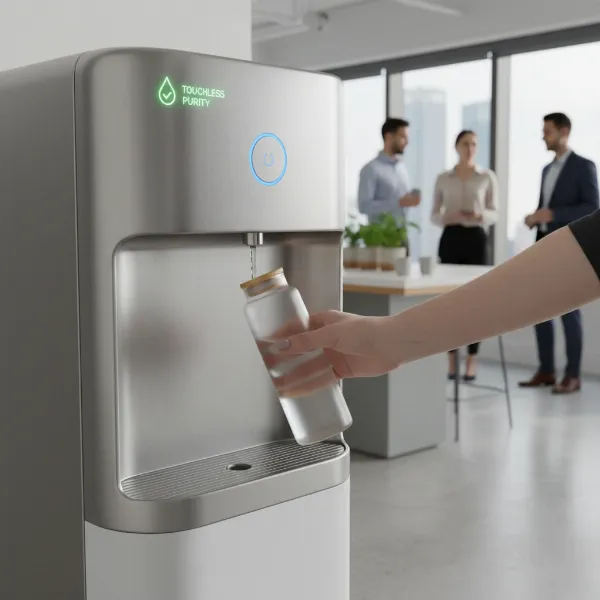 A sleek, modern touch-free office water dispenser in a bright breakroom, with a hand hovering over a sensor to activate water flow.
- Touch-Free Sensors: These are considered the gold standard for hygiene, allowing users to dispense water without physical contact, minimizing germ transmission.
- Push-Button/Lever Systems: While still popular and generally easy to use, these require regular cleaning to maintain hygiene standards.
Energy Efficiency and Durability
An Energy Star certified water dispenser can significantly reduce electricity costs, making it a more sustainable and economically sound choice in the long run. Look for models constructed from robust materials, especially those with stainless steel accents and internal components, ensuring long-term durability and a sleek, professional appearance.
Top Brands for Office Water Dispensers in 2026
When investing in a water dispenser for your office, choosing a reputable brand known for quality and reliability is essential. Several manufacturers stand out for their robust and feature-rich models tailored for commercial environments.
For commercial-grade ice and water solutions, Manitowoc Ice offers large, freestanding dispensers with high ice output, ideal for offices with high demand for cold beverages. Scotsman specializes in stylish countertop and wall-mounted dispensers, particularly suitable for medical offices, with some models offering chewable nugget ice and internal antimicrobial coatings like Aegion for enhanced hygiene. Hoshizaki provides durable and hygienic countertop models designed for various settings, while Follett is recognized for its broad range of dispensers, often incorporating special features such as internal UV lighting to inhibit mold development.
For more general office and home use, brands like Avalon, Brio, Igloo, and Frigidaire are frequently mentioned in reviews for their bottom-loading and top-loading water coolers, often equipped with hot/cold options, child safety locks, and stainless steel components. These brands offer a balance of performance and user convenience, making them suitable for many office breakrooms.
Maximizing the Lifespan: Usage and Maintenance Tips
To ensure your office water dispenser remains a reliable source of hydration and operates efficiently for years, proper usage and consistent maintenance are key. Neglecting these aspects can lead to hygiene issues, reduced performance, and a shorter lifespan for the unit.
- Regular Cleaning Schedule:
- External Cleaning: Wipe down the exterior, including dispensing nozzles and drip trays, weekly with a food-grade disinfectant to prevent germ buildup.
- Internal Tank Cleaning: Perform a thorough internal cleaning of the water tanks every 3 to 6 months. Always unplug the dispenser before cleaning to ensure safety.
- Filter Replacement: For bottleless or filtered bottled dispensers, adhere strictly to the manufacturer’s guidelines for filter replacement. This ensures continuous water quality and prevents clogs or system strain.
- Optimal Placement: Position the water dispenser in a dry, cool area, away from direct sunlight and heat sources, which can affect cooling efficiency and potentially encourage algae growth.
- Preventive Measures: Instruct employees on proper usage, such as not leaving empty bottles in top-loading units for extended periods. Utilize features like empty bottle indicators (on bottom-loading models) to facilitate timely replacement.
Following these simple guidelines will not only extend the life of your water dispenser but also guarantee that your team always has access to clean, safe, and great-tasting water.
“Water dispensers are critical to keeping people hydrated in the workspace.” – Jeff Biel, Vice President of Marketing and Product Development at Scotsman
Conclusion
Choosing the best water dispenser for your office or breakroom in 2026 is a strategic decision that impacts employee well-being, productivity, and your company’s operational efficiency. With a wide array of options, from convenient bottom-loading bottled units to advanced bottleless systems with integrated filtration, the market offers solutions for every need and budget. By carefully considering factors such as capacity, temperature options, robust filtration, essential safety features, and ease of maintenance, you can ensure a smart, long-term investment. Don’t underestimate the power of readily available, clean water to boost morale and foster a healthier work environment. Which features will you prioritize to keep your team optimally hydrated and performing at their best?
Frequently Asked Questions
What is the primary difference between a bottled and bottleless water dispenser?
A bottled water dispenser uses large, refillable water jugs, requiring manual replacement, while a bottleless (point-of-use) dispenser connects directly to your office’s water line, providing a continuous supply of filtered tap water without the need for bottle changes. Bottleless systems typically have higher upfront costs but lower long-term operational expenses.
How much electricity does an office water dispenser typically consume?
On average, a modern office water dispenser consumes about 1–2 units of electricity per day, depending on factors such as usage frequency, insulation quality, and the efficiency of its heating and cooling components. Energy Star-certified models are designed to minimize power consumption, leading to lower utility bills.
Can I install a bottleless water dispenser myself in an office setting?
While countertop and bottled water dispensers are usually easy to set up without professional help, bottleless (RO-based) systems typically require professional installation. This is because they need to be plumbed directly into your building’s water supply, which often involves specialized tools and knowledge to ensure proper connection and prevent leaks.
What is the average lifespan of a good quality office water dispenser?
With proper maintenance and regular cleaning, a high-quality office water dispenser can last anywhere from 5 to 10 years. Factors like the build materials (e.g., stainless steel components), frequency of use, and adherence to recommended service schedules significantly influence its longevity.
Is it better to buy a water dispenser with built-in filtration or a separate water purifier?
For offices, a water dispenser with built-in filtration (like RO or UV) offers the convenience of both purification and temperature control in one unit, saving space and simplifying operations. While a separate water purifier cleans water, it doesn’t offer the dispensing and temperature features of an all-in-one dispenser. Combined models provide the best of both worlds.