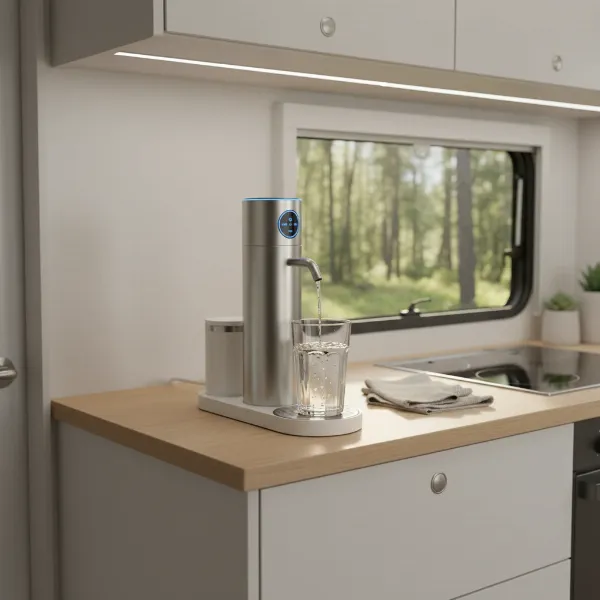
In the quest for efficient cooling solutions, two primary technologies stand out: compressor-based and thermoelectric cooling. Both systems offer distinct advantages and disadvantages, making the choice between them dependent on specific needs, environments, and performance expectations. Whether you’re considering a new wine cooler, a portable fridge for your next adventure, or a sophisticated industrial cooling system, understanding the core differences between compressor and thermoelectric cooling is crucial for making an informed decision. This guide will demystify these two approaches, helping you pinpoint the ideal cooling technology for your application.
Understanding the Fundamentals of Cooling Technologies
Before diving into a direct comparison, it’s essential to grasp the basic principles behind each cooling method. Both aim to transfer heat from one area to another, but they achieve this through entirely different mechanisms.
How Compressor Cooling Works
|
Our Picks for the Best Water Dispenser in 2026
As an Amazon Associate I earn from qualifying purchases.
|
||
| Num | Product | Action |
|---|---|---|
| 1 | Brio Bottom Loading Water Cooler Dispenser for 5 Gallon Bottles - 3 Temperatures with Hot, Room & Cold Spouts, Child Safety Lock, LED Display with Empty Bottle Alert, Stainless Steel |

|
| 2 | Water Jug Pump for 5 Gallon Bottle – Portable Electric USB-C Charging Dispenser, Dual Powerful Motors, Fast Flow, Fits 2-5 Gallon Jugs – Ideal for Home, Office, Camping, RV, Black |
|
| 3 | Primo Bottom-Loading Self-Sanitizing Water Dispenser - 2 Temp (Hot-Cold) Water Cooler Water Dispenser for 5 Gallon Bottle w/Child Safety Lock, Black and Stainless Steel |
|
| 4 | Housiwill Countertop Water Dispenser, Top Loading Water Cooler for 1.2 to 5 Gallon, 3 Temperature Settings Room Temperature Water Cold Hot Water Dispenser, Suitable for Home, Office, Dorm Bedside Use |
|
| 5 | Brio Limited Edition Top Loading Water Cooler Dispenser - Hot & Cold Water, Child Safety Lock, Holds 3 or 5 Gallon Bottles - UL/Energy Star Approved |
|
| 6 | Brita UltraMax Large Water Dispenser With Standard Filter, BPA-Free, Reduces Copper, Cadmium and Mercury Impurities, Lasts 2 Months or 40 Gallons, Includes 1 Filter, Kitchen Accessories, Large 27-Cup |
|
| 7 | Brio 130 Series Top-Load Water Cooler Dispenser for 3- and 5-Gallon Bottles, Hot & Cold, Spill-Free Loading, Child Safety Lock, Energy Star 3.0, Black |
|
| 8 | Igloo Top Loading Water Cooler with Removable Tray & Energy-Saving Features - Water Tower with Hot, Cold Temperature Settings- Water Dispenser Fits 3 & 5-Gallon Jugs with Child Safety Lock- Stainless |
|
| 9 | Brio Commercial Grade Bottleless Ultra Safe Reverse Osmosis Drinking Water Filter Water Cooler Dispenser-3 Temperature Settings Hot, Cold & Room Water - UL Approved – Point of Use |
|
| 10 | Brio Countertop Self Cleaning Bottleless Water Cooler Dispenser with Filtration - Hot Cold and Room Temperature Water. Free Extra Replacement Filters Included - UL/Energy Star Approved |
|
Compressor-based cooling systems operate on a principle similar to your home refrigerator or air conditioner: the vapor compression refrigeration cycle. This cycle involves a refrigerant that circulates through a closed loop. First, a compressor pressurizes the refrigerant, increasing its temperature. This hot, high-pressure gas then flows to a condenser, where it releases heat to the surroundings and condenses into a liquid. The liquid refrigerant then passes through an expansion valve, causing its pressure and temperature to drop significantly, turning it into a cold, low-pressure liquid. Finally, this cold liquid enters an evaporator coil within the cooling space, where it absorbs heat from the environment, vaporizing back into a gas. This gas then returns to the compressor, restarting the cycle. These systems are known for their robust cooling power and ability to maintain consistent low temperatures, cycling on and off to conserve energy.
How Thermoelectric Cooling Works
Thermoelectric cooling, also known as Peltier cooling, is a solid-state technology that utilizes the Peltier effect. This phenomenon occurs when an electric current passes through a junction of two dissimilar semiconductors, creating a temperature difference. One side of the thermoelectric module gets cold, absorbing heat from the desired cooling space, while the other side gets hot, dissipating heat to the ambient environment, often with the help of a heat sink and fan. Unlike compressor systems, thermoelectric coolers have no moving parts, no refrigerants, and operate continuously as long as power is supplied. This makes them inherently quiet and compact.
Key Differences: Compressor vs. Thermoelectric Cooling
When comparing compressor and thermoelectric cooling, several critical factors differentiate their performance, cost, and suitability for various applications. Understanding these distinctions is paramount for selecting the optimal cooling solution.
Cooling Performance and Temperature Range
Compressor-based systems are renowned for their superior cooling capacity and ability to achieve significantly lower temperatures. They can typically reach freezing temperatures (e.g., 30-40°F or -1.1°C to 4.4°C) reliably, making them suitable for refrigeration, freezing, and demanding cooling tasks. Their performance remains strong even in warm ambient conditions, allowing them to effectively cool a wide range of products or spaces.
Conversely, thermoelectric coolers have a more limited cooling capacity. They typically struggle to drop temperatures more than 20-30°F (10-15°C) below the ambient temperature, usually reaching a minimum of around 50°F (10°C). This makes them less effective for applications requiring deep chilling or freezing, especially in warmer environments where their efficiency further diminishes.
Energy Efficiency and Operating Costs
While the initial purchase price might suggest otherwise, compressor coolers are generally more energy-efficient in the long run. They operate by cycling on and off to maintain the set temperature, only drawing power when necessary. This intermittent operation significantly reduces overall energy consumption and, consequently, lower electricity bills over time. In contrast, thermoelectric coolers require a constant flow of power to maintain their cooling effect. This continuous operation often translates to higher energy consumption and increased operating costs, particularly when sustained cooling is required or in warmer climates where they work harder to dissipate heat.
> “For long-term cooling needs, especially in environments where consistent low temperatures are critical, the cyclic nature of compressor cooling often translates to substantial energy savings compared to the continuous power draw of thermoelectric units.” – Dr. Elena Petrova, Thermal Engineering Specialist
Noise Level and Vibration
One of the most notable differences lies in acoustic output. Thermoelectric cooling systems are celebrated for their virtually silent operation. Since they have no moving parts (apart from a small fan for heat dissipation), they produce minimal to no noise and vibration. This characteristic makes them ideal for noise-sensitive environments like bedrooms, offices, medical labs, or personal wine cellars where quiet operation is a premium.
Compressor coolers, on the other hand, contain a compressor motor that vibrates and generates noise as it cycles on and off. While modern compressors are much quieter than older models, they still produce an audible hum and subtle vibrations. This can be a significant consideration for residential or quiet professional settings.
Size, Weight, and Portability
Thermoelectric coolers typically boast a compact and lightweight design. The absence of bulky compressors, condensers, and elaborate refrigerant lines allows for smaller footprints, making them highly portable. This makes them a popular choice for personal coolers, small mini-fridges, and electronic enclosure cooling where space is at a premium.
Compressor-based systems, due to their intricate components and refrigerant requirements, are inherently larger and heavier. This impacts their portability and requires more significant installation space and consideration for mounting and orientation during shipping and handling.
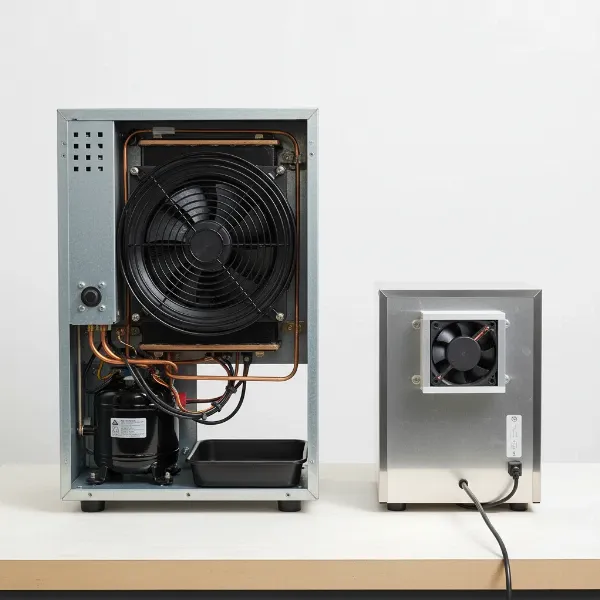 A side-by-side comparison illustrating the size and internal components of a compressor-based cooler versus a thermoelectric cooler, highlighting the compactness of the latter.
Durability and Maintenance
Compressor cooling systems are generally built for longevity and robustness, designed to handle larger cooling loads and continuous use. However, they do require periodic maintenance, such as checking refrigerant levels and cleaning coils, similar to larger refrigeration appliances. Their complex mechanical nature means there are more potential points of failure, though individual components are often replaceable.
Thermoelectric coolers, with their solid-state design and lack of moving parts, offer low maintenance. However, the constant operation can put stress on the electronic components, and they may sometimes have a shorter lifespan than well-maintained compressor units, particularly if they are consistently pushed to their limits in warm conditions.
Environmental Impact and Refrigerants
A key environmental distinction is the use of refrigerants. Compressor systems rely on chemical refrigerants (like R-134a or R600a), which, if leaked, can contribute to environmental concerns such as ozone depletion or global warming, depending on the specific refrigerant type. Strict regulations govern the handling and disposal of these substances.
Thermoelectric cooling systems are considered more eco-friendly because they do not use any harmful chemical refrigerants. Their operation is based purely on electrical current, making them a “green” alternative in many small-scale applications.
Upfront Cost
Generally, thermoelectric coolers tend to have a lower upfront purchase price. Their simpler design and fewer complex components make them more affordable to manufacture and, consequently, to buy. This makes them an attractive option for budget-conscious consumers or for those needing a temporary or casual cooling solution. Compressor-based units, with their advanced technology and robust components, typically come with a higher initial investment.
Ideal Applications for Each Cooling Technology
Understanding the strengths and weaknesses of each system helps in identifying their optimal use cases.
Where Compressor Cooling Shines
Compressor cooling is the undisputed champion for applications demanding significant cooling power, precise temperature control, and the ability to operate effectively in varying ambient conditions.
- Residential Refrigerators and Freezers: The standard for household food preservation due to their capacity and efficiency.
- Commercial Refrigeration: Supermarket display cases, restaurant freezers, and industrial chillers rely on compressor technology.
- Wine Cellars and High-End Wine Coolers: Capable of maintaining consistent and precise temperatures crucial for long-term wine storage.
- Medical and Laboratory Equipment: Where critical temperature ranges are necessary for samples and sensitive instruments.
- Large Portable Coolers/Fridge-Freezers: For extended camping trips, overlanding, or job sites where robust cooling and freezing are needed.
Where Thermoelectric Cooling Excels
Thermoelectric cooling finds its niche in applications where compactness, quiet operation, and portability are prioritized over extreme cooling power.
- Small Personal Coolers and Mini-Fridges: Ideal for desk use, car travel, or as a secondary beverage cooler.
- Picnic Coolers and Beverage Warmers: Can often switch between heating and cooling functions.
- Electronic Enclosure Cooling: To dissipate heat from sensitive electronics in confined spaces where noise and size are critical.
- Cosmetic Refrigerators: For preserving beauty products at a slightly cooler temperature.
- Medical Sample Transport (short-term): Where precise but not extremely low temperatures are needed for limited durations.
- CPU/Semiconductor Cooling: Niche applications in electronics for localized heat removal.
Choosing the Right Cooling System for You
Making the right choice between compressor and thermoelectric cooling ultimately boils down to aligning the technology with your specific needs. Consider the following:
- What temperature range do you need? If you need freezing or consistent low temperatures regardless of ambient conditions, a compressor is your best bet. If a moderate chill is sufficient and ambient temperatures aren’t extreme, thermoelectric might work.
- How important is energy efficiency and operating cost? For continuous use, compressor systems will save you money on electricity in the long run. For occasional or short-term use, the initial low cost of a thermoelectric unit might be appealing despite higher power consumption per hour of operation.
- Is noise a concern? If you prioritize silence, thermoelectric is the clear winner. If a gentle hum is acceptable, a compressor unit offers greater power.
- What about size, weight, and portability? For ultimate portability and compactness, thermoelectric is unmatched. For stationary or less frequently moved applications, a compressor unit’s size might be manageable.
- What is your budget? Thermoelectric units generally have a lower entry price, while compressor units represent a larger initial investment.
Conclusion
The evolution of cooling technology offers diverse solutions, with compressor-based and thermoelectric systems representing two distinct paths. Compressor cooling provides robust, efficient, and powerful refrigeration, making it the workhorse for most demanding cooling tasks, from domestic refrigerators to industrial chillers. Conversely, thermoelectric cooling offers a compact, quiet, and eco-friendly alternative, excelling in small-scale, portable, and noise-sensitive applications where extreme cooling is not a prerequisite.
Ultimately, the “better” system is the one that best meets your unique requirements. By carefully weighing factors like cooling capacity, energy consumption, noise, size, and cost, you can confidently select the technology that will provide the most effective and satisfactory cooling experience. Which cooling technology best aligns with your next project or purchase?
Frequently Asked Questions
Which cooling technology is more energy efficient for continuous use?
Compressor-based cooling systems are generally more energy efficient for continuous use because they cycle on and off to maintain temperature, only drawing power when needed. Thermoelectric coolers operate constantly, leading to higher overall energy consumption over time.
Can thermoelectric coolers make ice?
No, thermoelectric coolers typically cannot achieve temperatures low enough to make ice. They are usually limited to cooling 20-30°F below the ambient temperature, generally reaching a minimum of around 50°F (10°C).
Are compressor coolers louder than thermoelectric coolers?
Yes, compressor coolers are generally louder than thermoelectric coolers. Compressor systems contain moving parts that generate noise and vibration, whereas thermoelectric systems are solid-state and operate with minimal to no noise, apart from a small fan.
Is thermoelectric cooling environmentally friendly?
Yes, thermoelectric cooling is considered more environmentally friendly as it does not use harmful chemical refrigerants. It operates using the Peltier effect, based purely on electrical current, eliminating concerns about refrigerant leaks.
Why do some portable fridges use thermoelectric cooling if it’s less efficient?
Portable fridges often use thermoelectric cooling due to its advantages in size, weight, and quiet operation. For short-term use or when only moderate cooling is needed, its compactness and low upfront cost can outweigh the lower energy efficiency compared to bulkier, noisier compressor units.