Staying adequately hydrated is crucial for our health, and in many homes and offices, a water dispenser has become an indispensable appliance, offering instant access to refreshing cold water or steaming hot beverages. But with numerous options on the market, how do you choose a dispenser that stands the test of time? Panasonic, a brand synonymous with quality electronics, has a significant presence in this category. This in-depth review will meticulously examine Panasonic water dispensers, focusing specifically on their long-term reliability and overall performance to help you make an informed purchasing decision.
Panasonic’s Commitment to Quality: The Foundation of Reliability
Panasonic has built a global reputation for manufacturing durable and dependable electronic appliances, a legacy that extends to their water dispensers. This brand commitment to engineering excellence often translates into products designed for consistent performance over many years. For many consumers, the Panasonic name evokes trust and an expectation of high standards in build quality and functionality. While no appliance is entirely immune to wear and tear, Panasonic’s general standing in the market suggests a robust approach to product development, aiming for longevity and customer satisfaction.
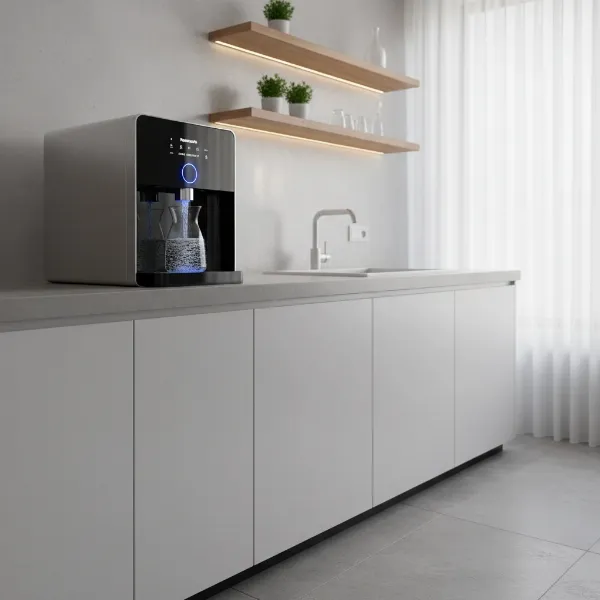 A sleek Panasonic water dispenser symbolizing quality and innovation, set in a modern kitchen environment.
However, it’s essential to note that while the brand is generally reliable, some users have reported occasional issues. These can include problems with the hot water function or the dispensing mechanism, typically occurring over an extended period of use. Understanding these nuances is key to a realistic expectation of a Panasonic water dispenser’s reliability. The true test lies in how well these units maintain their core functions and user experience throughout their operational life, often a reflection of the initial design and material choices.
Dissecting Durability: Materials, Design, and Safety Features
The foundation of any appliance’s reliability starts with its physical construction. Panasonic water dispensers often integrate a blend of materials and intelligent design choices aimed at both performance and safety.
Robust Construction
|
Our Picks for the Best Water Dispenser in 2026
As an Amazon Associate I earn from qualifying purchases.
|
||
| Num | Product | Action |
|---|---|---|
| 1 | Brio Countertop Self Cleaning Bottleless Water Cooler Dispenser with Filtration - Hot Cold and Room Temperature Water. Free Extra Replacement Filters Included - UL/Energy Star Approved |

|
| 2 | Igloo Top Loading Water Cooler with Removable Tray & Energy-Saving Features - Water Tower with Hot, Cold Temperature Settings- Water Dispenser Fits 3 & 5-Gallon Jugs with Child Safety Lock- Stainless |
|
| 3 | Brita UltraMax Large Water Dispenser With Standard Filter, BPA-Free, Reduces Copper, Cadmium and Mercury Impurities, Lasts 2 Months or 40 Gallons, Includes 1 Filter, Kitchen Accessories, Large 27-Cup |
|
| 4 | Brio 130 Series Top-Load Water Cooler Dispenser for 3- and 5-Gallon Bottles, Hot & Cold, Spill-Free Loading, Child Safety Lock, Energy Star 3.0, Black |
|
| 5 | Housiwill Countertop Water Dispenser, Top Loading Water Cooler for 1.2 to 5 Gallon, 3 Temperature Settings Room Temperature Water Cold Hot Water Dispenser, Suitable for Home, Office, Dorm Bedside Use |
|
| 6 | Brio Limited Edition Top Loading Water Cooler Dispenser - Hot & Cold Water, Child Safety Lock, Holds 3 or 5 Gallon Bottles - UL/Energy Star Approved |
|
| 7 | Water Jug Pump for 5 Gallon Bottle – Portable Electric USB-C Charging Dispenser, Dual Powerful Motors, Fast Flow, Fits 2-5 Gallon Jugs – Ideal for Home, Office, Camping, RV, Black |
|
| 8 | Brio Bottom Loading Water Cooler Dispenser for 5 Gallon Bottles - 3 Temperatures with Hot, Room & Cold Spouts, Child Safety Lock, LED Display with Empty Bottle Alert, Stainless Steel |
|
| 9 | Brio Commercial Grade Bottleless Ultra Safe Reverse Osmosis Drinking Water Filter Water Cooler Dispenser-3 Temperature Settings Hot, Cold & Room Water - UL Approved – Point of Use |
|
| 10 | Primo Bottom-Loading Self-Sanitizing Water Dispenser - 2 Temp (Hot-Cold) Water Cooler Water Dispenser for 5 Gallon Bottle w/Child Safety Lock, Black and Stainless Steel |
|
Many Panasonic water dispensers feature solid construction that contributes to their overall durability. Some models, such as the NC-EG3000 hot water dispenser, are noted for their stainless steel interiors, sometimes complemented by a charcoal coating. This combination not only provides a premium feel but also enhances the longevity of the heating elements and water reservoirs, preventing rust and ensuring clean water delivery. Reviewers have often highlighted that these units “feel built to last,” reflecting confidence in the material choices and assembly quality. However, it is worth noting that some models may incorporate more plastic components. While these can offer lighter weight and cost-effectiveness, they might not always match the durability or aesthetic appeal of stainless steel alternatives over extended use. When evaluating a Panasonic model, paying attention to the primary materials used in critical areas can offer insights into its potential lifespan.
Advanced Safety Mechanisms
Beyond structural integrity, Panasonic prioritizes user safety, which indirectly contributes to the perceived reliability and trustworthiness of their products. Many of their water dispensers come equipped with several key safety features designed to prevent accidents and ensure peace of mind. Overheat protection is a standard inclusion, automatically shutting off the unit if internal temperatures become dangerously high, thus preventing damage to the appliance and potential hazards. Automatic shut-off functions are also common, engaging when the water tank is empty to protect the heating elements from dry-boiling. For households with children, a child safety lock for the hot water dispense button, as seen on models like the SDM-WD3531BG, is an invaluable feature, preventing accidental burns. Furthermore, practical design choices like magnetic power cords are included in some models, which can easily detach if snagged, minimizing the risk of the dispenser being pulled over or electrical damage.
Thoughtful Design Elements
Panasonic’s attention to detail extends to other design elements that enhance both usability and durability. Many dispensers feature mesh filters in the water intake or internal containers, designed to capture sediment and impurities, thereby contributing to cleaner water and protecting internal components from clogging. Models like the SDM-WD3531BG and SDM-WD4534BG offer touchless operation for cold, normal, and hot water dispensing, activated by simply placing a palm over a sensor. This innovative feature not only adds a layer of hygiene but also reduces physical wear and tear on traditional buttons or levers, potentially extending the lifespan of the dispensing mechanism. Other useful features can include a digital touch control panel for precise temperature settings (e.g., cold water from 4-15°C and hot water from 79-90°C), UV sterilization for the cold water tank to eliminate bacteria, and even a night light for convenient water fetching in low-light conditions. These integrated features elevate the user experience while often enhancing the overall sanitary and functional reliability of the unit.
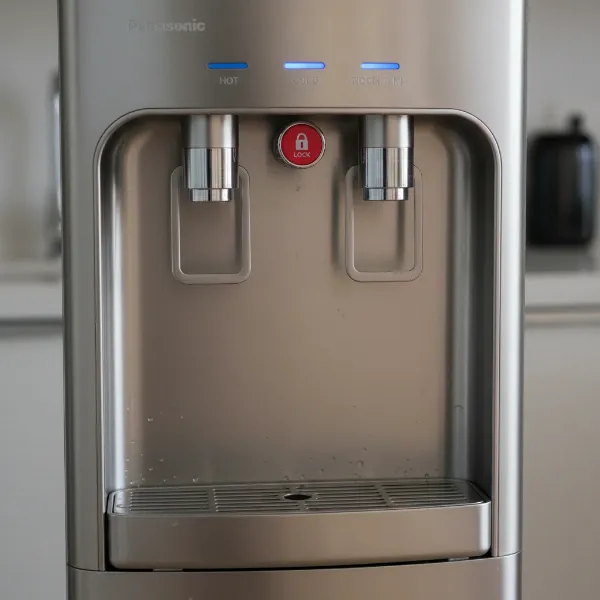 Close-up of a Panasonic water dispenser highlighting robust construction and safety features like child lock and stainless steel.
Performance Under Real-World Conditions: Beyond the Specs Sheet
While robust construction and advanced features lay the groundwork, true reliability is ultimately proven through consistent performance in daily use. Panasonic water dispensers are generally designed to provide convenient access to water at desired temperatures, but like any appliance, their real-world operation can present nuances.
Consistent Water Delivery
The primary function of any water dispenser is to provide water at the right temperature, reliably. Panasonic models typically excel in delivering both hot and cold water consistently, offering instant access for various needs, from brewing tea to cooling down. Some Panasonic hot water dispensers, for example, feature multiple temperature presets and a “Reboil” option that can extend boiling time to reduce chlorine, ensuring optimized water for different beverages. However, some users have occasionally reported issues with the hot water function or the dispensing mechanism over time. These issues are not universal but suggest that while Panasonic aims for high standards, individual units can sometimes develop specific problems. Careful consideration of these aspects in user reviews can offer valuable insights into potential long-term performance.
Noise Levels
An often-overlooked aspect of appliance performance is noise. Water dispensers, particularly those with cooling and heating elements, can generate some operational sound. Some Panasonic water dispensers have been noted by users to have a noticeable noise level, especially when the unit is actively cooling or heating water. For those sensitive to background noise, particularly in quiet home or office environments, this could be a minor consideration. While generally not indicative of a fault, consistent noise can affect the overall user experience and perceived reliability if it becomes a distraction.
Capacity Considerations
The capacity of a water dispenser’s tank directly impacts its convenience and perceived reliability for different user groups. For large families or busy office settings with high water consumption, the tank capacity of some Panasonic models might not be sufficient, leading to frequent refilling. Constantly needing to refill the tank, though a minor inconvenience, can affect the practical reliability of the dispenser in meeting daily demands. Panasonic offers a range of models, from compact countertop units to larger floor-standing dispensers, so matching the unit’s capacity to anticipated usage is crucial for long-term satisfaction and seamless operation.
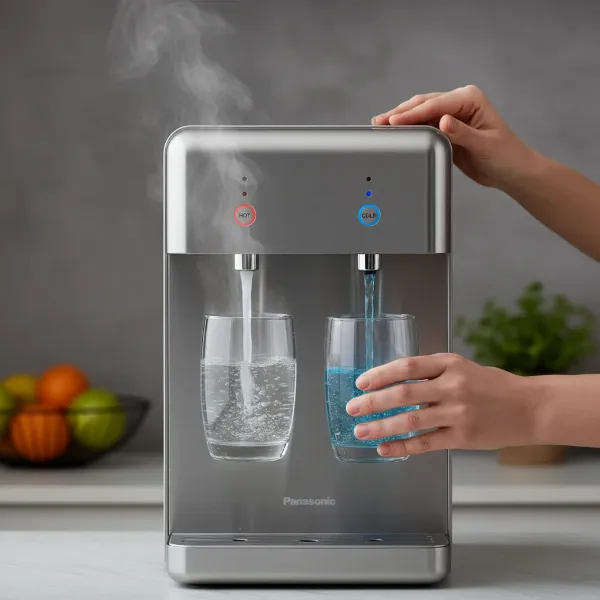 A person easily dispensing hot and cold water from a Panasonic water dispenser, showing consistent flow and user interaction.
Maximizing Lifespan: Essential Maintenance and Care
Even the most reliable appliances benefit from proper maintenance, and Panasonic water dispensers are no exception. Regular care can significantly extend their lifespan, ensure optimal performance, and maintain water quality.
Routine Cleaning Practices
Maintaining a high level of hygiene is paramount for any water dispensing appliance. Over time, mineral deposits and potential microbial growth can occur, affecting both the water quality and the internal components. Regular cleaning of your Panasonic water dispenser is essential. This typically involves wiping down the exterior and interior with a warm, damp cloth, avoiding harsh soaps or detergents that could contaminate the water. For models with removable parts like drip trays or mesh filters, these should be cleaned frequently according to the manufacturer’s instructions to prevent build-up and ensure optimal function.
Addressing Mineral Build-up
Mineral or calcium build-up, also known as scaling, is a common occurrence in appliances that heat water, including hot water dispensers. This can appear as discoloration or white, crystal-like residue inside the tank. While generally harmless to health, excessive scale can impact heating efficiency and potentially affect the dispenser’s internal mechanisms over time. Panasonic itself notes that such build-up can be remedied with citric acid. Regular descaling, using a citric acid solution or specialized descaling agents as per the user manual, is a crucial maintenance step to preserve the heating element’s efficiency and the overall lifespan of the appliance.
Filter Maintenance
For Panasonic water dispensers equipped with integrated filtration systems, regular filter replacement is a key component of maintenance. The frequency of filter replacement depends on the specific model and your household’s water usage. It is always advisable to consult the manufacturer’s recommendations in the user manual to ensure timely replacement. Timely filter changes ensure that the water dispensed remains clean and safe, and that the filtration system continues to function effectively, protecting both your health and the dispenser’s internal components. Neglecting filter replacement can not only compromise water quality but also strain the unit, potentially leading to premature wear and tear.
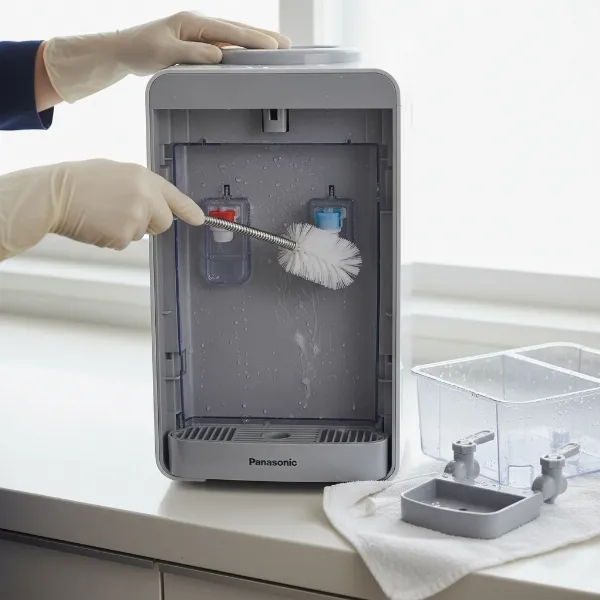 Hands cleaning the interior of a Panasonic water dispenser, focusing on hygiene and maintenance for longevity.
The Panasonic Advantage: Standing Out in the Market
In a crowded market of water dispensers, Panasonic strives to differentiate itself through a combination of brand heritage, innovative features, and a reliable support system. These elements collectively contribute to the “Panasonic Advantage” and influence a user’s perception of reliability and value.
Brand Reputation and Customer Support
Panasonic’s long-standing reputation for manufacturing quality home appliances provides a significant advantage. This legacy suggests a commitment to durable products and a robust support infrastructure. While not needing customer support is ideal, the knowledge that Panasonic is “known for having a reliable support team if any issues arise” can be a crucial factor for consumers. This assurance of post-purchase assistance contributes to overall trust and confidence in the brand’s reliability. The availability of clear warranty information, even if it varies by region, and the ease of accessing service centers further solidify this advantage.
Innovative Features
Beyond basic hot and cold water, Panasonic often integrates innovative features that enhance the user experience and can contribute to the longevity or convenience of the unit. For instance, specific models like the NC-EG3000 offer unique capabilities such as a “slow-drip mode for coffee & tea,” catering to connoisseurs who appreciate precise brewing. Other advancements, like UV sterilization found in models such as the SDM-WD3531BG, actively work to eliminate bacteria in the cold water tank, providing an added layer of hygiene and peace of mind. The implementation of smart touchpads, digital controls, and touchless dispensing mechanisms also showcases Panasonic’s push for modern, user-friendly solutions that reduce mechanical wear and tear, subtly enhancing the unit’s long-term reliability.
Value Proposition and Investment
Investing in a Panasonic water dispenser often means purchasing a product that balances initial cost with expected longevity and performance. While some competitors might offer lower price points, Panasonic’s reputation for durability and inclusion of advanced features can translate into a better long-term value. The robust build quality, coupled with thoughtful safety features and efficient temperature control, positions Panasonic as a premium choice that reduces the likelihood of frequent replacements or costly repairs. For many, the slightly higher initial investment is justified by the promise of a reliable, high-performing appliance that serves their hydration needs consistently for years.
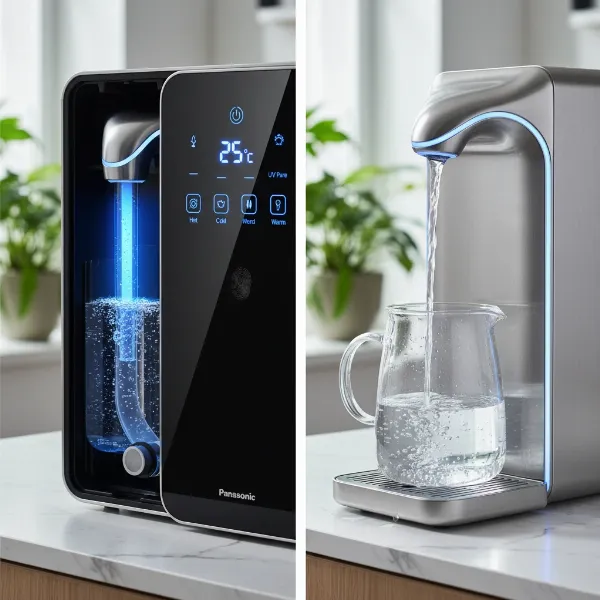 A collage or split image showcasing innovative features of Panasonic water dispensers like UV sterilization or digital touch controls.
Making an Informed Choice: Your Guide to a Reliable Panasonic Water Dispenser
Choosing the right water dispenser, especially when prioritizing reliability, involves weighing several factors. Panasonic offers a diverse range, each with its unique strengths. Understanding these can help you align a specific model with your household’s or office’s demands.
When considering a Panasonic water dispenser, keep in mind their generally strong build quality, often featuring robust materials and advanced safety protocols like overheat protection and child safety locks. The brand’s commitment to quality from its broader appliance range typically extends here. However, be aware of reported minor issues with hot water function or dispensing mechanisms in some units over time, and the potential for noticeable operating noise during heating or cooling cycles. Always check the specific model’s materials, as some may feature more plastic components than others, which could influence long-term aesthetic and durability perceptions.
To ensure long-term satisfaction, match the dispenser’s capacity to your usage needs, avoiding frequent refills if you have high consumption. Actively engage in routine maintenance, including regular cleaning and descaling, to prevent mineral build-up and extend the unit’s lifespan. For models with filters, adhere strictly to replacement schedules. Finally, leverage Panasonic’s customer support and warranty information, typically offering a 12-month period for most appliances, to safeguard your investment. By considering these aspects, you can confidently select a Panasonic water dispenser that meets your expectations for reliability and performance.
Conclusion
Panasonic water dispensers generally uphold the brand’s reputation for producing reliable and functional home appliances. While they are not without occasional, minor reported issues concerning specific functionalities or noise levels, their robust construction, thoughtful safety features, and often innovative design elements contribute significantly to their overall durability and user satisfaction. The availability of reliable customer support further enhances the trust in the brand, making a Panasonic water dispenser a worthy investment for those seeking a long-lasting hydration solution. By understanding the specific features of various models and committing to proper maintenance, consumers can confidently choose a Panasonic water dispenser that delivers consistent performance for years to come.
What features do you value most in a water dispenser, and how do they influence your perception of reliability?
Frequently Asked Questions
How long can I expect a Panasonic water dispenser to last?
Panasonic water dispensers are generally built to be durable, leveraging the brand’s reputation for quality. With proper maintenance and regular cleaning, many users can expect these appliances to last for several years, offering consistent performance. Actual lifespan can vary based on model, usage frequency, and adherence to care guidelines.
What are the most common reliability issues reported with Panasonic water dispensers?
While generally reliable, some users have occasionally reported issues with the hot water function or the water dispensing mechanism over time. Noticeable noise levels during heating or cooling cycles are also sometimes mentioned, though this is typically a design characteristic rather than a malfunction.
Is it challenging to maintain a Panasonic water dispenser for long-term reliability?
Maintaining a Panasonic water dispenser for longevity is relatively straightforward. It primarily involves routine cleaning of the exterior and interior, descaling to remove mineral build-up (often with citric acid), and, for models with filtration systems, timely filter replacement as per the manufacturer’s recommendations.
Do Panasonic water dispensers offer a good warranty?
Panasonic typically offers a 12-month warranty on most of its home appliances from the date of purchase. It is not always necessary to register the product for warranty purposes, but keeping a copy of the purchase receipt is crucial. Specific warranty terms may vary by region and product model, so checking the owner’s manual is advised.
Are Panasonic water dispensers energy efficient?
While specific energy efficiency ratings for individual Panasonic water dispenser models are not always prominently advertised in general product overviews, Panasonic as a company emphasizes sustainability and energy-saving designs across its product lines. Some models might feature design elements aimed at reducing power consumption, such as efficient heating/cooling cycles.