There’s little that compares to the excitement of unboxing a brand-new water dispenser, envisioning endless access to crisp, refreshing hydration. But that excitement can quickly turn to disappointment when the first sip delivers an unwelcome plastic, chemical-like taste. If you’ve just installed a new unit and found your water tasting less than pure, rest assured, you’re not alone. This is a common phenomenon, and more often than not, it’s easily fixable. As an Admin at WaterDispenserPro.com with over a decade in the field, I’ve seen this countless times and can guide you through understanding why it happens, whether it’s safe, and most importantly, how to get your water tasting great again.
Understanding the Plastic Taste Phenomenon
When your water has an unpleasant plastic taste, especially from a new dispenser, it’s usually due to a few primary culprits. These issues typically stem from the manufacturing process and the initial interaction of water with the unit’s components. Understanding these causes is the first step toward a solution.
The “New Car Smell” for Water
|
Our Picks for the Best Water Dispenser in 2026
As an Amazon Associate I earn from qualifying purchases.
|
||
| Num | Product | Action |
|---|---|---|
| 1 | Housiwill Countertop Water Dispenser, Top Loading Water Cooler for 1.2 to 5 Gallon, 3 Temperature Settings Room Temperature Water Cold Hot Water Dispenser, Suitable for Home, Office, Dorm Bedside Use |

|
| 2 | Igloo Top Loading Water Cooler with Removable Tray & Energy-Saving Features - Water Tower with Hot, Cold Temperature Settings- Water Dispenser Fits 3 & 5-Gallon Jugs with Child Safety Lock- Stainless |
|
| 3 | Brita UltraMax Large Water Dispenser With Standard Filter, BPA-Free, Reduces Copper, Cadmium and Mercury Impurities, Lasts 2 Months or 40 Gallons, Includes 1 Filter, Kitchen Accessories, Large 27-Cup |
|
| 4 | Brio Commercial Grade Bottleless Ultra Safe Reverse Osmosis Drinking Water Filter Water Cooler Dispenser-3 Temperature Settings Hot, Cold & Room Water - UL Approved – Point of Use |
|
| 5 | Brio Bottom Loading Water Cooler Dispenser for 5 Gallon Bottles - 3 Temperatures with Hot, Room & Cold Spouts, Child Safety Lock, LED Display with Empty Bottle Alert, Stainless Steel |
|
| 6 | Brio Countertop Self Cleaning Bottleless Water Cooler Dispenser with Filtration - Hot Cold and Room Temperature Water. Free Extra Replacement Filters Included - UL/Energy Star Approved |
|
| 7 | Brio Limited Edition Top Loading Water Cooler Dispenser - Hot & Cold Water, Child Safety Lock, Holds 3 or 5 Gallon Bottles - UL/Energy Star Approved |
|
| 8 | Brio 130 Series Top-Load Water Cooler Dispenser for 3- and 5-Gallon Bottles, Hot & Cold, Spill-Free Loading, Child Safety Lock, Energy Star 3.0, Black |
|
| 9 | Water Jug Pump for 5 Gallon Bottle – Portable Electric USB-C Charging Dispenser, Dual Powerful Motors, Fast Flow, Fits 2-5 Gallon Jugs – Ideal for Home, Office, Camping, RV, Black |
|
| 10 | Primo Bottom-Loading Self-Sanitizing Water Dispenser - 2 Temp (Hot-Cold) Water Cooler Water Dispenser for 5 Gallon Bottle w/Child Safety Lock, Black and Stainless Steel |
|
Just like a new car has a distinct scent, new appliances, especially those with plastic parts, can release volatile organic compounds (VOCs) or residual chemicals from the manufacturing process. This is often referred to as “off-gassing.” The plastic components within your dispenser, such as tubing, reservoirs, and dispensing mechanisms, are often the source of this initial taste transfer. When water sits in contact with these new plastics, it can absorb these minute particles, resulting in that noticeable plastic or chemical flavor. This is particularly common in the first few days or weeks of use.
Manufacturing Residues
During production, various substances like mold release agents, cleaning solutions, or even small plastic particles can remain in the unit’s internal pathways. These residues, though usually harmless in small quantities, can dissolve into the water, contributing to the initial unpleasant taste. It’s a temporary issue that thorough cleaning and flushing are designed to address.
Stagnant Water and Environmental Factors
Even in a new unit, if water sits stagnant in the reservoir or lines for extended periods, it can develop a stale or “off” taste. While not directly plastic-related, this stale flavor might be perceived as chemical or plastic-like. Additionally, environmental factors such as excessive heat or direct sunlight exposure can exacerbate the problem, potentially accelerating the leaching of compounds from plastic parts into the water.
When It’s Not Just a “New Unit” Issue
While the focus here is on new dispensers, it’s worth noting that if the plastic taste persists beyond initial troubleshooting or if you’re using bottled water, other factors might be at play. Old or expired plastic water bottles, for example, can leach chemicals into the water, especially if exposed to heat. A clogged or improperly seated filter in plumbed-in units can also cause taste anomalies, though less commonly a distinct plastic taste.
Is It Safe to Drink Water That Tastes Like Plastic?
This is a common and valid concern when your water doesn’t taste right. For new water dispensers, the initial plastic taste is generally considered harmless. The compounds leaching from new plastic components are typically present in very low concentrations and are not usually a health risk for a short period. Most manufacturers design their products to meet safety standards, and the taste is primarily an aesthetic issue rather than a toxic one.
However, if the plastic taste is extremely strong, persists for an unusually long time (beyond a few weeks of regular use and flushing), or is accompanied by unusual odors or other symptoms, it warrants further investigation. Certain types of plastics, like PVC (polyvinyl chloride), are not recommended for storing potable water due to potential chemical leaching. If you suspect your dispenser uses questionable plastic materials or the taste becomes concerning, it’s always best to contact the manufacturer or a water quality professional. “While an initial plastic taste from a new dispenser is usually a temporary nuisance, persistent or strong chemical notes should prompt further action. Your health is paramount,” advises the Admin of WaterDispenserPro.com.
Essential Tips to Eliminate Plastic Taste from Your New Dispenser
Getting rid of that bothersome plastic taste from your new water dispenser is usually straightforward. Here are the most effective steps you can take to ensure your water is fresh and pure.
Initial Flushing: The First Line of Defense
The most crucial step for any new water dispenser is a thorough flushing. This process helps to rinse out any manufacturing residues and “break in” the plastic components.
-
For Bottled Water Dispensers:
- Place a fresh, full water bottle on the dispenser.
- Place a large container under the cold water spout.
- Dispense water, discarding at least 2-3 gallons (approximately 8-12 liters) through the cold tap.
- Repeat this process for the hot water tap (if applicable), dispensing until the hot water tank is completely emptied and refilled with fresh water. Be cautious as the water will be hot.
- Continue dispensing water from both taps until the plastic taste subsides. This may take several refills of the bottle and flushing of 5-15 liters total, depending on the unit’s capacity.
-
For Plumbed-in Dispensers (e.g., refrigerator dispensers):
- Ensure the water supply is connected and the filter (if new) is properly installed and seated. Some refrigerator filters require an extra twist beyond the initial stop to fully engage.
- Dispense at least 2-3 gallons (approximately 8-12 liters) of water through the cold water dispenser, discarding the water. This helps to flush air from the filter and lines.
- For ice makers, discard the first few batches of ice as they may also carry the plastic taste.
Deep Cleaning Solutions for Stubborn Tastes
If simple flushing doesn’t completely remove the taste, a more thorough cleaning might be necessary. Always unplug your dispenser before performing any deep cleaning.
-
Vinegar and Hot Water Method:
- Drain any remaining water from the dispenser.
- Prepare a solution of equal parts white vinegar and hot water. For a standard bottled water dispenser, you might need a gallon of this mixture.
- Pour the solution into the top reservoir of your dispenser.
- Allow the solution to sit in the dispenser for at least 30 minutes, or even a few hours, to allow the vinegar to break down any residual chemicals or mineral deposits.
- Dispense the entire vinegar solution through both the hot and cold taps into a large container, discarding it.
- Rinse the dispenser thoroughly by refilling it with clean, fresh water and flushing it completely through both taps at least 2-3 times until no vinegar smell or taste remains.
-
Mild Bleach Solution Rinse:
- As an alternative, a mild bleach solution can be used for sanitization. Mix one capful of chlorine bleach with one gallon of warm water.
- With the dispenser unplugged, pour the solution into the top opening.
- Dispense the solution through both hot and cold spouts until the bleach solution has been completely flushed through the system.
- Immediately and thoroughly rinse the dispenser multiple times with fresh, clean water until absolutely no bleach odor or taste is detectable. This step is critical for safety.
-
Lemon Juice/Baking Soda (for reservoirs):
For a more natural approach, particularly for the main reservoir, a paste of baking soda and water, or a solution of lemon juice and water, can be used to scrub and neutralize odors. Let it sit, then rinse extensively.
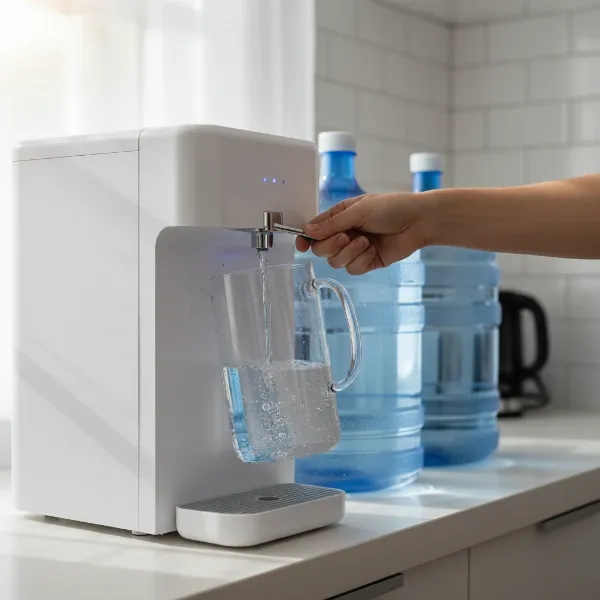 A person flushing a new water dispenser, holding a large pitcher under the spout to collect the water, with clean water bottles in the background, illustrating the initial setup and cleaning process to remove plastic taste.
Checking and Optimizing Your Water Source
While the dispenser itself is often the culprit for new unit plastic taste, your water source can also play a role.
- Bottled Water Considerations: If you use bottled water, ensure the bottles are new, not expired, and made from food-grade plastic. Store bottles in a cool, dark place, away from direct sunlight or heat, as heat can accelerate the leaching of plastics into the water.
- Plumbed-in Systems: For dispensers connected directly to your home’s water line, make sure your water filter is correctly installed and functioning. A new filter might also require initial flushing to remove any carbon dust or manufacturing residues.
Ongoing Maintenance for Pure Tasting Water
Once you’ve successfully removed the initial plastic taste, consistent maintenance is key to keeping your water dispenser performing optimally and delivering great-ttasting water. Regular care not only extends the life of your unit but also prevents future taste issues.
- Regular Cleaning Schedule: Plan to clean your water dispenser thoroughly every 3-6 months. This includes draining the reservoirs, cleaning all accessible internal parts with a mild food-safe sanitizer (like a vinegar solution), and wiping down external surfaces. Pay close attention to spouts and drip trays where bacteria and mold can accumulate.
- Filter Replacement Importance: If your dispenser has a water filter, adhere strictly to the manufacturer’s recommended replacement schedule. An old or clogged filter can harbor bacteria and cease to effectively remove impurities, potentially leading to off-tastes.
- Proper Storage and Placement: Always place your water dispenser in a cool, dry location away from direct sunlight. Excessive heat can degrade plastic components over time, increasing the likelihood of taste issues. Ensure adequate ventilation around the unit.
- Monitor Water Quality: Periodically taste your water. If you notice any unusual changes in taste or odor, perform a mini-flush or a quick clean to address it proactively before it becomes a bigger problem.
By integrating these routine maintenance practices, you’ll ensure that your water dispenser continues to provide the clean, refreshing water you expect, free from any unwanted plastic undertones.
Conclusion
Discovering a plastic taste in your new water dispenser can be a frustrating experience, but it’s a common and usually temporary issue that can be resolved with a few simple steps. By understanding that this taste often comes from new plastic components or manufacturing residues, you can confidently tackle the problem. Initial flushing is almost always the first and most effective solution, followed by deeper cleaning methods like vinegar rinses for more stubborn cases. While generally harmless, paying attention to persistent or strong chemical tastes is important for your peace of mind and health. With a little care and regular maintenance, your new water dispenser will quickly transition from an unexpected disappointment to a reliable source of fresh, clean-tasting water for your home or office. Don’t let a minor hurdle keep you from enjoying optimal hydration. What’s your go-to method for ensuring your water always tastes its best?
Frequently Asked Questions
How many times should I flush a new water dispenser?
For most new water dispensers, flushing 2-3 gallons (8-12 liters) of water from both the hot and cold spouts is usually sufficient to remove initial plastic tastes. However, for a more stubborn taste, you may need to flush 5-15 liters or even several bottle refills until the taste completely dissipates.
What causes the plastic taste in new dispensers?
The plastic taste in new dispensers is primarily caused by new plastic components releasing volatile organic compounds (VOCs) or residual chemicals from the manufacturing process. These substances can leach into the water when it first comes into contact with the dispenser’s internal parts.
Is it normal for a new water dispenser to taste like plastic?
Yes, it is quite normal for water from a brand-new dispenser to have a slight plastic or chemical taste initially. This is a common effect of new plastics and manufacturing residues, and it typically resolves with thorough flushing and cleaning.
When should I be concerned about the plastic taste?
While generally harmless, you should be concerned if the plastic taste is extremely strong, persists for several weeks despite flushing and cleaning, or is accompanied by unusual smells or physical symptoms. In such cases, contact the manufacturer or a water quality specialist.
Can hot water help remove plastic taste?
Yes, using hot water can be an effective part of the cleaning process. Flushing the hot water tank thoroughly, or even using a hot water and vinegar solution for a deep clean, can help break down and rinse away the compounds causing the plastic taste, especially in the hot water lines.