In today’s homes and offices, a water dispenser offers unparalleled convenience, providing instant access to refreshing cold water or piping hot water for beverages. However, many consumers overlook the energy consumption of these appliances, which can silently inflate electricity bills. Choosing an energy-efficient water dispenser is a smart investment that not only saves you money in the long run but also contributes to a more sustainable environment. As an experienced technician, I’ve seen firsthand how advancements in water dispenser technology are making it easier than ever to enjoy clean, perfectly temperature-controlled water without the hefty energy costs.
Energy-Efficient Water Dispensers: A Smart Choice for Every Home
Water dispensers, by their nature, require continuous operation to maintain water at desired hot and cold temperatures. This constant activity can lead to significant energy use. However, modern energy-efficient models are designed to minimize this consumption, offering a cost-effective and eco-friendly alternative to traditional units. These innovative dispensers integrate advanced technologies that reduce power usage without compromising on performance or convenience.
Benefits of Using Energy-Efficient Water Dispensers
Opting for an energy-efficient water dispenser provides a multitude of advantages that extend beyond just a lower utility bill.
- Lower Utility Bills: The most immediate and tangible benefit is the reduction in your monthly electricity costs. Energy-efficient models consume significantly less power, leading to noticeable savings over time. Some models can save over $95 over their lifespan compared to conventional units.
- Quick Return on Investment (ROI): While energy-efficient water dispensers might have a slightly higher upfront cost, the energy savings often result in a quick return on investment, sometimes within just a few years.
- Reduced Carbon Footprint: By consuming less electricity, these dispensers help decrease greenhouse gas emissions, contributing to a smaller environmental impact. This makes them an excellent choice for eco-conscious households and businesses.
- Extended Equipment Lifespan: Often built with higher-quality components and optimized systems, energy-efficient models tend to be more durable and require less frequent repairs or replacements, further adding to long-term savings.
- Enhanced Convenience: Despite their efficiency, these dispensers still offer the same, if not improved, convenience of instant hot or cold water, often with smart features that make daily use even easier.
|
Our Picks for the Best Water Dispenser in 2026
As an Amazon Associate I earn from qualifying purchases.
|
||
| Num | Product | Action |
|---|---|---|
| 1 | Igloo Top Loading Water Cooler with Removable Tray & Energy-Saving Features - Water Tower with Hot, Cold Temperature Settings- Water Dispenser Fits 3 & 5-Gallon Jugs with Child Safety Lock- Stainless |

|
| 2 | Brio Bottom Loading Water Cooler Dispenser for 5 Gallon Bottles - 3 Temperatures with Hot, Room & Cold Spouts, Child Safety Lock, LED Display with Empty Bottle Alert, Stainless Steel |
|
| 3 | Brio Countertop Self Cleaning Bottleless Water Cooler Dispenser with Filtration - Hot Cold and Room Temperature Water. Free Extra Replacement Filters Included - UL/Energy Star Approved |
|
| 4 | Brio Limited Edition Top Loading Water Cooler Dispenser - Hot & Cold Water, Child Safety Lock, Holds 3 or 5 Gallon Bottles - UL/Energy Star Approved |
|
| 5 | Housiwill Countertop Water Dispenser, Top Loading Water Cooler for 1.2 to 5 Gallon, 3 Temperature Settings Room Temperature Water Cold Hot Water Dispenser, Suitable for Home, Office, Dorm Bedside Use |
|
| 6 | Water Jug Pump for 5 Gallon Bottle – Portable Electric USB-C Charging Dispenser, Dual Powerful Motors, Fast Flow, Fits 2-5 Gallon Jugs – Ideal for Home, Office, Camping, RV, Black |
|
| 7 | Brio Commercial Grade Bottleless Ultra Safe Reverse Osmosis Drinking Water Filter Water Cooler Dispenser-3 Temperature Settings Hot, Cold & Room Water - UL Approved – Point of Use |
|
| 8 | Primo Bottom-Loading Self-Sanitizing Water Dispenser - 2 Temp (Hot-Cold) Water Cooler Water Dispenser for 5 Gallon Bottle w/Child Safety Lock, Black and Stainless Steel |
|
| 9 | Brita UltraMax Large Water Dispenser With Standard Filter, BPA-Free, Reduces Copper, Cadmium and Mercury Impurities, Lasts 2 Months or 40 Gallons, Includes 1 Filter, Kitchen Accessories, Large 27-Cup |
|
| 10 | Brio 130 Series Top-Load Water Cooler Dispenser for 3- and 5-Gallon Bottles, Hot & Cold, Spill-Free Loading, Child Safety Lock, Energy Star 3.0, Black |
|
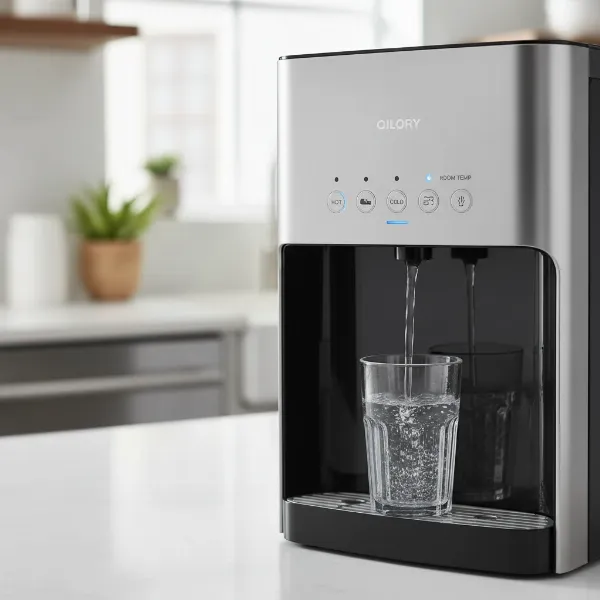 A sleek, modern energy-efficient water dispenser with touch controls and a full glass of refreshing water.
Understanding Energy-Saving Technologies in Water Dispensers
What makes a water dispenser truly energy efficient? Several key technologies and design choices contribute to their lower power consumption.
- ENERGY STAR Certification: This is the gold standard for energy efficiency. Products bearing the ENERGY STAR label meet strict energy-efficiency guidelines set by the U.S. Environmental Protection Agency, signifying that they use about 22% less energy than conventional models.
- Advanced Thermal Insulation: High-quality, multi-layer insulation within the water tanks and casing helps maintain water temperatures more effectively. This reduces the frequency and duration of heating and cooling cycles, leading to less energy expenditure.
- Inverter Compressors: Unlike conventional compressors that operate at full power or off, inverter compressors intelligently adjust their output based on demand. This optimized operation consumes less electricity, especially during periods of lower use.
- Smart Thermostats and Sensors: Digital temperature sensors and programmable thermostats allow for precise temperature control. Features like “ECO Mode” or “Sleep Mode” automatically put the device into a low-power standby during idle times, such as overnight or when no one is around, significantly cutting down on unnecessary energy usage.
- On-Demand Heating/Cooling: Some advanced models heat or cool water only as needed, rather than continuously maintaining large tanks at extreme temperatures. This “just-in-time” approach drastically reduces energy waste.
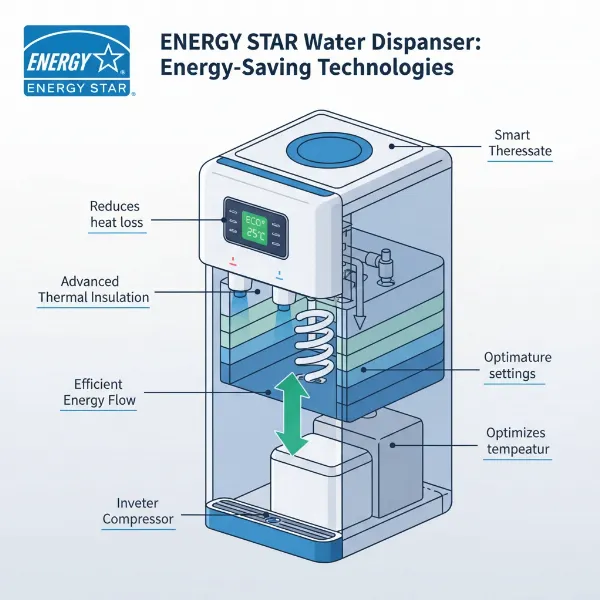 Infographic showing energy-saving technologies in a water dispenser with an ENERGY STAR label.
Comparison of Water Dispenser Types
Understanding the different types of water dispensers available can help you choose an energy-efficient model that fits your specific needs.
| Feature | Countertop Water Dispenser | Freestanding Water Dispenser | Hot/Cold Water Dispenser | Filtered/POU Water Dispenser |
|---|---|---|---|---|
| Size | Compact | Larger | Varies (usually freestanding) | Varies (freestanding or under-sink) |
| Capacity | Smaller | Larger (3-5 gallon bottles) | Varies | Unlimited (direct water line) |
| Portability | Easy to move | Difficult to move | Moderate | Fixed installation |
| Core Function | Hot/Cold/Room temp water | Hot/Cold/Room temp water | Hot/Cold water only (or all three) | Hot/Cold/Room temp + filtration |
| Energy Efficiency | Can be efficient with good features | Often highly efficient (Energy Star) | Varies greatly by model | Potentially very high (no bottles) |
| Price Range | Lower to mid-range | Mid to high-range | Mid-range | Mid to high-range |
| Ideal User | Small families, offices, limited space | Larger households, busy offices | General use, diverse needs | Health-conscious, eco-friendly |
Guide to Choosing the Right Energy-Efficient Water Dispenser
Selecting the perfect energy-efficient water dispenser involves considering several key factors to ensure it meets both your hydration and savings goals.
- Check for ENERGY STAR Certification: This is your primary indicator of energy efficiency. Prioritize models with this certification for guaranteed savings.
- Evaluate Heating and Cooling Systems: Look for features like inverter compressors, advanced insulation, and on-demand heating/cooling for optimal energy performance. Some models also have individual switches for hot and cold functions, allowing you to turn off the one you don’t need.
- Consider Smart Features: Programmable timers, “Eco Mode,” and “Sleep Mode” can significantly reduce energy consumption during off-peak hours or when the dispenser is not in use. Some smart dispensers even provide power usage visibility, helping you adjust habits.
- Assess Water Tank Size: For hot and cold models, larger tanks may need to be heated and cooled less frequently, potentially leading to less energy use over time, provided they are well-insulated.
- Read Customer Reviews: User experiences often provide valuable insights into a dispenser’s real-world energy consumption and reliability. Look for consistent feedback regarding energy efficiency.
- Research Reputable Brands: Brands known for quality and innovation often integrate better energy-saving technologies and offer reliable customer support.
- Compare Upfront Cost vs. Long-Term Savings: A slightly more expensive energy-efficient model can often save you much more in electricity bills over its lifespan, making it the more economical choice in the long run.
Top 5 Energy-Efficient Water Dispenser Recommendations
When it comes to cutting down on energy costs while enjoying convenient hydration, certain water dispensers stand out for their superior design and energy-saving features. Here are five top recommendations that prioritize efficiency:
- Avalon A4 Bottom-Loading Water Cooler: The Avalon A4 is a consistently highly-rated model, praised for its energy efficiency and often carrying an ENERGY STAR certification. Its bottom-loading design makes bottle replacement effortless, and it typically offers three temperature settings (hot, cold, and room temperature), making it versatile for various needs. Its robust insulation helps maintain temperatures without excessive energy draw.
- Brio Self-Cleaning Bottom-Load Water Cooler (e.g., 500 Series): Brio dispensers, particularly their 500 series, are well-regarded for their innovative features, including self-cleaning ozone technology and ENERGY STAR certification. They often feature bottom-loading designs, digital displays, and individual switches for hot and cold water, allowing users to conserve energy by turning off functions when not needed.
- Primo Deluxe Hot/Cold Bottom-Loading Water Cooler: Primo offers a strong balance of affordability and features, with many models incorporating energy-efficient designs. Their bottom-loading options are popular for ease of use and often include child-safety locks on the hot water tap. While specific energy ratings can vary by model, Primo consistently aims for efficient operation in its well-designed products.
- Igloo Top-Loading Hot and Cold Water Cooler: For those seeking a more budget-friendly and compact option, certain Igloo models offer noteworthy energy-saving features. Many Igloo top-loading dispensers include separate switches for hot and cold water on the back of the unit. This simple yet effective design allows users to easily turn off the heating or cooling function when it’s not needed, significantly reducing energy consumption.
- Bottleless (Point-of-Use) Water Dispensers with Advanced Filtration: While not a single brand, a category of highly efficient dispensers are bottleless, such as the Brio Moderna Touchless 4-Stage Reverse Osmosis Bottleless Water Cooler. These units connect directly to your home’s water line, eliminating the energy-intensive process of bottling and transporting water. Combined with advanced filtration, UV self-cleaning, and on-demand heating/cooling, they represent the pinnacle of energy efficiency and convenience.
Tips for Using and Maintaining Your Energy-Efficient Water Dispenser
Even the most energy-efficient water dispenser can waste power if not used and maintained correctly. Implement these tips to maximize your savings:
- Utilize Power-Saving Modes: Always engage “Eco Mode” or “Sleep Mode” if your dispenser has them, especially overnight or during extended periods of inactivity.
- Position Strategically: Place your water dispenser in a cool, shaded area, away from direct sunlight or heat sources like ovens or radiators. This prevents the unit from working harder to cool water, thereby reducing energy consumption.
- Turn Off Unused Functions: If you only drink cold water, turn off the hot water switch. Similarly, if you only need hot water occasionally, keep the hot function off and switch it on only when required.
- Regular Cleaning: A clean dispenser operates more efficiently. Limescale buildup and dust can hinder cooling and heating elements, forcing them to work harder. Follow manufacturer guidelines for regular cleaning and sanitization.
- Ensure Proper Ventilation: Make sure there’s adequate space around the back and sides of the dispenser for proper airflow. Obstructed vents can cause the compressor to overheat and consume more energy.
- Seal Water Bottles Properly (for bottled units): A good seal prevents air from entering, which can make the dispenser work harder to maintain temperature. For bottleless units, ensure all connections are secure to prevent leaks.
“Investing in an ENERGY STAR certified water dispenser is one of the easiest ways to ensure you’re getting maximum hydration with minimum energy waste. The long-term savings often outweigh the initial cost.”
Conclusion
Choosing an energy-efficient water dispenser is a conscious decision that benefits both your wallet and the planet. By understanding the key features that drive energy savings, such as ENERGY STAR certification, advanced insulation, and smart modes, you can make an informed choice that brings long-term value. Our top recommendations, including models from Avalon, Brio, and Primo, highlight the best in class for efficient hydration. Remember, smart usage and regular maintenance further amplify these savings, ensuring your water dispenser remains a convenient and cost-effective appliance for years to come. Are you ready to make the switch to a more energy-conscious way of staying hydrated?
Frequently Asked Questions
How much energy can an energy-efficient water dispenser save compared to a standard model?
ENERGY STAR certified water dispensers typically use about 22% less energy than conventional models. This can translate to over $95 in savings over the lifespan of the unit. For cold-only or cook & cold models, annual savings can be nearly $40, making a significant impact on your electricity bills over time.
Are bottom-loading water dispensers generally more energy efficient than top-loading ones?
While not universally true, many modern bottom-loading water dispensers incorporate advanced energy-saving features and designs that make them highly efficient. The bottom-loading mechanism often allows for better insulation and integration with smart technologies, contributing to lower energy consumption compared to some older top-loading designs.
What is the significance of an “Eco Mode” or “Sleep Mode” in a water dispenser?
“Eco Mode” or “Sleep Mode” allows the water dispenser to reduce its power consumption during periods of low activity, such as at night or when an office is closed. These modes often temporarily disable or reduce the intensity of heating and cooling cycles, saving a substantial amount of energy without manual intervention, and then reactivate when needed.
Should I turn off my water dispenser when I’m away from home for a few days?
Yes, it’s highly recommended to turn off your water dispenser if you’re going to be away for more than a day or two. This prevents the appliance from continuously consuming energy to maintain water temperatures when no one is using it, leading to noticeable energy savings over your absence.
Do water dispensers with filtration systems consume more energy?
Typically, the filtration system itself does not add significant energy consumption to a water dispenser. The main energy usage comes from heating and cooling the water. Bottleless (Point-of-Use) dispensers with integrated filtration can actually be more energy-efficient overall as they eliminate the energy associated with producing, transporting, and often chilling bottled water.
What’s the impact of placing my water dispenser near a window or heat source?
Placing your water dispenser near a window with direct sunlight or a heat source like a stove or radiator will force the unit’s cooling system to work harder. This increased effort translates directly into higher energy consumption and potentially reduced efficiency, costing you more on your electricity bill. Always choose a cool, shaded location.
How often should I clean my energy-efficient water dispenser to ensure optimal performance?
Regular cleaning is crucial for maintaining the efficiency and longevity of your water dispenser. It is generally recommended to clean your dispenser every 3-6 months. This prevents mineral buildup and ensures that the heating and cooling elements can operate without obstruction, thereby maintaining optimal energy efficiency.