Is your water dispenser delivering lukewarm water when you crave icy cold, or barely warm when you expect piping hot? Inconsistent water temperatures can be frustrating, turning your convenient appliance into a source of daily annoyance. As an Admin for WaterDispenserPro.com with over a decade of hands-on experience, I understand these common issues deeply. Often, the solution lies in a simple thermostat reset or adjustment. This guide will walk you through the essential steps to get your water dispenser back to its optimal temperature settings, ensuring you always have the perfect sip.
Understanding Your Water Dispenser’s Thermostat
At its core, your water dispenser’s thermostat is the brain behind its temperature regulation. This critical component monitors the water temperature within the reservoirs and signals the heating or cooling elements to activate or deactivate, maintaining your desired hot or cold levels. When this system malfunctions or gets out of sync, your dispenser might struggle to provide water at the right temperature, leading to frustration.
Common Signs Your Water Dispenser Thermostat Needs Attention
Before attempting a reset, it’s helpful to recognize the signs that indicate your thermostat might be the culprit. These typically include water that is consistently too hot or too cold, a complete lack of hot or cold water, or erratic temperature fluctuations. Sometimes, a dispenser might stop dispensing cold water altogether, or the hot water might not reach its usual steaming temperature. Addressing these issues promptly can extend the life of your appliance and restore its functionality.
Step-by-Step: How to Reset or Adjust Your Water Dispenser Thermostat
Resolving temperature issues often begins with a few straightforward steps. Remember, safety is paramount whenever you’re working with electrical appliances.
Safety First: Unplug Your Unit
|
Our Picks for the Best Water Dispenser in 2026
As an Amazon Associate I earn from qualifying purchases.
|
||
| Num | Product | Action |
|---|---|---|
| 1 | Brio Countertop Self Cleaning Bottleless Water Cooler Dispenser with Filtration - Hot Cold and Room Temperature Water. Free Extra Replacement Filters Included - UL/Energy Star Approved |

|
| 2 | Brio Bottom Loading Water Cooler Dispenser for 5 Gallon Bottles - 3 Temperatures with Hot, Room & Cold Spouts, Child Safety Lock, LED Display with Empty Bottle Alert, Stainless Steel |
|
| 3 | Primo Bottom-Loading Self-Sanitizing Water Dispenser - 2 Temp (Hot-Cold) Water Cooler Water Dispenser for 5 Gallon Bottle w/Child Safety Lock, Black and Stainless Steel |
|
| 4 | Housiwill Countertop Water Dispenser, Top Loading Water Cooler for 1.2 to 5 Gallon, 3 Temperature Settings Room Temperature Water Cold Hot Water Dispenser, Suitable for Home, Office, Dorm Bedside Use |
|
| 5 | Brio Limited Edition Top Loading Water Cooler Dispenser - Hot & Cold Water, Child Safety Lock, Holds 3 or 5 Gallon Bottles - UL/Energy Star Approved |
|
| 6 | Brita UltraMax Large Water Dispenser With Standard Filter, BPA-Free, Reduces Copper, Cadmium and Mercury Impurities, Lasts 2 Months or 40 Gallons, Includes 1 Filter, Kitchen Accessories, Large 27-Cup |
|
| 7 | Brio 130 Series Top-Load Water Cooler Dispenser for 3- and 5-Gallon Bottles, Hot & Cold, Spill-Free Loading, Child Safety Lock, Energy Star 3.0, Black |
|
| 8 | Igloo Top Loading Water Cooler with Removable Tray & Energy-Saving Features - Water Tower with Hot, Cold Temperature Settings- Water Dispenser Fits 3 & 5-Gallon Jugs with Child Safety Lock- Stainless |
|
| 9 | Water Jug Pump for 5 Gallon Bottle – Portable Electric USB-C Charging Dispenser, Dual Powerful Motors, Fast Flow, Fits 2-5 Gallon Jugs – Ideal for Home, Office, Camping, RV, Black |
|
| 10 | Brio Commercial Grade Bottleless Ultra Safe Reverse Osmosis Drinking Water Filter Water Cooler Dispenser-3 Temperature Settings Hot, Cold & Room Water - UL Approved – Point of Use |
|
Before performing any checks or adjustments on your water dispenser, always ensure it is completely unplugged from the wall outlet. This crucial first step prevents electrical shocks and protects both you and the appliance from potential damage.
Locate the Thermostat Controls
On most water dispensers, the thermostat controls are situated on the back panel of the unit. These controls can vary; some models feature a simple reset button, while others have an adjustable dial that may require a small screwdriver to turn. You might need to carefully remove a protective cover or panel to access these components.
Perform a Soft Reset (Power Cycle)
A basic power cycle often resolves minor electrical glitches that can affect thermostat performance. To do this, first, turn off any hot or cold water switches located on the back of the unit. Then, unplug the water dispenser from the power outlet. Wait for approximately 30 seconds to a full minute, allowing any residual charge to dissipate. After the waiting period, plug the dispenser back in and flip the hot and cold switches back to the “on” position. This simple reboot can often recalibrate the internal systems, including the thermostat.
Consider a Hard Reset (Extended Power Down)
For more stubborn temperature issues, a longer power-down might be necessary. In some cases, unplugging the water cooler and allowing it to remain unpowered for a full day can resolve problems with the cooling system. This extended rest allows all components to fully discharge and reset, which can be effective for persistent temperature inconsistencies. After the prolonged unplugging, reconnect the power and check the water temperature after a few hours.
Adjust the Temperature Dial
If your water dispenser features an adjustable thermostat dial, you can fine-tune your water temperatures. These dials are typically found on the back of the unit and may require a small flat-head screwdriver to turn. Turning the dial clockwise generally makes the water colder or hotter, depending on which thermostat you are adjusting, while turning it counter-clockwise will make it less cold or less hot. Make very small adjustments, perhaps a quarter turn at a time, as even minor changes can significantly impact the water temperature.
Look for a Dedicated Reset Button
Some water dispenser models are equipped with a dedicated reset button, often a small, recessed red button. This button is designed to trip in case of an overload or malfunction, acting as a safety feature. If your unit has such a button, pressing it can sometimes restore functionality. Consult your owner’s manual for its exact location and instructions specific to your model.
Allow Time for Temperature Stabilization
After performing any reset or adjustment, patience is key. It takes time for the water inside the dispenser’s reservoirs to reach the newly set temperature. Allow several hours, ideally 3-4, for the unit to stabilize and provide accurate hot and cold water. Checking too soon might give you a misleading impression of whether the fix was successful.
Beyond the Reset: What Else to Check?
If a thermostat reset or adjustment doesn’t resolve your water temperature issues, consider these additional checks:
- Power Connection: Ensure the dispenser is securely plugged into a functioning outlet. A loose connection can prevent proper operation.
- Rear Switches: Double-check that all power switches on the back of the unit (for hot and cold water) are in the “on” position.
- Air Circulation: Make sure the dispenser has adequate space around it for proper ventilation. Blocked vents can lead to overheating and affect cooling efficiency.
- Water Level: Ensure the water bottle is not empty or low, as this can impact both hot and cold water production.
If, after these steps, your water dispenser still isn’t performing as expected, there might be a more significant internal issue, such as a faulty cooling compressor or heating element. In such cases, professional repair service might be necessary.
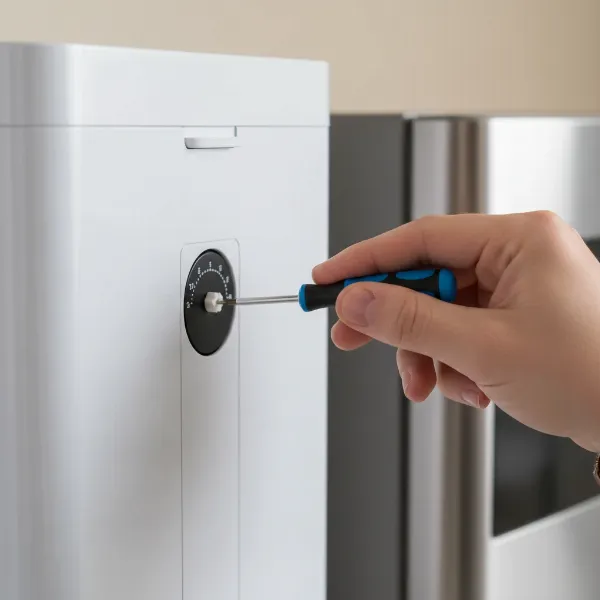 A hand adjusting a small dial on the back panel of a water dispenser with a screwdriver, indicating thermostat adjustment
Maintaining Optimal Performance: Tips for Your Water Dispenser
Regular maintenance can prevent many common water dispenser problems, including those related to temperature regulation.
- Regular Cleaning: Routinely clean your water dispenser, including the internal reservoirs and external surfaces. This prevents mineral buildup and bacterial growth that can affect performance and water quality.
- Proper Placement: Place your dispenser on a level surface, away from direct sunlight or heat sources, and with sufficient clearance from walls to allow for proper air circulation.
- Monitor Water Levels: Avoid running the dispenser dry, especially the hot water function, as this can damage the heating element.
- Periodic Checks: Occasionally check the power cord for damage and ensure all switches are working correctly.
By proactively maintaining your water dispenser, you can enjoy perfectly hot and cold water for years to come and minimize the need for troubleshooting.
Conclusion
A well-functioning water dispenser is a cornerstone of daily convenience, providing perfectly chilled or heated water on demand. When temperature issues arise, understanding how to reset or adjust its thermostat can save you time and the hassle of professional repairs. By following these straightforward steps—prioritizing safety, carefully locating controls, performing power cycles, and making precise adjustments—you can often restore your dispenser’s optimal performance. Don’t let inconsistent temperatures disrupt your hydration routine; empower yourself with these troubleshooting tips. What other water dispenser challenges have you encountered that a simple DIY fix couldn’t solve?
Frequently Asked Questions
How often should I reset my water dispenser thermostat?
Generally, you should only reset your water dispenser thermostat when you notice temperature inconsistencies, such as water being too hot or too cold, or if the unit is not heating or cooling at all. There isn’t a fixed schedule for resetting; it’s a troubleshooting step for specific problems.
What if resetting the thermostat doesn’t fix the temperature?
If a thermostat reset and adjustment don’t resolve the temperature issues, you should check for other problems like a loose power connection, improperly set hot/cold switches, or blocked ventilation. If these checks also fail, there might be an internal component failure, such as the compressor or heating element, which may require professional servicing.